
Joe Pyfer defeated Israel Adesanya by second-round TKO at UFC Seattle, forcing the stoppage at 4:18 of Round 2. The result was more than a power punch landing from nowhere. Pyfer made Adesanya account for forward pressure, clinch contact and takedown threats, then used the fence to keep the former champion from escaping the decisive sequence.
This recap starts with the official result, reconstructs the tactical shift and separates what the loss demonstrated from the easy claim that every veteran defeat proves irreversible decline. It also identifies the other UFC Seattle results worth revisiting.
Adesanya vs Pyfer result at a glance
- Winner
- Joe Pyfer
- Method
- TKO, strikes
- Round / time
- Round 2, 4:18
- Event
- UFC Seattle, March 28, 2026
The middleweight bout headlined a Fight Night at Climate Pledge Arena. It was scheduled for five rounds and carried clear ranking pressure: Adesanya entered as the established former champion trying to stop a three-fight skid, while Pyfer arrived at No. 14 with dangerous power but no previous victory at this level. Both officially weighed 186 pounds, the non-title middleweight allowance.
The UFC event record and independent completed-card reports agree on the finish. Pyfer earned the stoppage with 42 seconds left in the second round. Adesanya had survived early wrestling contact and was finding kicking opportunities, so this was not a fight in which he offered nothing. Pyfer kept forcing a second and third defensive task after the first exchange, preventing the former champion from resetting at long range.
For every winner, use the UFC Seattle event page. The site's latest UFC results page covers cards that followed.
How Pyfer changed the fight with pressure and wrestling threats
Pyfer's first achievement was denying Adesanya a purely kickboxing problem. The former champion built much of his best work around making an opponent cross open space, reading the entry and answering with a straight counter, kick or angle change. Pyfer crowded that read. He moved forward behind the possibility of a hard right hand, attached in the clinch and made takedown defense part of Adesanya's workload.
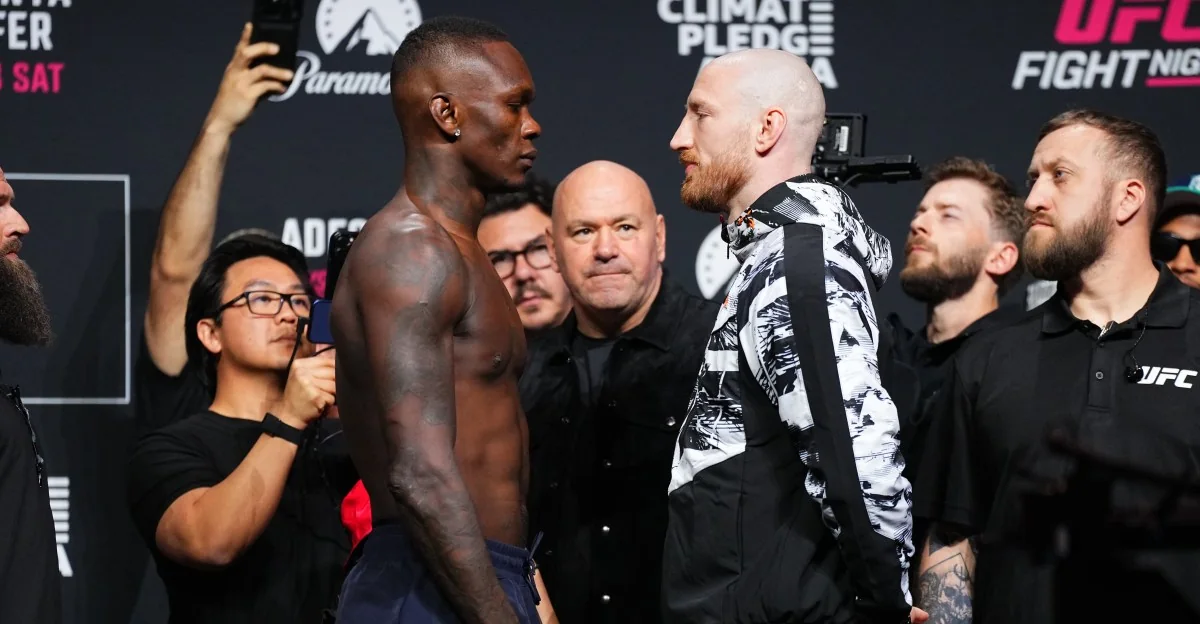
The value did not depend on every takedown succeeding. Adesanya had to widen his base near the fence, pummel for position and decide whether Pyfer was stepping into a punch or dropping toward the hips. Each defensive answer narrowed the time available to build his own combination. When Adesanya separated, his kicks and a well-timed knee reminded everyone why rushing him is dangerous. Pyfer accepted those moments and resumed pressure instead of backing out into a long staring match.
Late in the opening round, Pyfer again turned contact into a grounded exchange. Even where a takedown produces limited damage, finishing a round on top changes the next five minutes: the opponent knows the fence is not a safe boundary, and every retreat can become an entry. Effective grappling must be judged by what it creates, not by the word “takedown” alone.
A less patient pressure fighter can be drawn onto counters; Pyfer was willing to clinch, reset and make the former champion carry weight. That made his right hand more dangerous in Round 2 because Adesanya could no longer treat every forward step as a single striking cue. Compare the Adesanya profile with the Pyfer profile.
The Round 2 sequence that ended Adesanya’s night
Adesanya began the second round with more initiative. His kicks affected Pyfer's movement, and the challenger did not complete every attempt to turn pressure into grappling. That is what makes the finish useful to study: Pyfer did not need continuous control. He needed Adesanya to respect enough possible attacks that one hard entry could start a chain.
The decisive sequence began when Pyfer's right-hand offense forced Adesanya backward. Once the former champion was hurt and nearing the fence, Pyfer did not pause to admire the first connection. He followed, kept contact through the transition and continued striking as Adesanya tried to defend. The official record lists a TKO by strikes, properly crediting sustained finishing work rather than rewriting the result as a clean one-shot knockout.
Why the fence position mattered
Open space gives a hurt fighter several exits: circle away, change stance, clinch on an angle or make the attacker turn before throwing again. The fence removes space behind the defender and makes lateral movement easier to predict. Pyfer's earlier clinch and takedown pressure meant Adesanya could not assume that lowering his level or reaching for a body lock would create a harmless stall.
Pyfer reached a back-oriented position during the continuation and kept delivering punches while Adesanya protected himself. A fighter can be conscious and still be unable to mount intelligent defense. The relevant question is whether the defender is meaningfully improving position, blocking or escaping.
Why the stoppage was defensible
The official footage and recap show a hurt fighter trapped under continuing strikes with no successful escape before intervention. Waiting for complete unconsciousness is not the standard for a TKO. Pyfer created damage, denied the exit and maintained offense. That is a complete finish, and the referee's intervention was consistent with protecting a fighter who was no longer improving his defensive position.
What the loss says about Adesanya’s current game
Four consecutive defeats are a meaningful trend, but “washed” is not analysis. Adesanya's losses have not been copies. Sean Strickland pressured behind disciplined defense and won a decision. Dricus du Plessis combined physical pressure with grappling and found a submission. Nassourdine Imavov produced a damaging striking finish. Pyfer added another version: enough wrestling threat to restrict range, then power and follow-up when Adesanya retreated.
The common problem is reduced authority over the terms of engagement. During Adesanya's championship peak, opponents often paid a price merely for entering his preferred distance. They hesitated, overreached or reset after the first counter. Recent opponents have been willing to keep a sequence alive. They crowd him, force clinch exchanges or continue after absorbing a kick.
UFC Seattle also showed dangerous tools remain. Adesanya's kicks affected Pyfer, his knee punished an entry and he escaped early grappling positions. The concern is conversion: isolated success did not become a sustained round-winning phase, while Pyfer's best right hand became a complete finish. At elite middleweight level, the ability to turn one read into two or three connected actions separated them.
Age, accumulated rounds and confidence may be part of a fan's interpretation, but the bout cannot measure them cleanly. It demonstrates a specific need: Adesanya requires reliable answers when an opponent survives the first long-range layer and reaches the fence with striking and wrestling available. Earlier lateral exits, clinch offense and combinations before the opponent establishes momentum are the tactical areas that matter.
The result did not announce retirement. Until the UFC or Adesanya confirms another bout, his status is an active former champion coming off four losses, with the latest ending by TKO. Monitor the Adesanya next-fight page for a real booking.
The UFC Seattle results that changed other divisions
Pyfer produced the biggest name-value win, but UFC Seattle was built around finishes. Alexa Grasso, Michael Chiesa and Terrance McKinney each ended a main-card bout in the opening round, giving fans three different examples of how quickly position can collapse.
Alexa Grasso’s first-round statement
Grasso knocked out Maycee Barber with a punch at 2:42 of Round 1. Both women entered with top-five flyweight relevance. A fast finish does not automatically award another title fight, but it creates a stronger case than a cautious decision and reminds the division that Grasso's boxing can end exchanges.
Michael Chiesa’s Seattle finish
Chiesa submitted Niko Price with a rear-naked choke at 1:03. The hometown setting gave the moment emotion, while the mechanics were familiar: turn a scramble into back control, secure position and attack the neck before the opponent builds a safe base.
The fastest main-card finish
McKinney stopped Kyle Nelson in 24 seconds with a head kick and follow-up punches. Lerryan Douglas also stopped Julian Erosa in Round 1, while Yousri Belgaroui finished Mansur Abdul-Malik with a third-round knee.
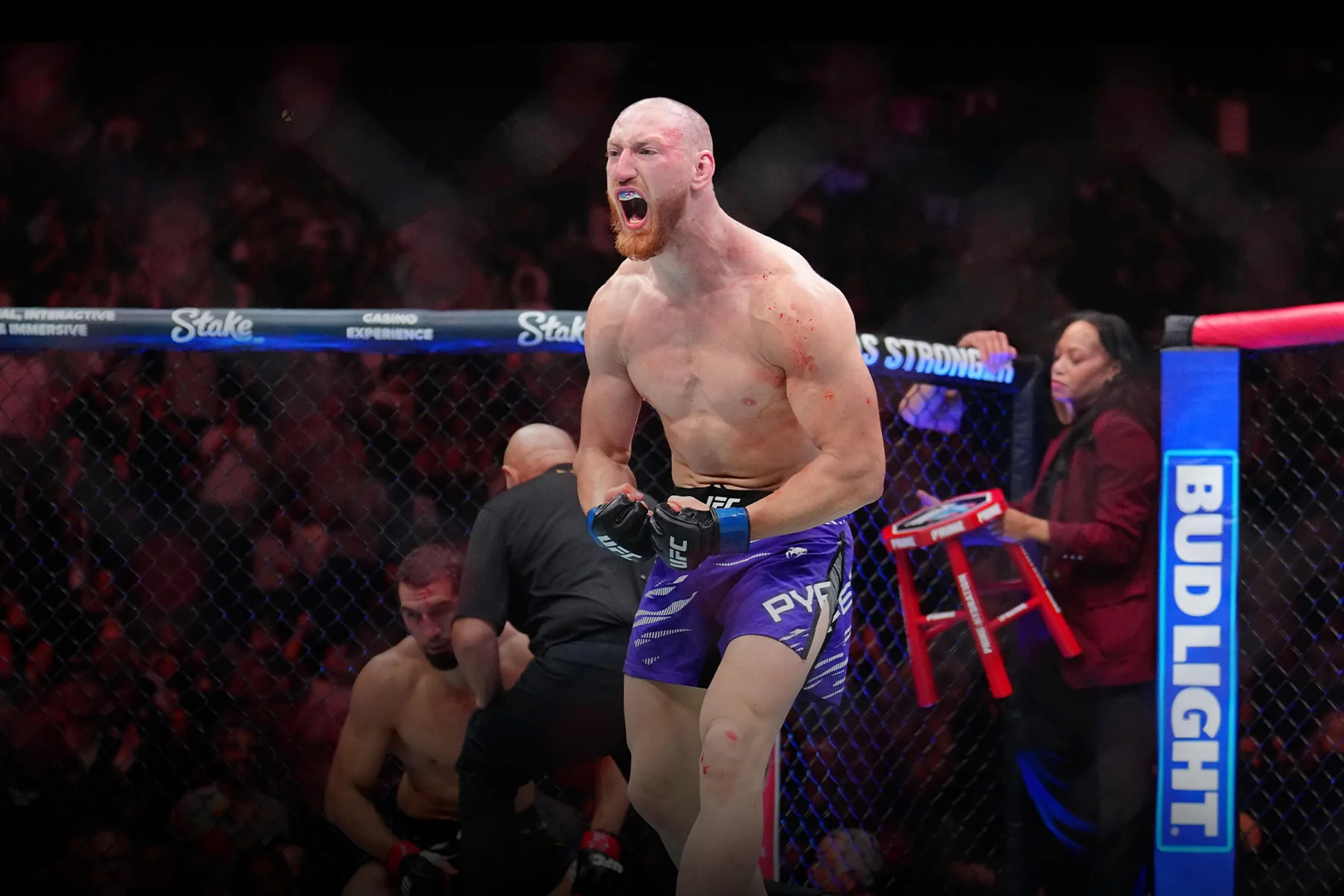
The event deserves more than one clip. Grasso changed the women's flyweight discussion, Chiesa produced a career-fitting finish and McKinney delivered the quickest burst.
The preliminary card added more variety. Tofiq Musayev defeated Ignacio Bahamondes by unanimous decision in a lightweight bout that required sustained work rather than one finishing burst. Tyrell Fortune also went the distance against Marcin Tybura, while Casey O'Neill, Lance Gibson Jr. and Navajo Stirling recorded stoppages. Ricky Simón and Adrian Yañez fought to a majority draw, a result that matters because neither fighter can be described as the winner even if one media score favored him.
Those outcomes help place the main event in its proper setting. Seattle was not simply a veteran falling to a younger puncher. It was a card where contenders repeatedly converted opportunities into decisive finishes, while the bouts that reached the scorecards demanded a different kind of reading. Pyfer's TKO carried the largest career consequence, but Grasso's knockout and Chiesa's submission were complete technical statements of their own.
What comes next for Joe Pyfer and Israel Adesanya
Pyfer's next step should reflect the quality of the win without pretending a ranking number signs a contract. Beating a former two-time champion by stoppage proves he can carry pressure and power into a five-round main event. The next useful test is another established middleweight who can punish entries, defend prolonged grappling and force Pyfer to manage pace if an early finish does not arrive.
Future opponents will prepare for the connection he displayed. Selling out to avoid the right hand invites clinch and takedown work; widening the base for wrestling can slow lateral exits. Pyfer's win becomes a durable contender credential if he reproduces the process against an opponent who expects it.
Adesanya's choice is more personal. A quick return against another pressure fighter would give him little room to rebuild the layers that failed in Seattle. A carefully chosen return could test whether he can regain range authority without asking him to defeat the entire top of the division at once. Neither path is official simply because it sounds sensible.
If he returns, the opponent is only half the question. The camp must decide how to discourage an attacker who survives the first counter and remains attached near the fence. More volume without positional exits can create the same trap. More wrestling practice without an offensive clinch response can turn defense into another long interruption. The goal is to recover the ability to decide where exchanges restart.
Pyfer faces the opposite challenge. Success will make future opponents more cautious, so he may receive fewer reckless entries to punish. He will need to create pressure against fighters who circle early, attack his lead leg and make him pay for carrying power deep into rounds. UFC Seattle proved the ceiling is higher than his ranking suggested; a next fight would test whether the process remains effective after the surprise is gone.
Fight fans should resist two shortcuts. Pyfer did not become champion by beating Adesanya, and Adesanya's achievements did not vanish when the referee intervened. UFC Seattle established a present hierarchy on one night: Pyfer forced his fight, while Adesanya could not turn his dangerous moments into control of the bout.
A rematch is not required to validate the first result. Pyfer won through a legal, complete finishing sequence, and Adesanya's previous championship status does not create an automatic second meeting. Their next assignments should answer present competitive questions: whether Pyfer can reproduce his layered pressure against a prepared contender, and whether Adesanya can recover control of space against an opponent who refuses to reset after the first exchange.
Track the Joe Pyfer next-fight page and the upcoming UFC schedule for confirmation. The lasting result is clear: Pyfer connected pressure, grappling threat and finishing instincts well enough to score the defining win of his career.
Fight talk
Comments