The prohibited target is a defined zone
Strikes to the back of the head are prohibited in UFC competition, but identifying a foul requires more than saying a punch landed somewhere behind an ear. The rule defines a particular protected area. The referee must assess contact with that area, then address the separate questions of intent, injury and whether the bout can continue. An illegal target and an automatic disqualification are not the same conclusion.
The central strip is not the entire rear of the skull
In the ABC's July 2024 Unified Rules, the head portion begins at the crown and follows a central band allowing one inch on either side toward the occipital junction. The protection widens across the nape, then continues along the spine. That description is more precise than drawing an imaginary line through the ears and declaring everything behind it forbidden.
For a viewer, the first task is to locate the impact rather than the attacking hand's eventual position. A glove can finish behind a head after a strike approached from another direction. A broadcast angle can also conceal the actual point of contact. “Behind the ear” therefore does not, by itself, resolve the question either way. Nor does a fighter facing away mean the attacker has permission to strike any exposed surface.
Read the adopted rule, not just the newest PDF
Rules depend on the authority overseeing the event and the version it has adopted. A publication date is not an effective date for every jurisdiction. The ABC's August 2026 document, for example, requests implementation of its new changes in November 2027. Applying that entire file retroactively to an October 2026 UFC fight would require evidence of the event's actual rules, not merely finding the newest download.
This article explains the established protected-target and foul-response framework. It does not certify that every authority has adopted identical language. When judging a specific incident, identify the event, regulator and applicable version first. Even UFC's general rules webpage should be read as an introduction rather than a substitute for the relevant commission's current provisions.
That groundwork matters because several arguments can otherwise be mixed together: where the blow landed, whether it was deliberate, whether it caused the stoppage, and whether the official used the correct procedure. Each needs its own evidence. A sharp still image may help with the first question while telling you very little about the others.
Turning the head does not create a simple exemption
A moving head makes the referee's judgment harder; it does not make the written target disappear. The important distinction is between recognizing where contact occurred and deciding how that contact happened. An attacker deliberately steering a strike into a protected area presents a different intent question from a fighter whose opponent rotates during an already developing exchange. The answer cannot be supplied by the phrase “he turned away” alone.
Consider an illustrative ground exchange. The bottom fighter is building toward a knee while the top fighter changes position. The bottom fighter's shoulders and head may turn at different moments, and the top fighter may already be moving an arm. To assess the disputed contact, follow both movements through the impact. A still taken after the exchange can make the glove and head appear aligned without showing the route by which they got there.
Now change the situation. Suppose the head position remains visible and stable while an attacker repeatedly chooses the same line. That gives an observer a different sequence to assess than one sudden rotation. It still does not authorize the observer to announce an official finding of intent. It explains why the timing, repeated actions and the official's instructions are relevant evidence rather than distractions from the target question.
A defender's movement also needs to be described accurately. Rotating to escape, attempting to stand and remaining unable to defend are not interchangeable. “Turtled up” names a position; it does not itself tell you which strikes were legal or whether the fighter was intelligently defending. The referee has to judge the attack and the fighter's condition as the situation develops.
For fight fans, avoid both shortcuts: that every rear-looking strike is automatically deliberate cheating, or that turning away makes any strike permissible. Start with the actual target and the complete movement. Then ask how the referee classified what happened and which response followed. This preserves a legitimate criticism of an official's decision without inventing a universal exemption or treating every difficult collision as the same event.
A warning, a deduction and a DQ do different jobs
A warning tells a fighter to correct conduct. A point deduction changes the scoring calculation. Disqualification ends the bout with a loss for the offending fighter. Treating them as interchangeable misses the decisions the referee must make. There is no universal rule that every alleged back-of-the-head strike gets a free warning, and no universal requirement to wait through three warnings before acting on serious misconduct.
The referee identifies the foul
UFC's general rules explanation assigns foul assessment to the referee and distinguishes that role from the judges and scorekeeper. A judge does not independently announce a deduction because a television viewer thinks a strike was illegal. For analysis, look for what the referee actually communicated. A shouted instruction to change the target is different from a formal point announcement.
A timeout also has a safety purpose. It creates space to assess the affected fighter instead of allowing the exchange to continue unchecked. Do not infer the severity of an injury solely from the length of the pause or the fighter's willingness to restart. Those observations are part of the sequence, not a medical diagnosis from the audience.
An injury changes the sanction question
The ABC framework contains a specific mandatory two-point provision when an intentional foul causes injury but the bout continues. That is more specific than “every illegal punch costs two points.” The classification and injury condition matter. A one-point deduction in another situation cannot simply be declared inconsistent without establishing that the same provision applied and that its conditions were met.
Disqualification also does not require a completed checklist of prior warnings. A flagrant violation or an intentional injury that ends the contest raises a different question from a brief contact followed by continuation. Fans can criticize an official for failing to act firmly enough, but the criticism should identify the branch of the rule rather than inventing a mandatory warning ladder.
Recovery time is not automatically five minutes
Do not transfer the familiar five-minute discussion from other fouls into a guaranteed five-minute rest after every strike to a protected area. The ABC text allows up to five minutes for medical evaluation at the referee's discretion in the relevant circumstances. “Up to” describes a limit, not a period every fighter can demand. The actual decision still concerns whether competition can safely continue.
Watch the official's instructions, any physician assessment and the announcement of a deduction separately. Together they explain more than the mere fact that the fight restarted. They also keep a safety evaluation from being confused with either an admission that no foul occurred or a promise that the injured fighter must return.
What happens if the fighter cannot continue
The injury-ending question is more specific than whether an illegal contact occurred. Officials must determine why the contest cannot continue and apply the relevant result rule. A stoppage after a foul is not automatically a disqualification, and a contest ending without a normal finish is not automatically a no contest. The classification of the action and the stage of the bout both matter.
Intentional and accidental fouls follow different branches
Under the ABC framework, an intentional foul causing an injury severe enough to end the bout immediately produces a disqualification loss for the offender. An accidental injury stoppage has a different route, potentially leaving no competitive result when insufficient action has been completed. The purpose of that distinction is visible in the outcome: one penalizes the responsible fighter with a loss; the other does not simply award the injured fighter a victory.
That is why a comment saying “he could not continue, so he wins” skips a necessary finding. Conversely, “it was accidental, so nothing happens” also fails. An accidental foul may still prevent a contest from continuing. For a separate UFC example involving a different prohibited action, our TUF 34 illegal-knee explanation focuses on its own official result and circumstances; the name of a foul alone does not settle every bout's outcome.
A later stoppage can make the scorecards relevant
After enough of a bout has elapsed under the applicable rules, an accidental-foul stoppage can lead to a scorecard result. As a named jurisdictional example, Nevada's published MMA provisions in NAC 467.7966 use two completed rounds for a scheduled three-round contest and three for a longer contest in that branch, with the stopped round also scored. That example should not be silently applied to an event governed elsewhere.
A later aggravation of an earlier injury can create another branch. The record needs to distinguish an injury directly ending the bout, one allowing continuation before a later stoppage, and an unrelated legal finish. Merely noting that a foul occurred at some earlier point does not prove it legally caused the eventual result. The officials' finding and applicable language are essential.
For viewers, listen for the announced method and read the official result before arguing about the category. A technical decision is a scorecard outcome reached through an early stoppage; it is not another name for a knockout. A disqualification and a no contest likewise describe different conclusions. Keeping those labels straight makes a complaint about the ruling much more precise.
UFC 333 and Pereira show why the distinction matters
Recent UFC discussion contains both a recognized foul with a penalty and a disputed sequence in which a fighter wanted a different ruling. Those are different kinds of evidence. One tells us an official intervened; the other tells us an athlete challenges how an earlier bout was handled. Putting them beside each other is useful, provided we do not assume the strikes, injury findings and applicable circumstances were identical.
Aliev's point deduction was an official intervention
At UFC 333 on October 24, Nurullo Aliev's bout with Grant Dawson was interrupted by a deduction for shots to the back of the head. UFC's official preliminary results report describes the pause and penalty during the opening round, then Dawson taking over the contest and winning a unanimous decision. The public Paramount+ episode description identifies Marc Goddard as the referee deducting the point.
The defensible takeaway is that the bout supplies a recent example of the rule being enforced while competition continued. It does not establish a new policy requiring the same sanction after every contact. Without the full official explanation, it would be wrong to infer an intentional-injury finding merely from the deduction, or to say the penalty alone determined the winner. The official recap also describes Dawson's subsequent work.
Pereira's criticism is an allegation about a different bout
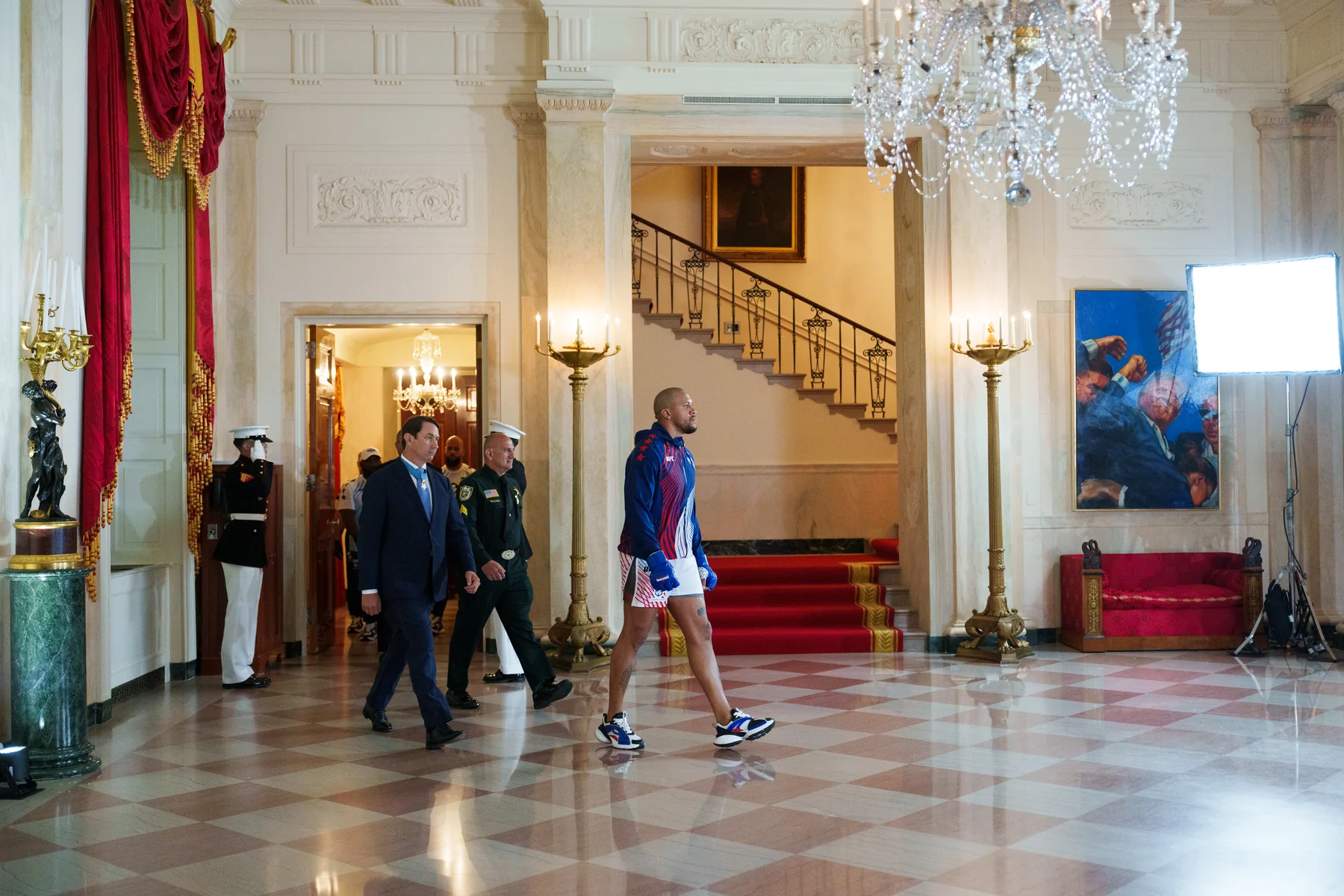
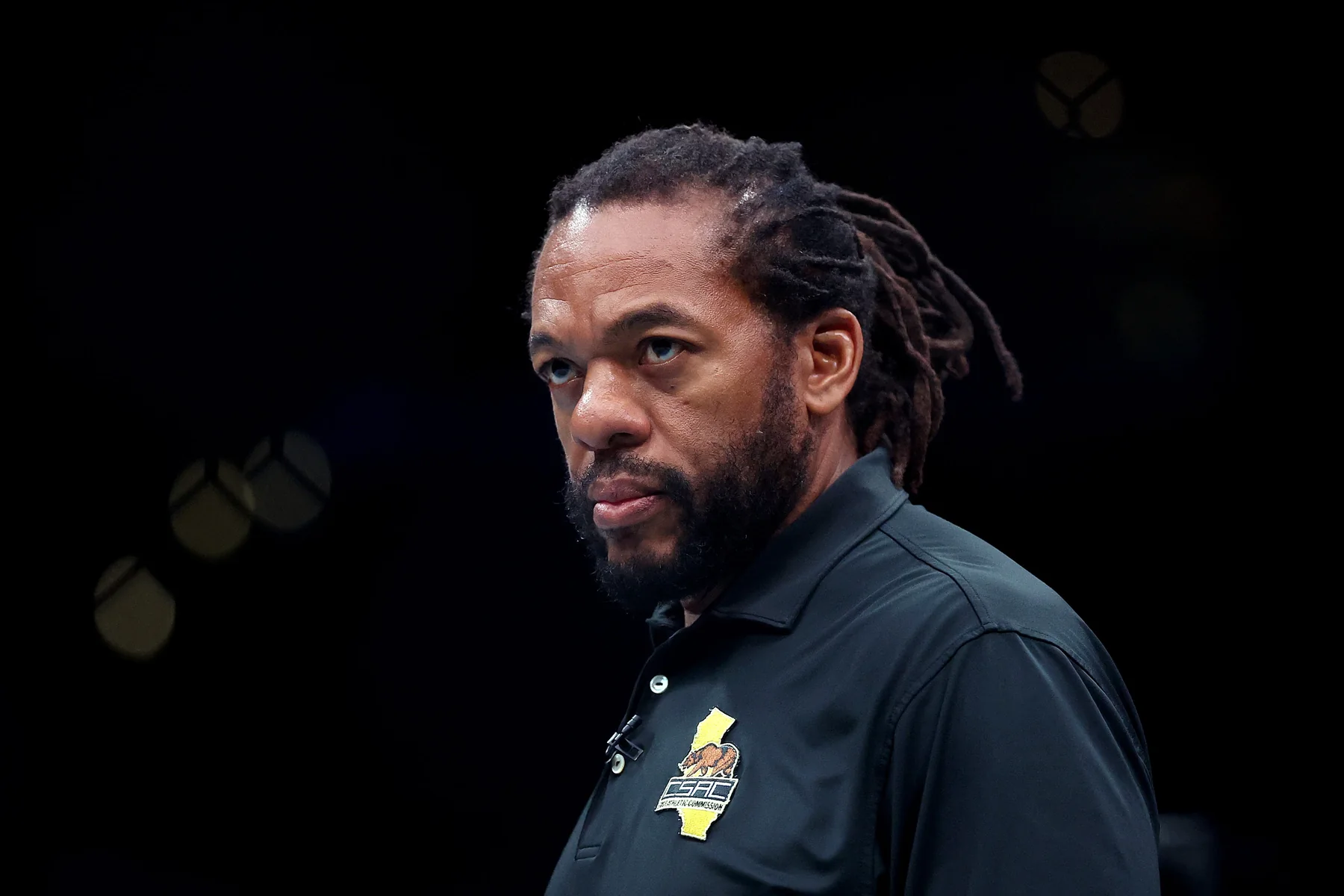
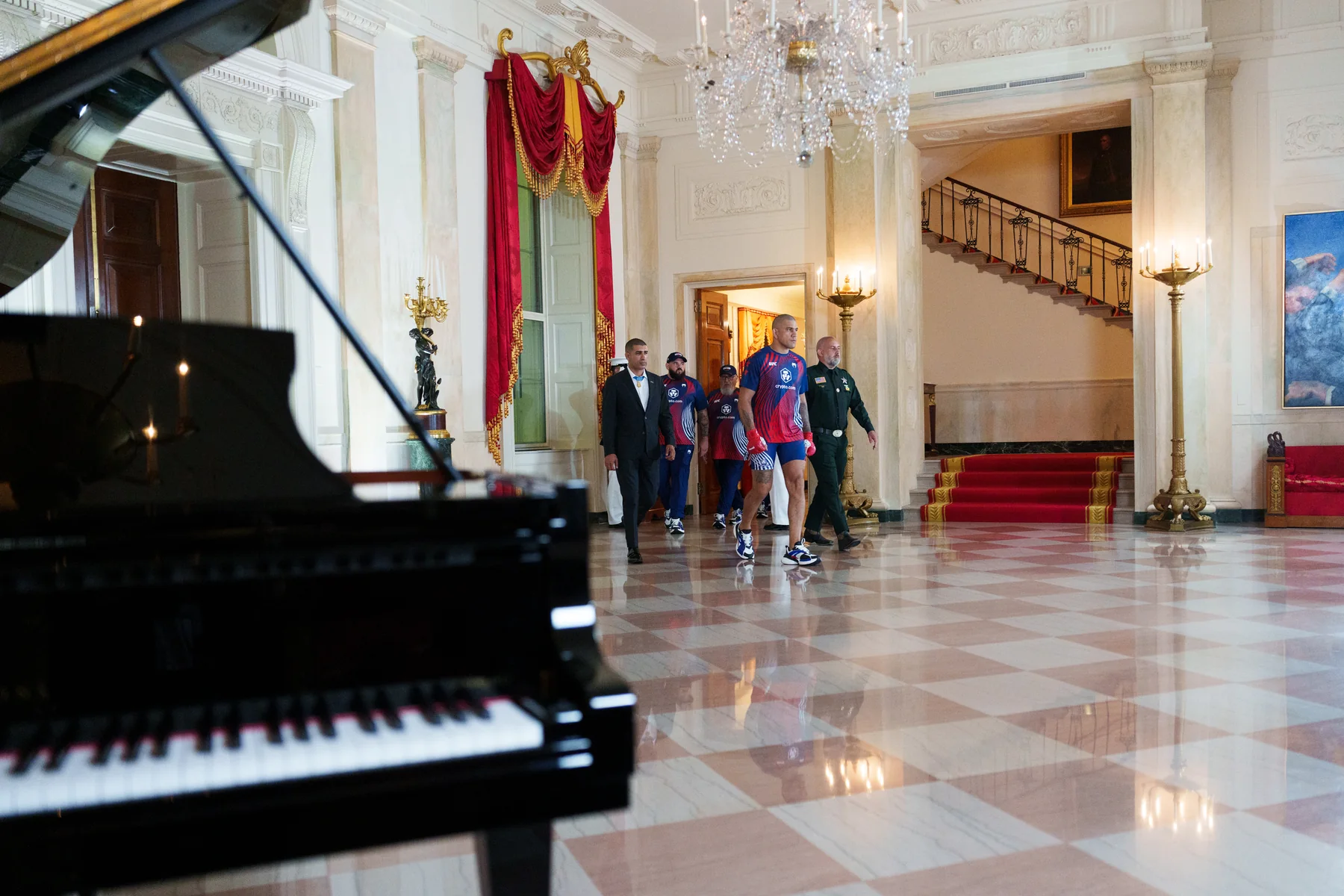
Pereira's October comments revisit his June fight with Ciryl Gane at UFC Freedom 250. MMA Junkie's October 21 interview report says Pereira believes Gane should have been disqualified and still objects to Herb Dean's handling of the contest. That accurately describes Pereira's position. It does not turn the position into a regulator's finding or show that the official result has changed.
Dean's reported June explanation focused on identifying the protected target. That is relevant to understanding his response, but explaining a boundary and proving the legality of every contact in a fast sequence are separate tasks. This article does not claim to have independently adjudicated the entire finishing exchange. Our Freedom 250 results article provides the event context.
The comparison helps narrow the real questions: was a foul recognized, what contact was identified, what did officials conclude about injury and intent, and why did they choose the announced response? An answer based only on “Aliev lost a point, so Gane had to be disqualified” skips those steps. You can question consistency seriously while still respecting the difference between an official intervention and an athlete's unresolved criticism.
Review the sequence before calling every disputed shot a robbery
A convincing review starts with the exact moment, not the loudest reaction. Identify the round and time, then watch the lead-in and the impact rather than only the aftermath. Note which part of the head is visible, how it moves, where the striking surface lands and whether another angle answers what the first one conceals. If the contact point remains hidden, say so instead of treating uncertainty as proof.
Next separate the observations from the conclusions. “The referee warned the attacker” is an observable event if the instruction is audible. “The referee secretly knew it was intentional” is a claim about knowledge that the broadcast does not establish. Likewise, an injury photograph may document appearance at a later moment without proving which particular contact produced it or how the official classified the sequence.
Read the official result and any explanation alongside the adopted rule. A fighter's complaint, a commentator's view and a referee's account can all be relevant while still representing different perspectives. They should be attributed accurately. If a regulator reviews a protest, its actual decision matters; social agreement that a result should change does not itself change the record.
Keep scoring questions separate as well. A strike total is not a ruling on whether every recorded contact was legal, and it does not tell you whether a formal deduction was applied. Our UFC statistics explainer helps distinguish statistical categories from judging. The referee's foul decisions, the judges' round assessments and the final arithmetic have different functions.
For a useful disagreement, state what you can support: the contact you believe reached the protected area, the instruction or penalty you observed, and the provision you think should have applied. Then identify the remaining uncertainty about intent, injury or jurisdiction. That approach leaves room to criticize a serious missed foul. It also avoids turning every awkward rear-angle exchange into the same automatic accusation, regardless of what actually happened in the cage.
Fight talk
Comments