A 10–8 records a wider round-winning margin
A 10–8 round means one fighter earned a substantially wider advantage than an ordinary 10–9. Under the ABC's July 2025 model clarification, that advantage must involve significant damage from legal, effective offense. A knockdown, takedown or long stretch of control does not automatically settle the score. The judge must assess what the action actually did to the opponent.
The numbers come from the ten-point must system. Before any penalties, the round winner normally receives ten points and the opponent nine or fewer; a rare even round can be 10–10. The second number therefore expresses the margin awarded on that judge's card. It does not mean a fighter performed at eighty percent, and it is not a separate bonus added after deciding the overall winner.
Two fights can consequently contain the same number of rounds won by a fighter and produce different totals. If one of those victories is a 10–8, the larger margin matters when the numbers are added. That is why discussing only who “won more rounds” can miss the reason for a draw or a close final card.
The ABC clarification is the main model explained here, current to this October 29, 2026 guide. The authority overseeing an actual event determines the criteria adopted there. Earlier contests should be read under their own rules, rather than silently rejudged using later language.
Version dates also need care. The separate August 2026 Unified Rules document states a requested implementation date of November 2027 for its new changes. Its publication does not make every amendment automatically applicable to an October 2026 UFC bout. The useful task is to identify both the round and the criteria before arguing about its numerical margin.
Damage anchors the current ABC explanation
The current model asks judges to value the consequences of legal offense. Damage can involve a strike disrupting an opponent's ability to compete, a joint attack causing a meaningful effect or a choke producing visible distress. Blood alone is an incomplete test: a fighter can be badly affected without a dramatic cut, while an obvious cut does not by itself measure every important exchange.
Sportsnet's report of the 2025 approval explains the strengthened emphasis on damage. The clarification makes significant damage the anchor for a 10–8, and says it can be sufficient on its own. That is why reducing the process to automatically checking any two of three equal boxes can misstate the model.
Dominance describes productive offense
Dominance concerns what the stronger fighter makes happen, including forcing the opponent into persistent defense against effective attacks. A favorable position is an opportunity to do that work, rather than proof it has already occurred. The distinction applies to standing exchanges as well as grappling: taking space is different from using it to produce an effect.
Consider two hypothetical mount sequences. In one, the top fighter holds the position while the opponent prevents useful attacks. In the other, the top fighter repeatedly lands damaging offense and forces urgent submission defense. Both may look like positional control on a timeline. They present different evidence about the margin of effective offense.
Duration measures how long the effect lasts
Duration puts the important exchanges in the context of the round. It asks how long meaningful offense or dominance was imposed, rather than how long a fighter occupied a particular part of the cage. A severe attacking sequence can matter even if it does not last the entire five minutes.
A useful viewing question is therefore what changed during the sequence. Did the opponent recover and produce comparable offense? Did the attack repeatedly interrupt his ability to do anything beyond defend? Was an apparently tight submission creating visible difficulty, or had the defender already solved the danger? Those observations help explain a proposed margin without pretending that a stopwatch or a single camera angle supplies a complete answer.
Three shortcuts that do not decide the score
A knockdown does not automatically make 10–8
A knockdown is important evidence, but MMA does not assign every knockdown a fixed extra point on the scorecard. The round still contains everything before and after it. Consider a hypothetical brief knockdown followed by an immediate recovery and substantial answering offense. That is a different scoring problem from repeated severe attacks that leave the opponent defending for survival.
Boxing habits can create confusion here. The WBC's discussion of boxing knockdown scoring concerns that discipline's criteria. It should not be imported into an MMA bout just because both sports use a ten-point must system. The similar numbers do not make every mechanism identical.
Holding position is different from damaging an opponent
Four minutes on top describes elapsed positional time. It does not tell you whether the top fighter landed useful offense, threatened submissions or mainly held the opponent in place. The lower fighter's defensive success also does not become a bank of points by itself. The task is to identify the effective attacks, then assess the advantage they produced.
This is especially important with back control. A body triangle can look imposing while the defender successfully controls the attacking hands. In another sequence, repeated choke attempts and strikes can force urgent defensive choices. The same position can contain very different offensive work. Naming the position cannot substitute for describing that work.
Strike totals cannot measure the whole round
Thirty recorded strikes are thirty recorded strikes, not thirty judge's points. Their force, target, effect and relationship to the opponent's offense still matter. Many light contacts can coexist with a much smaller number of damaging attacks in the other direction. That observation does not mean volume is irrelevant; sustained effective offense can create a substantial advantage.
Our UFC statistics guide explains the difference between significant strikes, total strikes, takedowns and control time. Use those figures to investigate the round rather than to replace it. The useful follow-up to a lopsided graphic is which exchanges created the gap and what the opponent was able to do in response. No published strike-count threshold automatically turns a 10–9 into a 10–8.
Chimaev–Usman shows why the actual card matters

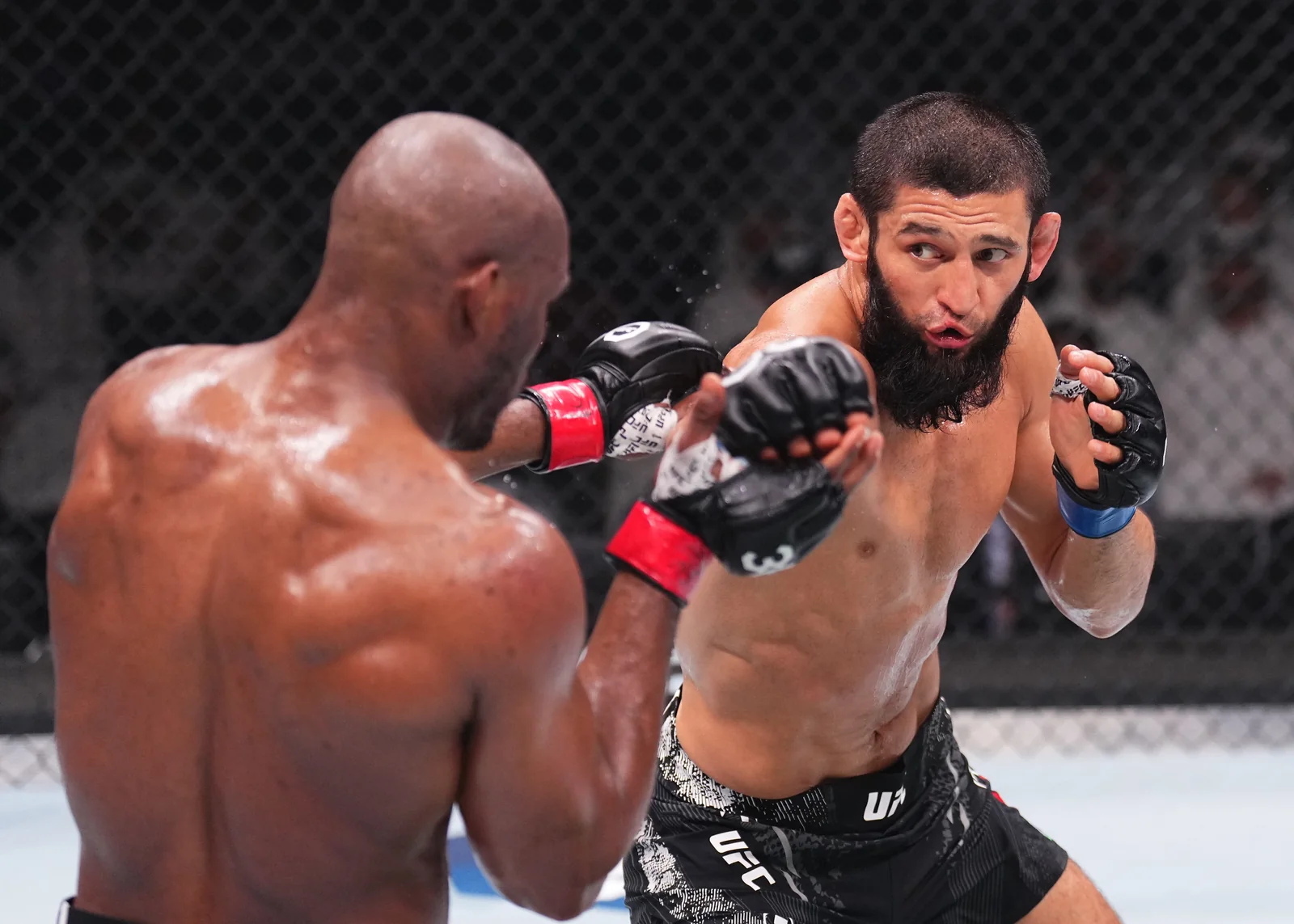
Khamzat Chimaev's majority-decision win over Kamaru Usman at UFC 294 on October 21, 2023, provides a concrete example. The official UFC scorecard shows all three judges giving Chimaev the opening round 10–8. The final cards were two 29–27 scores for Chimaev and one 28–28 draw.
UFC's contemporary recap described Chimaev spending much of the opening round on Usman's back while adding strikes and choke threats. The important reading task is to examine that attacking work alongside the position. Merely extracting a control-time figure would lose the difference between holding and creating offensive danger.
The judges then disagreed about the later rounds. Derek Cleary gave Usman Round 2 and Chimaev Round 3. David Lethaby gave Usman both remaining rounds. Vito Paolillo gave Chimaev Round 2 and Usman Round 3. Their shared 10–8 in the opening frame did not mean they agreed about the entire contest.
A historical example is not a new rules ruling
This was a 2023 bout, before the 2025 clarification discussed earlier. The example records what the judges actually awarded and how their numbers produced the result. It does not claim that they were applying a later document, or that a present-day viewer can retroactively change the criteria for that night.
The distinction is useful whenever an old highlight becomes part of a current rules argument. A clip may identify the strongest moment, while the card establishes the official score and the full round supplies the surrounding action. Those are related forms of evidence, not interchangeable ones.
Lethaby's card is especially instructive. He gave Usman two rounds yet did not score Usman the winner because the first-round deficit was two points. The other judges each gave Chimaev one additional round and reached winning totals. One drawn ballot therefore coexisted with an official majority-decision victory. Reading all three original cards resolves the arithmetic without requiring anyone to invent a consensus that did not exist.
One 10–8 can offset losing two ordinary rounds
Consider an original hypothetical example with no deductions. Fighter A wins the opening round 10–8, then Fighter B wins each of the next two 10–9. Adding the numbers produces a draw on that judge's card, even though B won two rounds. The larger first-round margin offsets the two smaller margins that follow.
| Round | Fighter A | Fighter B |
|---|---|---|
| 1 | 10 | 8 |
| 2 | 9 | 10 |
| 3 | 9 | 10 |
| Total | 28 | 28 |
Now change only the first-round margin to 10–9. The round winners remain identical: A wins one, B wins two. A still finishes with 28, but B now finishes with 29. That single-point difference explains why identifying the 10–8 matters so much. It is not merely a stronger adjective attached to a round everyone already agrees A won.
Saying that a 10–8 is “worth two rounds” can obscure the mechanism. Its winning margin is two points; an ordinary 10–9 has a one-point margin. The round is still one round, and later offense is still assessed in its own round. Keeping a running total makes the effect clearer than replacing the scoring process with a slogan.
The same caution applies to the final verdict. This table represents one judge's ballot, not an official three-judge result by itself. Other judges may disagree about a round winner or about whether the margin reached 10–8. A draw on one card can accompany two winning cards, as the Chimaev–Usman example demonstrates.
When a result in our UFC results listings includes an unexpected total, inspect the original cards before diagnosing the cause. Look for wider margins and any penalties, then add each judge's numbers separately. That basic sequence can resolve a confusing announcement before the discussion even reaches the harder question of whether a particular round deserved its score.
A point deduction changes the arithmetic separately
A 9–9 round can be the product of a normal 10–9 assessment followed by a one-point penalty against the fighter who won the action. It does not mean the judge initially considered the offense exactly equal. The offensive score and the penalty answer different questions, so they need to be traced separately when reading a card.
Use another hypothetical example. A wins the action 10–9, but the referee deducts one point from A. Subtract one from A's ten and the adjusted round becomes 9–9. If the same one-point deduction instead applies to B, the adjusted figures become 10–8 for A. That second outcome looks like a wider round-winning margin even though the original assessment was only 10–9.
The reverse can happen after a true 10–8 assessment. If A wins the action 10–8 but then loses one point through a referee's penalty, the adjusted result becomes 9–8. The judge's original offensive assessment was still 10–8, but the penalty reduces the net margin on the card from two points to one. These examples show why the two numbers alone cannot always tell the full story.
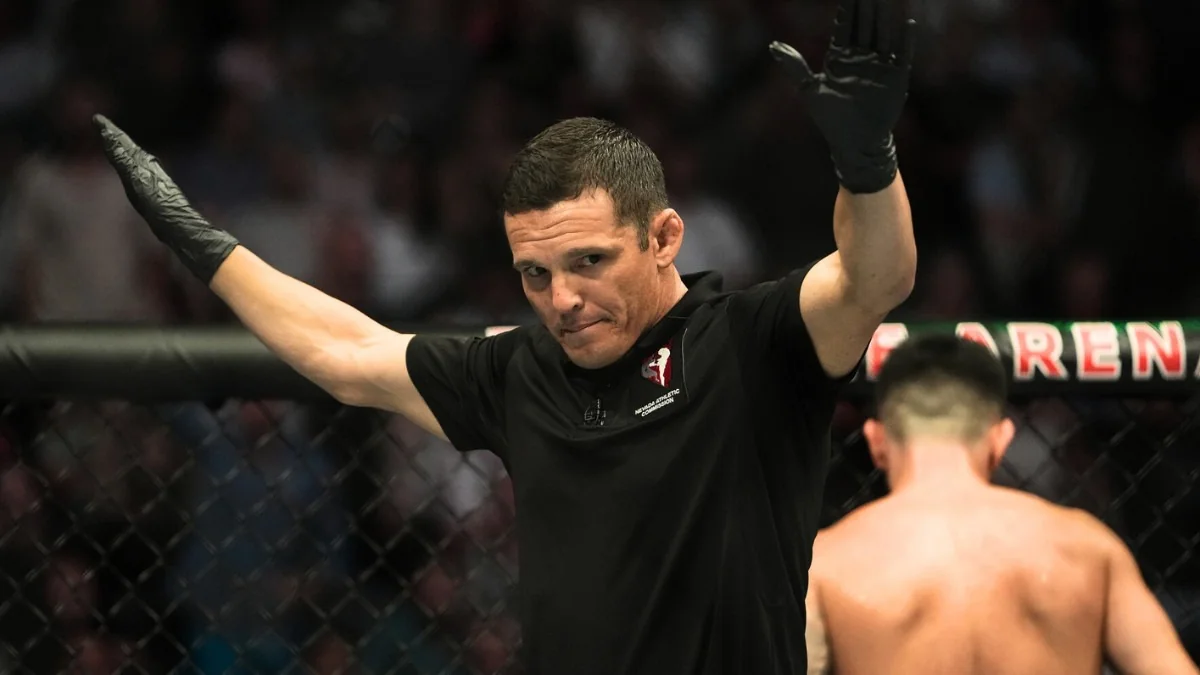
The referee calls the penalty; judges score the action
The Unified Rules' foul procedures give the referee responsibility for assessing the foul and potential deduction. The judging clarification separately explains that assessed penalties are deducted from the card in the affected round. A spectator should not invent a deduction because an exchange looked illegal, and a warning should not be silently counted as a lost point.
When a broadcast mentions a foul, listen for the actual ruling. Was the action stopped? Was a warning given? Were points deducted, and from whom? Then read the card's deduction entry alongside the round assessment. Those details prevent a viewer from attributing an unusual total to dominance when it arose from a penalty.
This also separates two possible disagreements. You can dispute how the referee handled a foul and independently dispute how a judge evaluated the legal action. Combining them into one accusation about “the scoring” makes the explanation less precise. Identify the decision being questioned before deciding which evidence would support the criticism.
Watch the complete round before choosing the margin
Start by deciding who produced the more effective legal offense, then ask how wide the advantage became. Keeping those questions separate makes disagreement more precise. Two viewers can agree on the winner while disagreeing about 10–9 versus 10–8. That disagreement is different from selecting opposite winners, and it needs a different explanation.
When reviewing a round, note the important attacking sequences and what happened after each. Identify the opponent's answering offense, the time spent imposing meaningful attacks and any recovery that changed the balance. Write down the reason for your margin before looking at the announced card. That habit reduces the temptation to build an explanation backward from a favored final result.
Replay the full round if the decisive exchange is unclear. A submission can appear dangerous from one camera and already defended from another. A late flurry can dominate memory without representing the preceding four minutes. Neither observation means a judge must be correct; both explain why a short highlight is weak evidence for a confident round-wide verdict.
The scale also extends beyond 10–8. The 2025 ABC clarification reserves 10–7 for overwhelming damage and domination across the round. It is a separate threshold, not an automatic response to counting two knockdowns or deciding that 10–8 is insufficiently emphatic. The same discipline applies: explain the observed effect and the extent of the advantage.
Finally, compare your notes with the original judge-by-judge card and any referee deductions. The broadcast team's opinion can help identify an exchange worth revisiting, but it is not another official ballot. A productive criticism names the round, the criterion and the action the scorer may have undervalued. That gives fight fans something concrete to assess, while keeping a difficult judgment from becoming an unsupported allegation about the people making it.
Fight talk
Comments