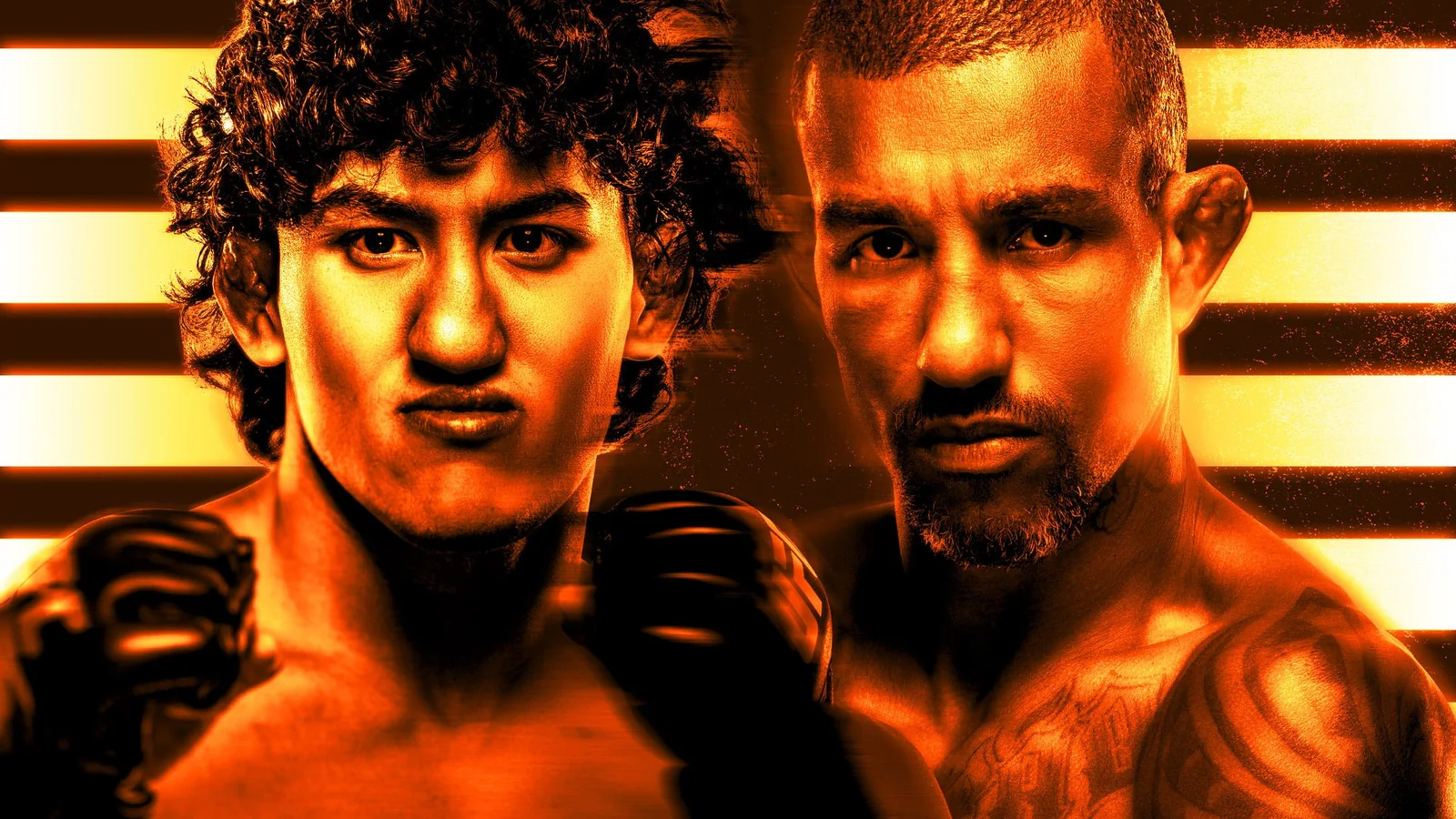
Raoni Barcelos was stable, alert and responsive, with full movement, in the UFC's September 27 update after his frightening fifth-round loss to Raul Rosas Jr. The promotion said he had been taken to a Level 1 trauma center, assessed by hospital staff and kept under medical supervision. His coach and a doctor working with his team offered further reassurance later that day. Neither the UFC statement nor those comments publicly established why he lost consciousness or when he could fight again. This September 28 account separates the confirmed health update from the fight result and from the questions that remain open.
What has UFC officially said about Raoni Barcelos's condition?
The clearest official status is the UFC's statement dated September 27. It said Barcelos was immediately transported to a Level 1 trauma center after the main event with Rosas Jr. Hospital staff performed a CT scan and a comprehensive assessment. At the time of that notice, the promotion described Barcelos as stable, alert and responsive, with full movement, and said he would remain under medical supervision. That is an encouraging account of his condition after he left the Octagon, but it is a description at a specific time, not a final medical report.
Those details matter because the finish was alarming to viewers. Barcelos became unresponsive during the final round of a bout that had been competitive through four rounds, and medical personnel attended to him before he was removed from the cage. The UFC statement gives fans a stronger basis than clips or instant reactions for answering the immediate question of whether he was responsive later. It also confirms that the response continued beyond the arena, with hospital evaluation and observation rather than a quick cage-side declaration.
The statement does not publish a diagnosis, a CT finding, a discharge date or a clearance to train. A CT scan being performed tells readers what evaluation the UFC reported; it does not disclose what clinicians found. Likewise, “full movement” describes what the promotion reported during observation, but it cannot settle every question about the episode or long-term recovery. A fighter's own account, a treating clinician's formal update, a commission record or a later UFC notice could add detail, but none should be assumed from this initial bulletin.
The incident occurred after the September 26 bantamweight main event at Meta APEX in Las Vegas. Fans seeking the compact outcome can use the Rosas Jr. vs. Barcelos event page, while the Raoni Barcelos fighter profile provides his longer UFC record. This article's health description is tied to the dated September 27 notice; any later statement should be read as a new development rather than silently folded into that earlier status.
What did Barcelos's coach and doctor report afterward?
Barcelos's head coach, Davi Ramos, gave fans a more personal account after the fight. In a Portuguese-language social video reported by MMA Fighting on September 27, Ramos said Barcelos was conscious, talking and moving his arms and legs while undergoing tests. The message addressed the worry created by his departure on a stretcher: someone close to the fighter was reporting that he could respond and communicate after the bout. Ramos also said he would need rest. These are attributed observations from his coach, not an announcement that every medical question had been resolved.
MMA Fighting later added comments from Dr. Gustavo Medeiros, identified as Barcelos's doctor. Medeiros said the fighter was lucid and oriented and expected to remain under observation for a few days while the team assessed how he was doing. He characterized the hospitalization as precautionary. That provides a useful update to the earlier UFC bulletin, which had already confirmed a CT scan, assessment and continued medical supervision. The physician's description of a plan for observation should be read at the time he gave it: it is not a report that Barcelos has since been discharged, and it does not set a date for clearance.
Source order matters here. The UFC published its own written statement; the coach and doctor spoke separately in messages that journalists reported and translated. Their accounts broadly agree on the immediate point that Barcelos was conscious and able to move after evaluation began. They do not add a verified cause of the sudden loss of responsiveness, and neither gives the public access to clinical findings. Some stories compress the updates into “he is fine,” but that phrase can imply more certainty than the detailed statements actually provide.
For UFC fans, the practical answer is encouraging but bounded. Barcelos's team described him as alert and communicating, and a doctor connected with him expected further observation. The next meaningful development would be a fresh, dated statement from Barcelos, his team, the promotion or the relevant athletic commission that clarifies his condition or any competition restriction. Until then, the strongest account is a sequence of September 27 updates, each tied to its speaker, rather than a single undated claim that the matter is finished.
How did Barcelos vs. Rosas Jr. reach the fifth round?
The September 26 headliner was a five-round bantamweight fight at Meta APEX, and it was the first UFC main event for both men. Rosas Jr. entered as a young ranked contender; Barcelos arrived after five straight wins against increasingly recognizable 135-pound opponents. The match became a demanding exchange of striking, takedowns and scrambles rather than a simple case of one fighter controlling every phase. UFC subsequently named it Fight of the Night.
Rosas Jr. set an early pace, then Barcelos found his range
Rosas Jr. pressed forward with combinations and leg kicks in the opener. Barcelos did not merely absorb the rush: he countered with right hands and uppercuts, went to the body and completed a takedown. The high pace mattered because Rosas Jr. was trying to make his speed and volume decisive before the veteran could settle into his own timing. MMA Fighting's round-by-round account described a competitive first five minutes and then a shift as Barcelos began to connect more consistently.
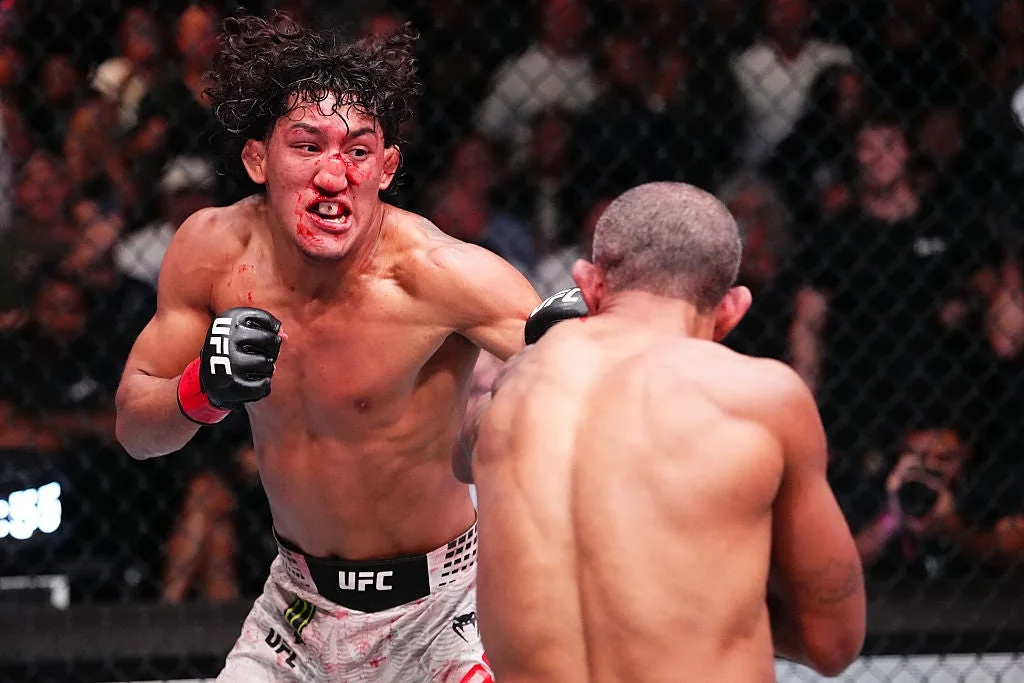
In Round 2, Barcelos repeatedly attacked the body, used uppercuts when Rosas Jr. came into range and mixed in takedown entries. Rosas Jr. still landed and pushed through the exchanges, but the pattern was changing: the Brazilian was making the younger fighter work on the feet and in the clinch. Round 3 added a tactical swing on the mat. Barcelos used a sweep and reached back position; Rosas Jr. turned into top position and punched before Barcelos escaped and resumed his own offense. That is why reducing the round to “the wrestler versus the striker” misses the point. Both fighters had useful grappling moments, and reporters who scored the bout live differed on that close frame.
Barcelos entered Round 5 ahead on the cards
Barcelos had his clearest stretch in the fourth. His jab and body work pushed Rosas Jr. backward, then takedowns led to back control and attempts around the neck. Rosas Jr. defended, fought hands and kept moving, but he spent much of the round answering Barcelos's offense. The distinction matters: a threatened choke is evidence of positional danger, not proof that a submission was inevitable. Sherdog's play-by-play also tracked the body attacks, trips and back-control work that shaped this late stretch.
MMA Fighting reported that all three judges had Barcelos ahead three rounds to one entering the fifth. That is different from a reporter's unofficial round score and explains why the stoppage changed the outcome so sharply. Round scoring rewards effective striking and grappling within each five-minute period; it is not a simple count of every punch or second of control across the fight. Barcelos had put himself in position to win a decision if he completed the final round, but the actual fight ended before those cards could become the result.
What is known about the stoppage and what remains uncertain?
The result and the medical explanation are separate questions. Rosas Jr. received the victory when the fight was stopped 1:38 into Round 5. Fans can describe the action that appeared on the broadcast and the referee's intervention. They cannot turn that footage into a diagnosis. The UFC's later health statement confirms assessment at a hospital, but it does not state what made Barcelos lose responsiveness in the cage.
The official outcome and the visible sequence
At the start of the fifth, Rosas Jr. was still attempting to turn the fight despite Barcelos's strong previous rounds. The men exchanged and clinched; Rosas Jr. drove through a takedown or trip near the fence. Barcelos went down and appeared unresponsive, prompting referee Herb Dean to end the bout and medical staff to attend to him. He was eventually taken away on a stretcher. That sequence, rather than a conventional extended barrage of follow-up strikes, is why the finish drew immediate concern. MMA Fighting's finish report also cautioned that the replay did not make the reason for Barcelos's loss of consciousness clear.
Result listings use slightly different shorthand. Sherdog records KO (slam) at 1:38 of the fifth, while UFC's Portuguese bonus report describes a technical knockout after the takedown. The shared, reliable point is that Rosas Jr. won by a fifth-round stoppage. A KO or TKO label in a results list classifies the bout's ending; it is not a clinical finding about what happened inside Barcelos's body.
A replay cannot diagnose why a fighter lost consciousness
The temptation is to freeze one angle and assign a single cause to the moment Barcelos fell. Video does not provide the hospital's assessment, and viewers may not see every contact point or physiological event. Even if a takedown and a loss of responsiveness occur in close succession, timing alone does not prove exactly what caused the latter. UFC fans should be especially wary of social posts that present a specific head, neck or cardiac explanation as fact without an attributable medical statement.
The UFC's September 27 notice says staff performed a CT scan and comprehensive assessment. It does not release a scan result or diagnosis. Ramos and Medeiros spoke about consciousness, movement and observation, yet did not publicly identify the mechanism either. The proper reading of the evidence as of September 28 is narrow: Barcelos was evaluated, reported responsive later and continued under supervision at the time of those updates. The health question deserves a later named source with new information, not a theory inferred from a replay.
Why did this setback matter for Barcelos's bantamweight run?
The September main event was a career marker for Barcelos before it became a worrying health story. At 39, eight years after his 2018 UFC debut, he was finally headlining a card. UFC's September 24 profile framed the booking as the reward for a five-fight rebound, not a gift based on longevity. The opponent was Rosas Jr., a rising ranked bantamweight with an unusually early path into the promotion. Barcelos had a chance to make the headline about a veteran's technical level against a younger contender.
The run had substance. It began when Barcelos submitted Cristian Quiñonez in February 2024, then continued with decisions over Payton Talbott and former UFC bantamweight champion Cody Garbrandt in 2025. He followed by beating Ricky Simon in November and Montel Jackson in April 2026. Those were different types of tests: a highly watched prospect, a former champion and proven division regulars. Four of the five wins went to the judges, so the streak was built on repeated round-winning work rather than a sequence of quick finishes. The dated fight record confirms the order and methods.
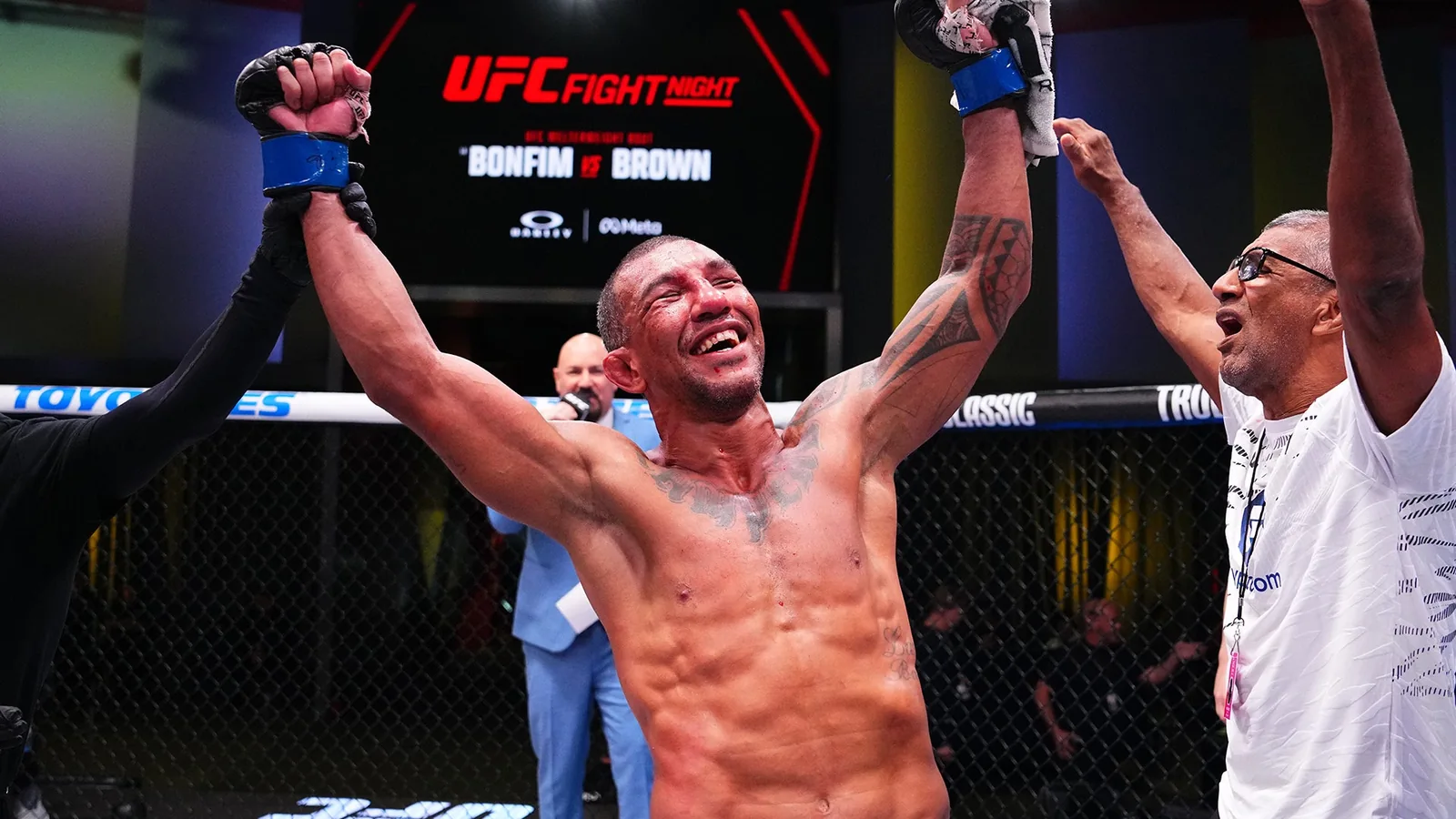
Against Rosas Jr., some of the same tools appeared again: disciplined body punching, counters when the prospect entered range, foot sweeps and control from the back. Through four rounds, that variety had placed Barcelos ahead according to the reported judges' cards. His eventual defeat therefore does not erase the competitive evidence in those rounds. It does end the five-win streak, and it leaves the sporting consequences unresolved until the health situation is clearer.
It would be premature to turn one abrupt result into a retirement claim, a guaranteed rankings drop or a proposed rematch. A bantamweight ranking is a separate update, and a future bout requires both a booking and any necessary clearance. For now, the Barcelos fighter page is useful for his fight history, while the immediate story remains what his team and the UFC have actually said about his condition.
What should fight fans watch for next?
There are two separate developments to watch: a clearer health update and, only later, a confirmed fight booking. The UFC said on September 27 that it would provide further information as available. Barcelos's coach and a team doctor supplied reassurance about consciousness and observation, but their comments did not answer every medical question. No public statement reviewed for this September 28 account gave a diagnosis, a discharge date or a date for returning to competition. That makes a cautious, dated reading more useful than guessing how quickly a fighter might resume training.
Medical news needs a dated, attributed update
A meaningful new report would identify its speaker and timing: for example, Barcelos himself, his team, UFC or a relevant athletic commission could say whether his observation status changed. A treating professional might make a finding public through the athlete's team. None of these possibilities should be written as something that has already happened. In particular, “he was alert” on September 27 and “he has been medically cleared” are very different statements. The first is supported by the UFC notice; the second would require new evidence.
Fans should also distinguish a fresh source from an old page surfaced by a new search. The UFC's dated condition notice remains the official baseline unless it is updated or replaced. A clip reposted without its original date can make September 27 reassurance appear to be a later recovery announcement. The same caution applies to claims about a medical suspension: look for a published commission or promotion record before assigning a length or reason to one.
A return fight is not scheduled by this result
The result tells us Rosas Jr. won the September 26 main event. It does not create an automatic rematch, name Barcelos's next opponent or show that he is ready to compete. UFC matchmaking depends on available fighters, event plans and medical clearance. Even a rankings update would only change where a fighter appears on a list; it would not be a signed fight announcement. This distinction is especially important after a bout that ended with a hospital evaluation rather than an ordinary post-fight interview.
For a real next-fight claim, look for the opponent, event and date together on a current upcoming UFC events page or the Barcelos next-fight tracker, then check the promotion's announcement. For the September 26 sporting result, use the UFC results hub. The verified story as of September 28 is that Barcelos was reported stable and responsive after hospital evaluation, while the cause of the episode and his return timeline remain unconfirmed in public statements.
Fight talk
Comments