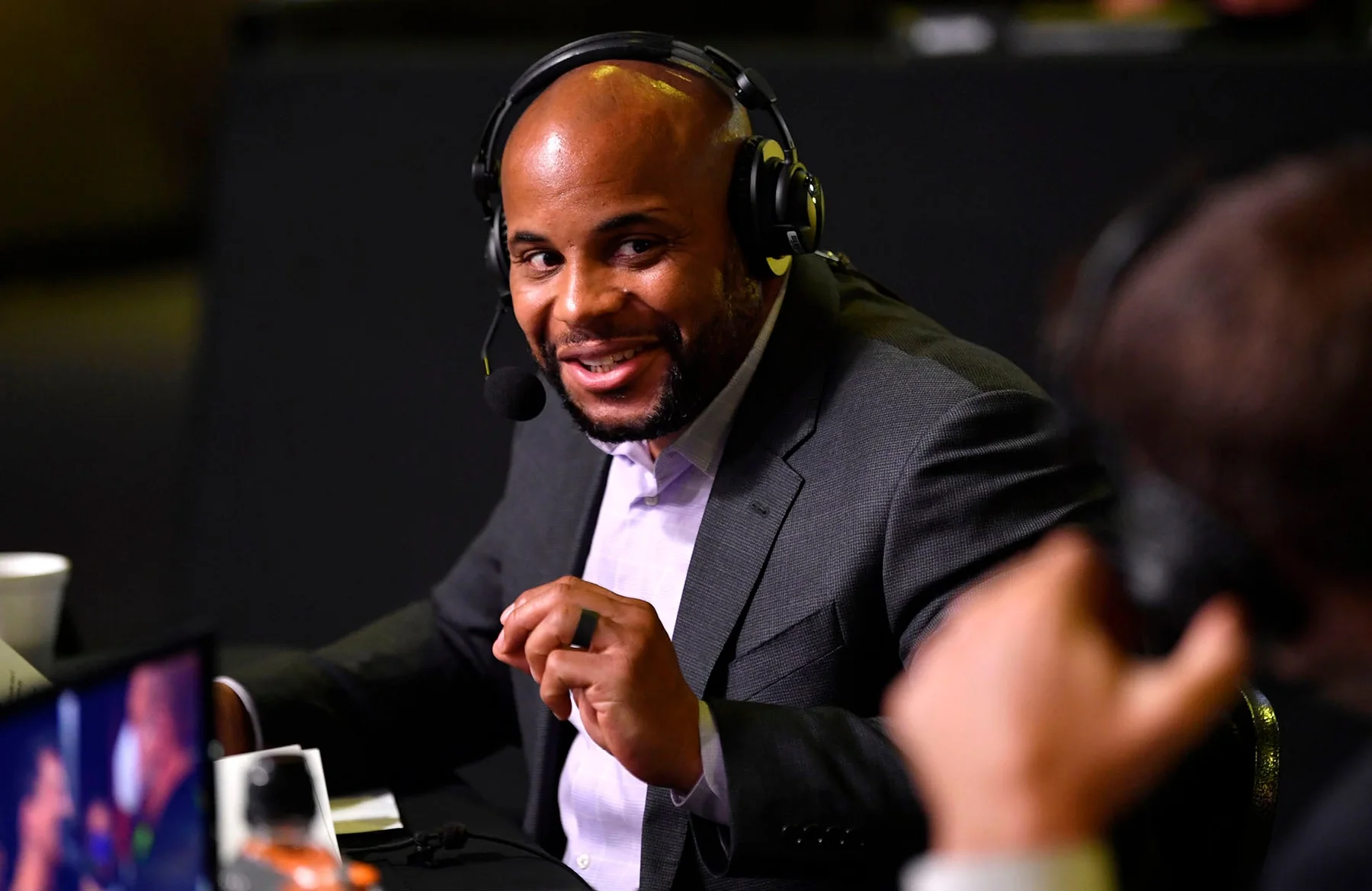
Reyes won at UFC 333 before the argument moved online
Dominick Reyes's dispute with Daniel Cormier began after a win, and it developed into an argument about respect, preparation and perceived favoritism in UFC commentary. Reyes objected to Cormier's presentation of him; Cormier said his language was not meant negatively. Reyes later apologized for the personal insults while maintaining his broader criticism. That follow-up matters when describing an exchange that started with much sharper language.
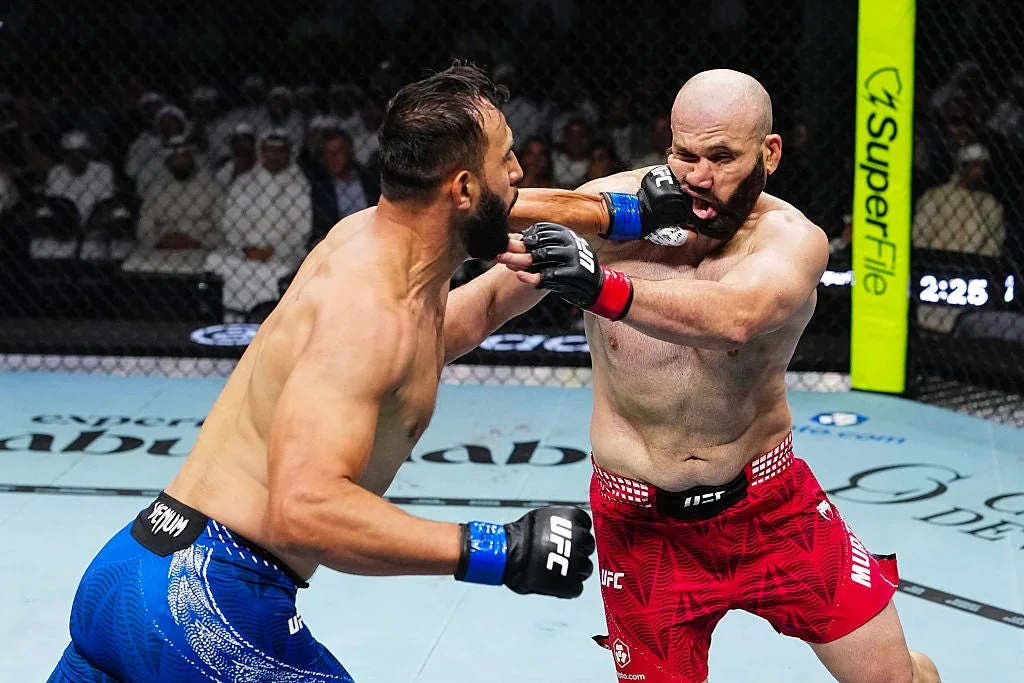
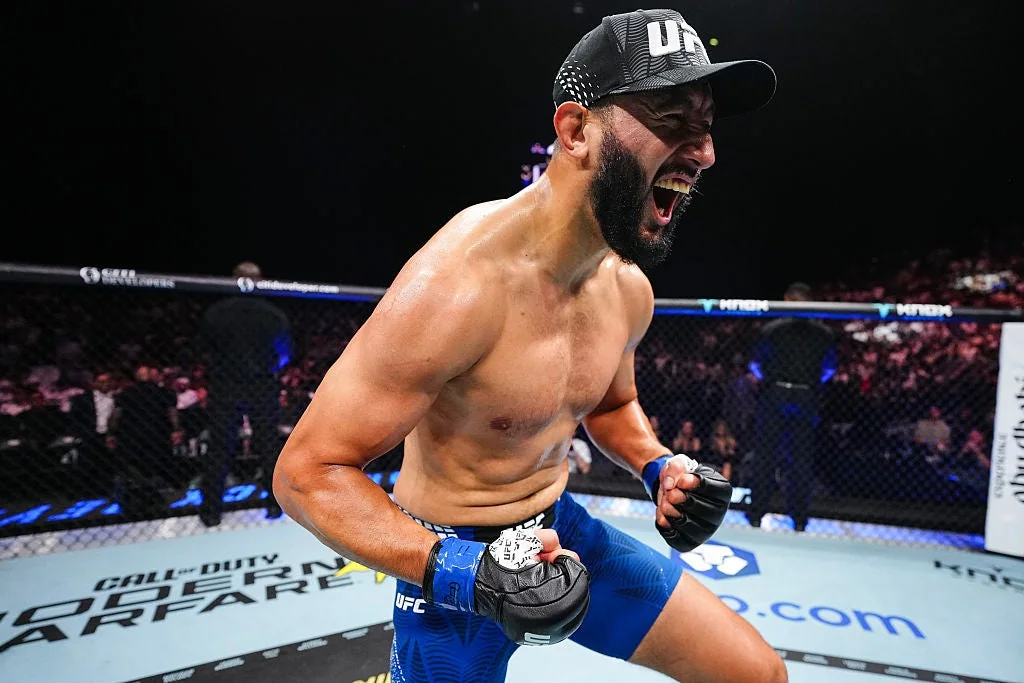
The sporting result is clear. UFC's official preliminary results list Reyes defeating Azamat Murzakanov by knockout, with a head kick and punches, at 2:40 of Round 1 on October 24, 2026. The bout closed the preliminary portion of UFC 333 at Etihad Arena in Abu Dhabi. There was no three-judge verdict deciding this fight.
The online exchange followed. Original posts dated October 25 and contemporaneous reporting show Reyes criticizing the broadcast, then responding to Cormier's explanation. The dates should not be confused: the fight happened October 24, while the posts and subsequent coverage continued afterward. An article describing only the night of the fight would miss the later clarification about what Reyes did and did not regret.
UFC's recap describes Reyes resetting after Murzakanov landed a clean left, then hurting him with a high kick and following up to finish. That gives the debate a useful sporting anchor: Reyes had produced a decisive result before complaining about the way his work was discussed. His dissatisfaction was not an attempt to explain away a loss or a request to reverse a scorecard.
What remains contested is the broadcast evaluation. This article has not independently replayed the complete live commentary or audited every remark by the booth. We can establish the result, the men's public positions and the later reported interview. Claims about bias need to remain attributed to Reyes unless the underlying evidence independently establishes more.
For background on the event's card and viewing window, the UFC 333 event guide covers that setting. Here the question is narrower: what Reyes objected to, how Cormier answered, and why the disagreement should be assessed as a commentary dispute rather than a change to the official outcome.
Reyes raised three different complaints about the commentary
Reducing the exchange to one unwanted nickname leaves out most of Reyes's argument. He challenged how he was addressed, how thoroughly the commentators prepared, and what he perceived as preferential treatment of certain fighters. Those claims overlap emotionally, but they are not interchangeable. Someone can use an unwelcome term without making a factual mistake, and a factual mistake does not on its own establish favoritism.
Being called kid became a question of respect
In his original October 25 response, Reyes objected to being called “kid” and asked to be referred to by his name. That is a direct objection to the way he felt he was being treated. It is possible to establish that he disliked the description without deciding that Cormier must have intended to belittle him.
The distinction matters because intended tone and received tone can diverge. A familiar expression may feel harmless to the speaker and patronizing to the person being described. The useful question is how the broadcaster responds when that preference becomes clear. It does not require readers to invent a private history between the men or assume they understand every relationship around the cage.
Preparation was the broader professional criticism
Reyes also questioned research and technical knowledge. His short original post about grappling knowledge makes that concern explicit, while later reporting expands on his demand for more professional preparation. His complaint was about the quality of the work, not simply whether a commentator praised his knockout. A broadcast can celebrate a finish and still contain an error elsewhere.
To assess that criticism, identify the disputed statement and compare it with the relevant fact or technique. Was a fighter's history described incorrectly? Was a position misidentified? Was the subject merely a technical judgment on which informed observers can disagree? Those questions produce a more useful assessment than treating a former champion's experience as either automatic proof of accuracy or a reason to dismiss his expertise.
Regional favoritism remains an allegation
Reyes's broader accusation concerned perceived favoritism toward fighters from the Caucasus region. That is his allegation, as presented in the published exchange. It should not be rewritten as an established finding about Cormier's motives. An association with a gym or other fighters is not, by itself, a demonstration that the commentary on this particular bout was unfair.
Reyes also invoked an alleged challenge from Paul during the broadcast. Without independently reviewing the full passage, we should not turn that reference into proof that another commentator formally exposed bias. The surrounding remark, response and action would matter. Attribution keeps the concern visible while preserving the difference between reporting a serious criticism and announcing that the criticism has been conclusively proved.
Cormier said his language was not intended as an insult
Cormier's first answer rejected the idea that “kid” was meant negatively. In his original October 25 post, he said he praised Reyes when the performance justified it and also commented honestly on less impressive outings. He contrasted the Murzakanov victory with Reyes's previous fight involving Johnny. That was a defense of his approach to commentary, not an acceptance of the allegation that he had deliberately diminished Reyes.
The full exchange, as reported by Uncrowned on October 25, also had Cormier offering a conversation. In a later reply reproduced in that reporting, he said he liked Reyes and had told the fighter's team how well he thought Reyes had performed. Those points belong in an account of the argument, even if a reader ultimately finds Reyes's criticism more persuasive.
The response addresses one part of the dispute directly: Cormier's stated intention when using familiar language. It also makes a broader claim that his comments reflect the performance he sees. Neither statement independently resolves whether every historical detail or technical observation on the broadcast was accurate. A fair assessment can recognize the defense without treating it as the conclusion of a complete review.
Likewise, disagreement about criticism is not itself evidence of hostility. A fighter may want greater preparation while a commentator believes his evaluation was candid and justified. To decide between those positions on a specific passage, the passage matters. Praise delivered after a knockout does not erase a factual mistake elsewhere; an unwelcome judgment does not automatically become a factual mistake because the fighter dislikes it.
There is no need to imagine a future confrontation or call the exchange a signed agreement to settle anything in person. What can be supported is narrower: Cormier publicly defended his intent and work, offered direct conversation in the reported thread, and did not agree that the accusations fairly described him. Reporting that answer keeps both men's positions visible without pretending that a social reply supplies a verdict on an entire broadcast career.
Reyes apologized for the personal attack while keeping his criticism
Reyes subsequently drew a line between his criticism of the commentary and the insults he used to express it. In Uncrowned's October 27 report of his Monday appearance on The Ariel Helwani Show, he apologized for attacking Cormier personally and for language including the “low IQ” insult. He maintained that the booth should prepare more thoroughly. An apology for delivery is different from retracting the substance of a complaint.
The follow-up broadened his argument beyond one commentator. Reyes framed his position as a demand for accountability and professional standards across the broadcast booth. He also indicated that he intended to scrutinize commentary through his own videos. Those are statements of his intended approach, not proof that every future criticism he makes will be accurate or that a formal review process has been created.
The follow-up changes how the dispute should be described
A current account should therefore preserve two facts together: Reyes regretted the personal attack, and he continued to believe the professional criticism was justified. Saying he simply backed down would erase the second point. Saying he remained wholly unapologetic would erase the first. Neither version gives readers the update they need after seeing the original angry posts.
The chronology also limits the temperature of the story. The most confrontational statements came during the first exchange, while the later interview supplied a more considered explanation of his concerns. That does not mean the earlier language never happened. It means a headline or summary written days later should not imply that the first reaction remains the only available account of his position.
There is no verified public resolution in the material reviewed here that allows us to announce a reconciliation, an accepted apology or a disciplinary action against either man. The record supports a more specific update: Reyes softened the personal attack while keeping his request for better work. Cormier's earlier defense of his intent and commentary remains part of the same record.
For readers deciding what to make of the episode, that distinction is useful. You can disapprove of insulting language while still examining the underlying criticism. You can accept the apology without deciding the broadcast was biased. The question returns to the actual work: which statements were accurate, which judgments were supported by the action, and how the booth represented the fighters competing that day.
Broadcast commentary does not decide the official result
Cormier's commentary did not decide whether Reyes won at UFC 333. The official result was a first-round knockout. That does not make every complaint about the broadcast irrelevant, but it puts the complaint in the right category. Reyes was challenging how his performance and career were discussed, rather than identifying a judge whose scorecard cost him the bout.
A stoppage is different from a disputed scorecard
For bouts that reach the judges, the ABC's judging clarification describes individual round evaluation based on effective fighting. The broadcast team's enthusiasm, prediction or informal opinion is not a fourth official scorecard. A remark that a fighter looks ahead does not replace the judges' assessment of the offense within that round.
In Reyes's fight, the knockout removed the need for a final scorecard verdict. An analysis that calls the commentary exchange a “robbed decision” would therefore confuse this event with a different kind of controversy. The fight's official method, the referee's intervention and the later social dispute are distinct parts of the record. Keeping them separate prevents a personality argument from rewriting the competitive outcome.
Statistics require a similar distinction. A number displayed on screen describes a category of action; it does not automatically establish who won a round, and a commentator's reading of that number remains an interpretation. Our guide to UFC statistics and round context explains why totals, impact and official scoring should not be treated as the same thing.
Perception can matter without changing a judge's authority
Reyes's concern was that an authoritative broadcast voice can shape how ordinary viewers understand a fighter. That is a different argument from saying the commentator legally awards the result. A new viewer may rely on an analyst to explain a grappling exchange or summarize a career. If the explanation is inaccurate, the viewer can leave with an inaccurate understanding even when the right fighter wins.
The limit is causation. The material reviewed does not quantify an effect on Reyes's contracts, ranking or future bookings, and this article does not claim one. His concern about reputation is worth reporting in his own terms. Proving a particular career consequence would require more evidence. Recognizing that boundary allows a serious discussion of broadcast responsibility without granting commentators authority they do not have or dismissing athletes' concerns simply because the result remains intact.
Judge the work from complete examples rather than guessed motives
The strongest way to examine Reyes's complaint is to identify complete examples of the work he questions. Start with the actual passage, the action taking place and the factual claim being made. A career detail can be checked against a record. A technical interpretation should be compared with the position and sequence. A perceived difference in enthusiasm requires a broader comparison than one isolated exclamation.
Keep the surrounding explanation. A commentator may notice something, revise it when another angle appears, or be discussing a different moment from the one attached to a short clip. Conversely, a long passage can contain a clear factual mistake even if the overall tone is friendly. Context should clarify what was said, rather than become a reason to excuse any error or dismiss any criticism.
Allegations of a consistent pattern require consistently chosen examples. Compare similar situations and explain the standard used. Selecting only praise for one fighter and only criticism of another can manufacture a contrast that the complete broadcast does not support. A serious review would also consider counterexamples and corrections. This article has not performed that audit, so it does not announce its result.
Avoid substituting motive guesses for that work. Knowing whom a commentator trained with does not establish why he made a particular remark. Disliking a speaker does not prove incompetence, and an awkward response in a later clip does not justify a medical diagnosis. Those claims spread easily in reaction threads because they are simpler than reviewing a full sequence; they still need evidence.
The confirmed story is already substantial without adding them. Reyes won decisively, criticized Cormier's tone and professional preparation, and alleged favoritism. Cormier defended his intent and approach. Reyes then apologized for the personal attack while retaining the criticism. The next useful step for anyone judging the broadcast is to examine specific, complete examples. That keeps attention on the standard both fighters and viewers have reason to care about: accurate, well-informed explanation of what happens inside the Octagon.
Fight talk
Comments