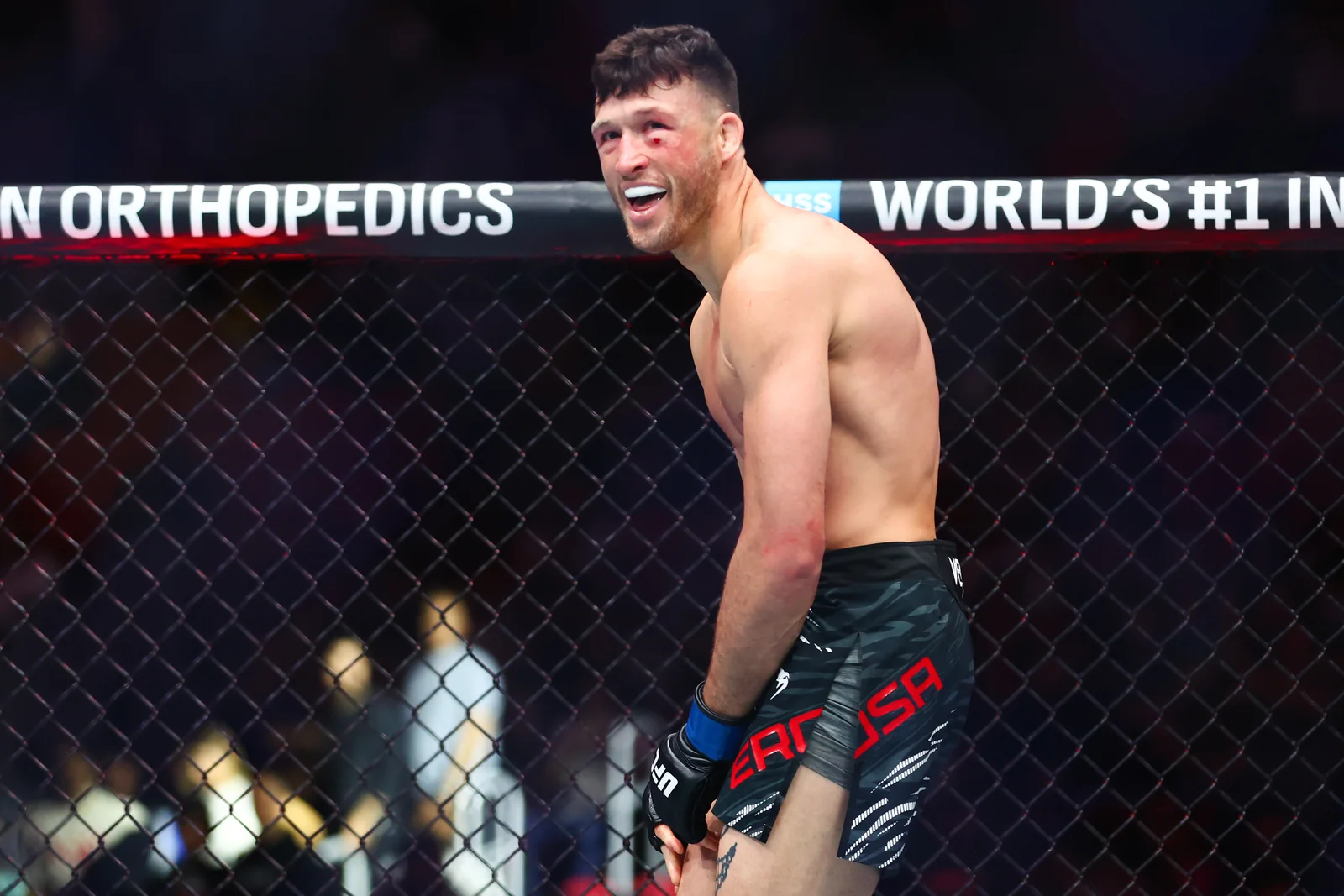
Erosa has chosen October 31 as his finish line
Julian Erosa plans to retire after facing Jeong Yeong Lee at UFC Vegas 123 on October 31, 2026, regardless of the result. As of October 29, that is an announced intention before an upcoming fight. He has not already completed his farewell. The distinction respects both the decision he has explained and the contest that still has to take place.
Erosa described the plan in an interview with James Lynch for Fanatics View, subsequently covered by MMA Mania and other outlets. His official UFC profile also identifies the October 31 assignment as his retirement fight. This is therefore more substantial than speculation generated by a difficult recent result or a supporter wondering whether a veteran should stop.
His reasoning addresses a familiar problem for competitive athletes: neither winning nor losing necessarily supplies a natural stopping point. Success can encourage another attempt because the work still feels rewarding. Defeat can encourage another attempt because the athlete wants to leave with a better performance. Erosa wanted to choose the date before either reaction became the dominant feeling.
That helps explain why the Lee bout matters even though his longer-term intention is settled. He still wants another UFC victory. The planned end does not remove the competitive goal; it sets a boundary around pursuing it. Watching the fight as a ceremonial goodbye would miss the distinction between honoring a career and assuming an opponent will cooperate with the desired ending.
At 37, Erosa enters after losses to Melquizael Costa and Lerryan Douglas. Those results belong in the background, but his own explanation extends beyond the losing streak. He has discussed changing priorities, family arrangements and the effort required to continue training. A fair account lets those stated reasons lead instead of reducing the decision to an imagined ultimatum from UFC.
The wider card is covered in our Moicano–Nolan event preview. Erosa's place on it carries a separate story: a fighter whose career repeatedly involved earning another chance has now decided when he wants to stop asking for one.
Fatherhood changed what he wants from fighting
Erosa's explanation centers on a change in priorities after becoming a father. He still values competing, but no longer places it above everything else. In his UFC athlete Q&A, he identifies family as his main motivation and specifically connects that feeling to his son's arrival. The retirement interview describes a choice about how he wants to spend the next part of his life.
This is a different proposition from saying he stopped caring about winning. A fighter can remain committed to the next contest while deciding that preparing for repeated future contests no longer fits his household. The immediate bout requires concentration; a career extending for another year requires a broader commitment. Erosa's decision addresses the second question without excusing him from the first.
The move home is part of a wider decision
Bloody Elbow's account of the Fanatics View interview describes his wife's attempt to help his mother's business in Washington while he trained in Las Vegas. Erosa said maintaining that split with a young child was not sustainable. His plan involves moving the family back to Washington after his fighting commitments, with Yakima identified in the coverage as home.
The details explain why an ordinary question about one more fight is not really about just one evening. Another bout can involve another period of training away from the arrangement the family wants. The attraction of winning again has to be weighed against the time needed to pursue it. Outsiders cannot assign the correct value to those choices simply by looking at a record.
He has also discussed wanting to leave with his health intact. That is a personal goal, not a statement that a particular medical condition has been diagnosed or that continuing would necessarily cause one. It should be reported with the same restraint as any athlete's explanation of risk. There is no need to invent a medical reason when he has already explained a family reason.
Acknowledging that choice allows fans to appreciate the final assignment without demanding that it validate his decision. If he fights well, it can demonstrate the ability he still possesses. If the night goes badly, the disappointment can be real. Neither result determines whether being home with his family is a worthwhile next step.
Three UFC stints make this a different kind of farewell
Erosa's UFC career contains eighteen completed bouts entering the Lee assignment, spread across three separate stays on the roster. His first appearance followed The Ultimate Fighter 22, where he represented Team Faber. He beat fellow cast member Marcin Wrzosek by split decision in December 2015, then lost to Teruto Ishihara the following March. Those two fights were the first chapter, rather than the beginning of an uninterrupted decade in UFC.
Returning through the Contender Series
After competing regionally, Erosa knocked out Jamall Emmers in the second round of a June 2018 Contender Series bout. There is a useful correction to a common abbreviated account: UFC's own March 2026 retrospective says he was not awarded a contract that evening. A short-notice opportunity later that year brought him back. Winning on the show and receiving a contract immediately afterward are different events.
The second stint was difficult. Devonte Smith, Grant Dawson and Julio Arce all beat him before he returned to regional competition again. These were specific competitive setbacks, not a straight upward prospect narrative. They also explain why the next invitation carried such importance: an opportunity to come back does not necessarily appear after a fighter has already left twice.
The 2020 comeback became his longest run
Against Sean Woodson in June 2020, Erosa secured a third-round D'Arce choke at 2:44. He later identified that fight in his UFC Q&A as the most meaningful of his career, explaining that the short-notice assignment kept his ambition alive. His description of taking the opportunity on three days' notice supplies the human context behind the result without needing to invent an official round-by-round score.
The submission also illustrates why completed bout counts need care. Contender Series competition and the bouts filmed for The Ultimate Fighter do not simply become additional UFC event appearances. The official history, from Wrzosek through Douglas, is the relevant sequence when describing the forthcoming contest as his nineteenth Octagon appearance.
This history gives the planned farewell a distinctive meaning. Earlier departures were followed by work aimed at earning another invitation. This time he has a scheduled UFC bout and has explained why he wants it to be the last. Fans can recognize the persistence that brought him back without assuming persistence must always mean continuing indefinitely.
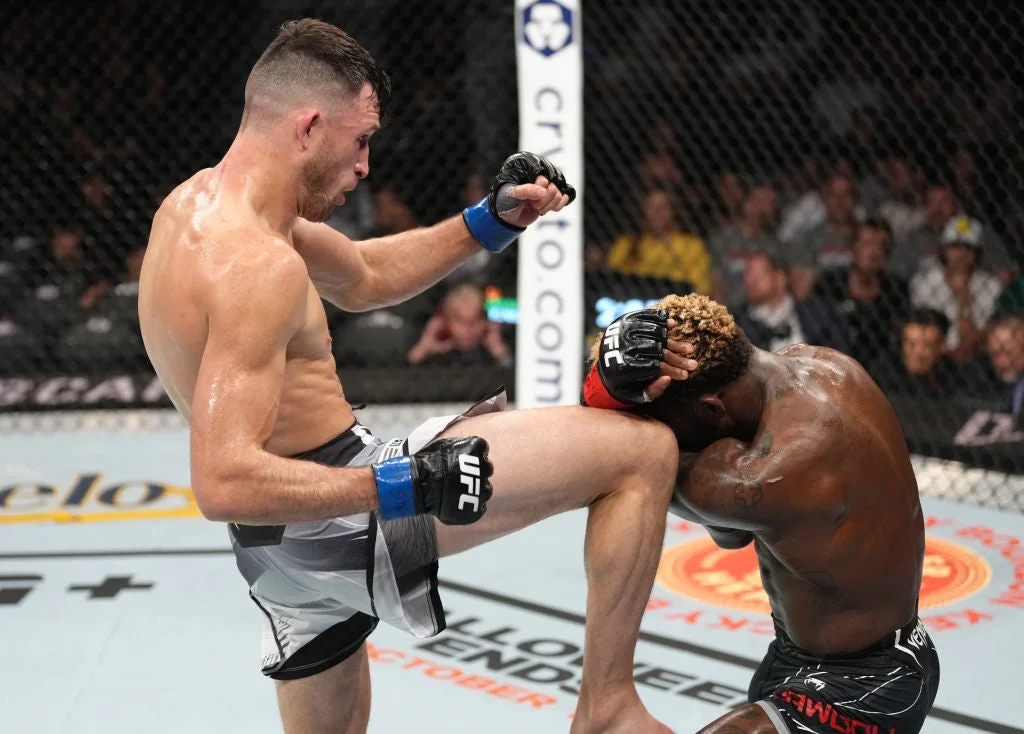
His best nights came from taking difficult exchanges
Erosa's reputation has specific competitive foundations. A first-round stoppage of Nate Landwehr in February 2021 lasted only 56 seconds. Against Charles Jourdain that September, a D'Arce choke finished the contest at 2:56 of Round 3. Those are different kinds of danger: immediate striking damage and a submission available deep into a difficult fight. Neither is captured well by reading only the combined win-loss total.
The 2024 victories over Ricardo Ramos and Christian Rodriguez both came through first-round guillotines. In April 2025 he stopped Darren Elkins with strikes at 4:15 of Round 1. That run demonstrates why opponents have to respect more than one phase. Preparing only to avoid a striking exchange does not remove a choke threat during the transition into wrestling; preparing only to defend the neck can still leave other openings.
In his UFC 314 interview, Erosa discussed the difference between facing a rising opponent and a veteran such as Elkins. He expected fewer easy mistakes from the experienced fighter and considered how the appropriate attacking choices might change as the bout developed. That is evidence of tactical thought behind the action, rather than a fighter simply deciding every exchange should be a brawl.
Entertainment and self-preservation can pull apart
A dangerous exchange offers opportunities in both directions. Moving into range can create the chance to strike or attack a neck, while also giving the opponent a chance to answer. Technical judgment involves deciding when the opportunity justifies the exposure. A highlight reel preserves the successful choice; a full career also records the occasions when the opponent found the better answer.
Erosa has experienced both. His recent Douglas loss ended in the first round, while the preceding Costa bout reached a decision. Those results should not become a retrospective diagnosis of his health or a claim that every aggressive choice was wrong. They illustrate the competitive uncertainty that remains even when an experienced fighter knows exactly what kind of contest he wants.
Fans can appreciate the entertainment he has supplied while respecting a decision to stop accepting that uncertainty repeatedly. A farewell does not require rewriting the setbacks as victories or turning resilience into an obligation. The value of his career lies partly in the memorable tests he took, not in a requirement that he continue taking them indefinitely.
Jeong Yeong Lee has his own career to fight for
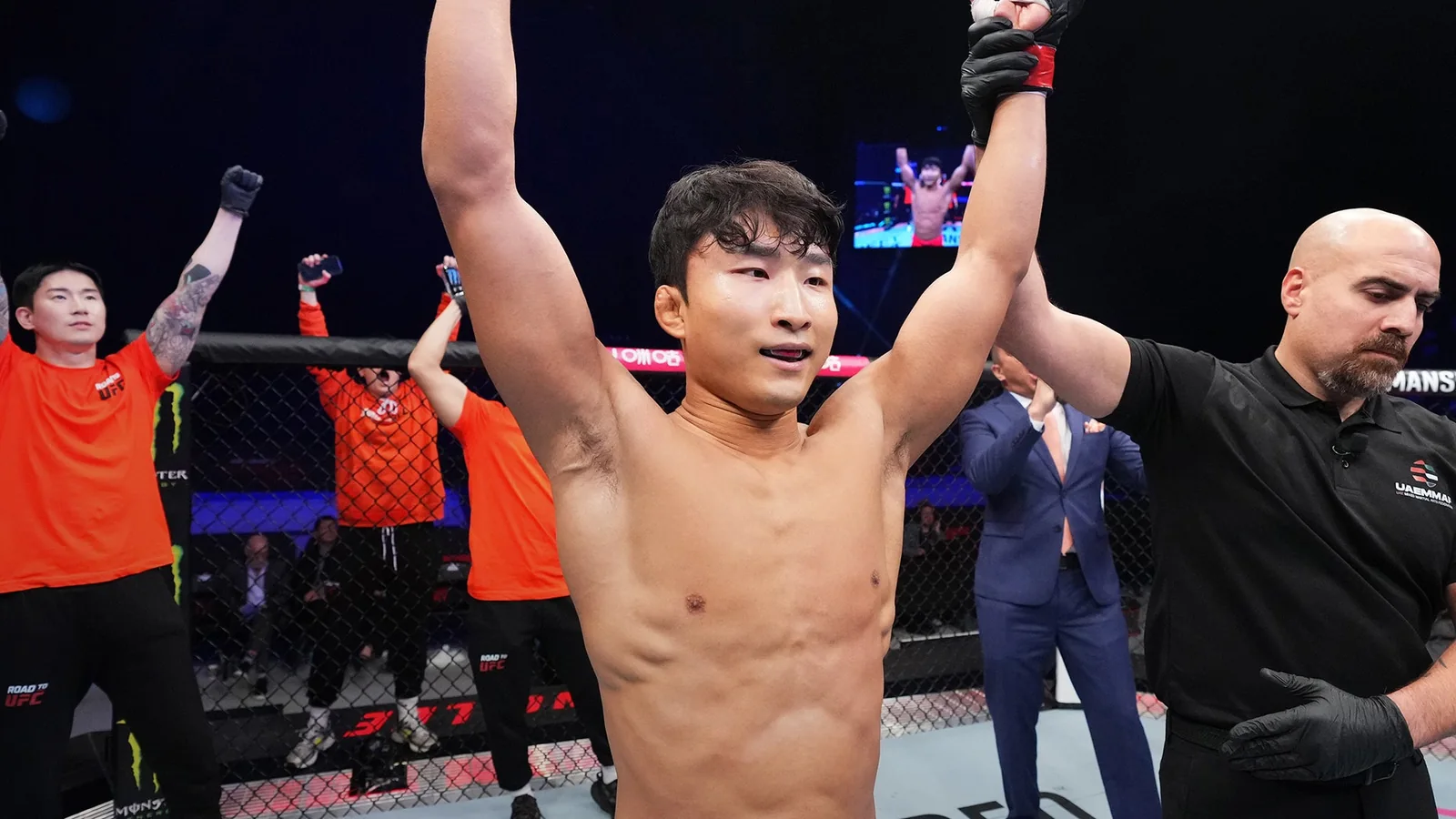
Lee enters this matchup with a problem of his own to solve. The South Korean featherweight has lost his last two completed UFC bouts: a first-round stoppage against Hyder Amil in July 2024 and a unanimous decision against Daniel Santos at UFC 315 in May 2025. Erosa's retirement announcement does not turn Lee into a supporting character whose only purpose is to provide a pleasing final result.
Lee's official history explains why the assignment remains interesting. He won the inaugural Road To UFC featherweight final against Yi Zha by split decision in February 2023, then defeated Blake Bilder unanimously a year later. Before the final, his tournament wins came rapidly: an armbar against Xie Bin and a knockout of Lu Kai. The tournament route established opportunities, while the subsequent UFC results have provided a harder, more uneven test.
That background makes a simplistic striker-versus-grappler description inadequate. Lee's record includes submission wins as well as knockouts, and his athlete profile lists Brazilian jiu-jitsu and taekwondo credentials. Erosa has also won through both striking and chokes. The more useful question is which fighter can connect his preferred phases while denying the opponent the transition he wants.
For Erosa, attacking Lee's neck during a scramble may be valuable, but reaching for a submission without controlling the position can create its own problems. For Lee, reacting to pressure requires more than being willing to exchange. Maintaining balance, choosing exits and keeping the next defensive task in view can matter when an experienced opponent changes from strikes to grappling.
These are matchup questions, not a prediction that either man will execute a particular finish. Their earlier results identify capabilities and vulnerabilities; they do not supply a script for October 31. A veteran can still surprise a younger opponent, and a younger opponent can make a difficult farewell even more difficult.
The best way to respect Erosa's final assignment is therefore to take Lee seriously. A competitive opponent gives a last win its meaning if it comes. If Lee wins instead, the result will belong to his own career and his efforts to regain momentum. Both men have something concrete to pursue when the preliminary-card bout begins.
Follow the farewell on the preliminary card
The official UFC preview lists Erosa against Lee on the preliminary card for the October 31 event at Meta APEX in Las Vegas. That placement is important for anyone arriving only for the Moicano–Nolan main event. A headline start time is not the time every fighter on the card walks out, and waiting for the Main Card could mean missing the bout this article is about.
Check the current running order and your regional viewing arrangement near the event. UFC's preview names Paramount+ for the United States, while access elsewhere depends on the country. Card order and broadcast segments can change. Even with the correct listing, previous bouts can end early or run their scheduled distance, so calculating an exact Erosa walkout from a sequence of assumed fifteen-minute fights is unreliable.
If the farewell is your priority, begin with the preliminary-card coverage rather than trying to join at an estimated minute. Keep the local date in mind when watching outside North America: a Saturday event in Las Vegas can occur on Sunday elsewhere. The relevant date is the one applying to your viewing location, not necessarily the date printed in an American headline.
After the contest, separate the sporting result from the career announcement. The first record should identify the winner, method, round and official time, or the judges' scores if it reaches a decision. The second should describe what Erosa actually says about retirement after the experience. Our UFC results guide provides the results entry point; an emotional interview may require its own context.
There is no need to assume a particular ceremony will happen. Leaving gloves in the cage, receiving an interview or appearing in a tribute package are possible broadcast moments, not requirements that establish whether the earlier decision was sincere. Equally, an announcement before the fight should remain an intention until the night and its aftermath supply the next update.
For now, the plan is clear enough to follow: one more opportunity against Lee, then a return to the family priorities Erosa has described. The bout can add another memorable performance to a career that repeatedly surprised expectations. It does not need to rewrite that whole career in fifteen minutes to make his chosen ending worth understanding.
Fight talk
Comments