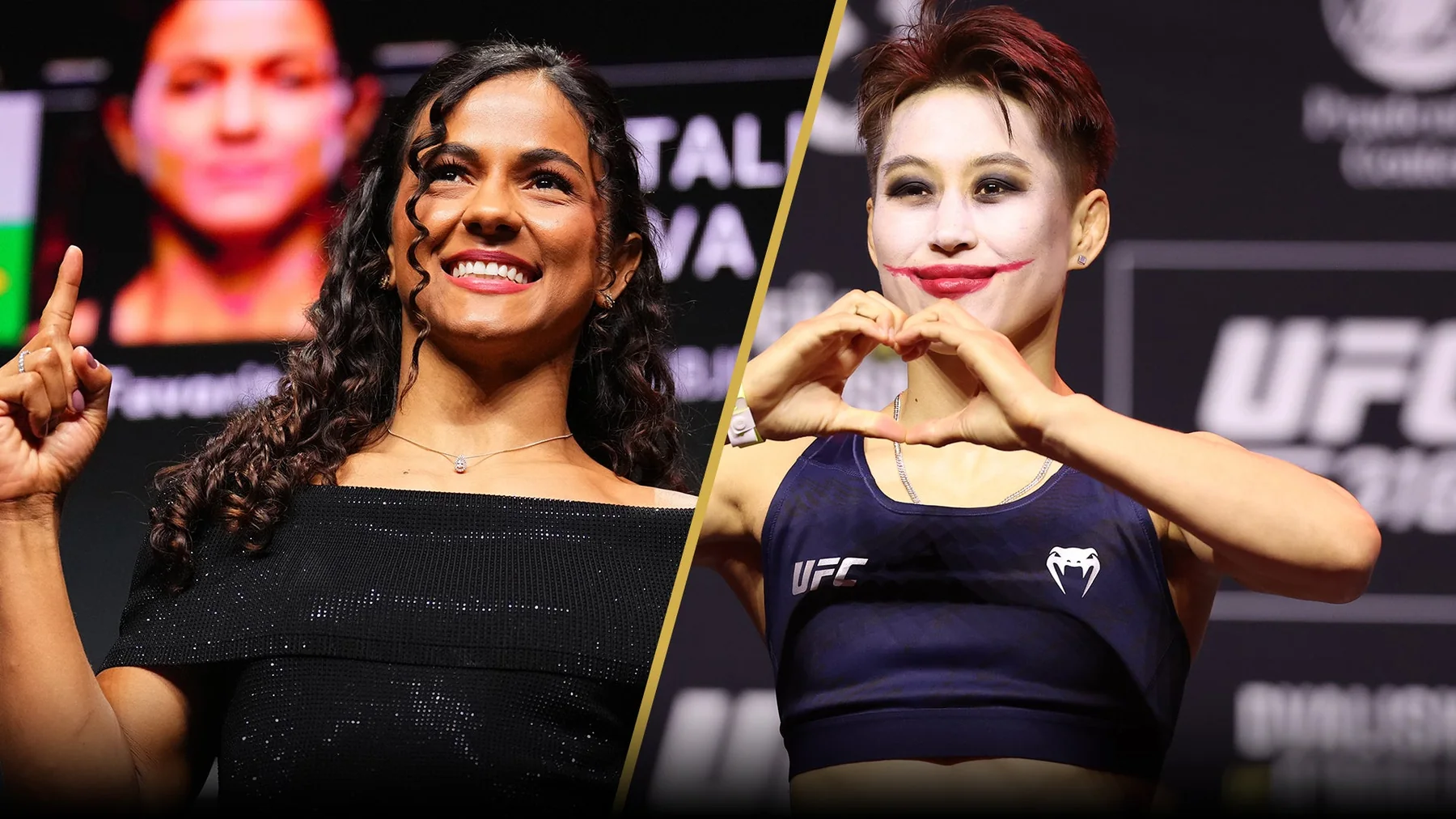
What is at stake in Silva vs. Wang at UFC 332?
Natalia Silva and Wang Cong are scheduled to fight for the vacant, undisputed UFC women's flyweight championship in the UFC 332 main event on Saturday, October 3, 2026. That designation is the essential starting point. An earlier search result or social post may call the matchup an interim-title fight, but the UFC's championship announcement calls the title vacant and undisputed after Valentina Shevchenko stepped away. The winner is set to become the division's champion through this bout, subject to the fight taking place as booked. Neither contender enters as the defending UFC champion.
That distinction is more than a word on a poster. An interim champion usually exists alongside a reigning titleholder and faces an expected unification question. A vacant championship instead starts a new reign. It also changes how fans should understand the matchmaking: Silva and Wang are competing to settle the top of the division while the former champion is unavailable, rather than waiting beneath an active champion's claim. It does not tell us who the winner will defend against first, whether Shevchenko will return at flyweight, or what priority any returning former champion would receive. Those are future decisions, not part of the announced UFC 332 terms.
The venue and broadcast give this title fight a conspicuous stage. UFC 332 is booked for Delta Center in Salt Lake City, with the U.S. main card scheduled for 8 p.m. Eastern / 5 p.m. Pacific on CBS and Paramount+, according to the broadcaster's event guide. A numbered event on a broadcast network invites scrutiny of the headliner as well as the quality of the whole card. Fans can reasonably debate the matchup's star power, but that debate should begin with the correct sporting stake: this is the contest to crown the next undisputed women's flyweight champion.
Bookings and broadcast order can still change in fight week. For ticket and venue decisions, use the site's UFC 332 ticket and schedule guide; this article focuses on why the championship became available, how each challenger got here, and what their fight could reveal.
Why did Valentina Shevchenko vacate the flyweight title?
The UFC's stated reason is an extended absence. In its September 5 championship announcement, the promotion said Shevchenko told it she would be unable to compete for at least a year. A later UFC feature on Alexa Grasso described the former champion as relinquishing her title because of injury. Those are the solid public facts. The UFC did not provide, in those announcements, a diagnosis that readers can independently use to calculate a recovery date.
What the UFC has actually confirmed
The official UFC 332 announcement connects three developments: Shevchenko could not take the planned bout, the belt was made vacant, and Silva against Wang became the title fight. That is a stronger account than old headlines that speculated about an interim championship while the replacement was still taking shape. The official status is now a vacant undisputed title. Calling Shevchenko the current champion at fight time, or calling the October 3 winner an interim champion, would give readers the wrong championship map.
Some reports relay a coach's description of the injury. Such an account may help explain the news cycle, but it is not a UFC medical bulletin and does not establish an exact timetable. Nor should a fan infer that the title change was punishment. A fighter can relinquish a championship when a long absence prevents the division from moving through its usual title schedule. The relevant consequence for flyweight contenders is immediate: there is a recognized championship opportunity this October rather than a wait for an unavailable champion to defend.
What her exit does not tell us about a return
The announcement does not promise Shevchenko a particular comeback date, an automatic bout with the UFC 332 winner, or a return at a specific point in the rankings. Even an accurate estimate of time away can change when a fighter resumes full training, receives medical clearance, and accepts an opponent. A championship booking adds negotiations and scheduling on top of those questions. Fans can hope for a future meeting, but they should not treat that hope as a confirmed unification fight. There is no interim champion waiting to unify with her after the vacancy.
This distinction also protects the new title fight from being framed as a placeholder. Silva and Wang must win the bout in front of them. If a former champion later comes back, the promotion can decide how to match her in the division that exists then. In the meantime, other contenders can continue to earn positions rather than have every result interpreted as a wait for one athlete's recovery. The most accurate fight-week summary is simple: Shevchenko's extended unavailability opened the belt; the UFC has scheduled two available challengers to settle it.
How did Natalia Silva and Wang Cong reach this title fight?
Silva has the clearer résumé against established UFC championship names; Wang has a live winning streak and a dangerous stand-up game, but less evidence against the division's top tier. That difference is the heart of the matchmaking discussion. In its September 11 event release, the UFC listed Silva at No. 1 and Wang at No. 8 among women's flyweights. Those positions describe the promotion's ranking snapshot, not a rule that the two highest numbers must always receive every vacant-title booking. Availability, recent form and the event date also shape a card.
Silva's route through former champions
The UFC's title announcement traces Silva's last three victories through former champions Jessica Andrade, Alexa Grasso and Rose Namajunas. She entered this booking on a 14-fight overall winning streak, with eight UFC victories in eight attempts after the Namajunas bout. Beating that sequence establishes more than name recognition. Andrade brought pressure and physicality, Grasso presented a former flyweight champion's boxing and positional awareness, and Namajunas posed a different distance and timing problem. Silva has had to solve more than one type of elite opponent.
Still, the latest result deserves accurate scale. At UFC 324 in January, Silva beat Namajunas by three 29–28 scorecards. The UFC's fight account described a close, tentative contest in which modest changes in activity and a late scramble mattered. It was evidence that Silva could win a tight fight against a former champion, not proof that she dominated every round. A title bout against a different striker asks her to repeat that decision-making for a scheduled five rounds.
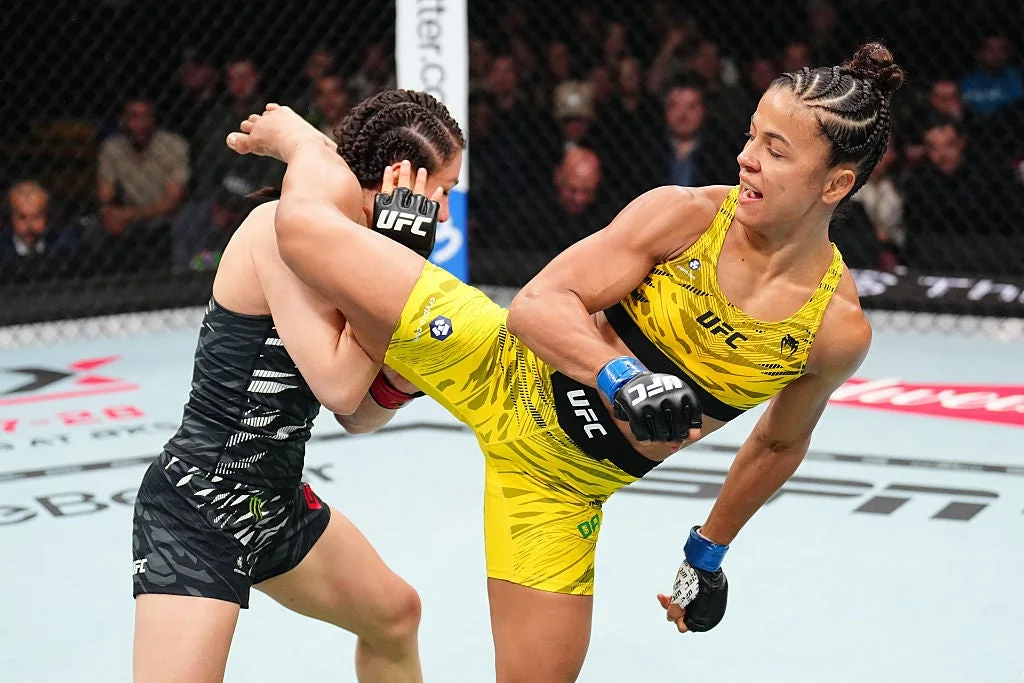
Wang's four-fight rebound and the contender debate
Wang's path is less linear. Gabriella Fernandes submitted her by rear-naked choke in round two in November 2024, according to the UFC fighter record. Wang then won four consecutive Octagon bouts. The most recent was a July 2026 unanimous decision over Tracy Cortez at UFC 329. UFC coverage credits Wang's leg kicks and boxing but also records a point deduction for an illegal knee to a downed Cortez; all three final cards read 29–27. Her win remains a strong result, while the foul is a relevant detail for anyone assessing composure and rules awareness.
The objection to Wang's title shot is understandable: a No. 8 contender has not assembled Silva's run through former champions. But calling her an arbitrary replacement ignores the comeback from a real submission defeat and the Cortez win. The more useful fan question is whether Wang's improving cage craft can hold up when the opponent is Silva and the stakes stretch beyond a standard three-round test. On fight night, the rankings will stop being an argument and become a question the fighters can answer in the Octagon.
Where can the five-round fight turn?
The central tactical question is who controls the first exchange and, just as important, the position after it. Silva's movement has helped her make opponents reset; Wang has shown that she can attack legs and connect with straight punches while moving forward. A title fight gives each woman more chances to revise that pattern, so a strong opening five minutes is only the first clue. The useful viewing test is whether one fighter repeatedly lands cleanly without paying for her exit or entry.
Silva's distance management against Wang's entries
UFC's flyweight divisional review singled out Silva's striking and footwork after the Grasso win. That style can frustrate a pursuer if Silva kicks, angles away, and makes the next attack start from too far out. But her Namajunas fight is a caution against assuming movement alone wins a round. The UFC 324 recap called the contest tentative and credited small shifts in activity. Against Wang, Silva will need her exits to accompany visible scoring, not simply make Wang miss at range.
Wang's clearest recent blueprint is the Cortez fight. UFC's July report describes repeated kicks to Cortez's lead leg and clean boxing over 15 minutes. Those attacks could make Silva less willing to plant and burst out, especially if Wang can follow a kick with a punch rather than lunge at an empty target. The risk runs both ways: a straight-line entry can give Silva a countering lane, and chasing without clean impact will not automatically persuade judges. Look at who lands the better shots at the end of combinations, not just who occupies the center of the cage.
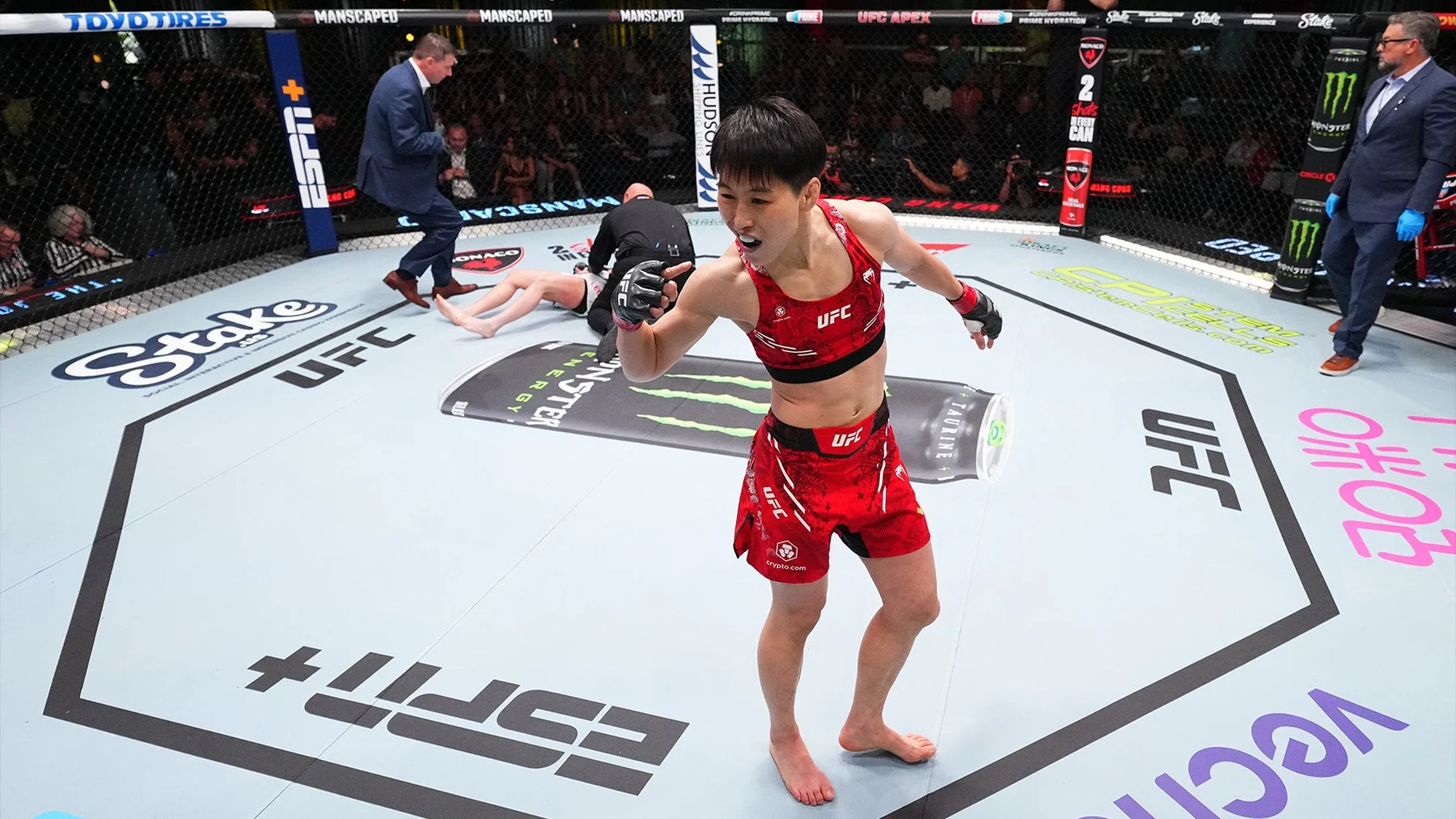
What changes after the first ten minutes
Both fighters' latest cited tests lasted three rounds, while the title main event is scheduled for five. Rounds three through five could reward the athlete who can keep making good choices as the opponent adjusts. If Silva's early kicks draw a different stance or a takedown attempt, can she change her exit without losing offense? If Wang's leg work is checked or countered, can she enter behind a different combination? These are questions, not a claim that either woman lacks stamina. No previous result against someone else can settle their endurance in this specific matchup.
Grappling is an additional test, even if the build-up emphasizes striking. Wang was submitted by Fernandes in 2024; Silva's late top position against Namajunas showed she can capitalize on a scramble. Neither fact guarantees a repeat here. Watch whether a takedown attempt produces meaningful offense or merely interrupts the striking rhythm. Round scoring rewards effective work, and a fighter who wins the visual battle early can still lose if she gives away cleaner late exchanges. That uncertainty is precisely why the championship distance adds substance to this pairing.
Why are some fans criticizing the UFC 332 main event?
The criticism combines two different judgments. One asks whether Wang has faced enough of the division's elite to jump from a No. 8 ranking in the UFC's September event release into an undisputed title fight. The other asks whether a numbered event on CBS has enough established stars below its headliner. Neither question erases Silva's strong record or the championship's significance, but both are legitimate ways to evaluate a card before paying for a seat or setting aside an evening. The mistake is to treat a debate about promotion and matchmaking as a prediction that the athletes cannot deliver.
The star-power complaint and Figueiredo's reply
SI's September report documents the negative reaction and Deiveson Figueiredo's response. Figueiredo, a former UFC flyweight champion now competing at bantamweight, found the criticism frustrating and argued that a lineup that looks modest before the event can become compelling in the cage. He also said he had not expected to be the co-main event. Those are his reported views, not a measurable verdict on how the fights will play out.
A fair critique should be specific. Wang's four-fight rebound is real, yet her biggest UFC win came over Cortez and she has not matched Silva's three consecutive former-champion wins. Fans who wanted a challenger with a longer record against the top five can make that argument without claiming Wang is unqualified to compete. Conversely, Silva has earned a title opportunity by a route few contenders can match. An undisputed belt and a credible No. 1 contender make the headliner consequential even if its broader name recognition is still developing.
What the supporting card adds to the argument
The UFC's announced five-bout main card includes Figueiredo against rising bantamweight Payton Talbott; King Green against Esteban Ribovics; Roberto Soldic against Khaos Williams; and Ateba Gautier against Roman Kopylov. Figueiredo brings recognized championship experience to a meeting with a much younger contender. The other pairings offer contrasting striking pace and power, even though the UFC has not presented them as additional title fights. That is a different appeal from a card filled with reigning champions or long-established headliners.
Fans can decide that mix is insufficient for their expectations of a numbered event. They can also find value in a real vacant-title contest plus several developmental tests. What cannot be settled before October 3 is whether the actual fights will be memorable. A famous name does not guarantee a competitive bout, and a less famous fighter can turn a close matchup into the night's defining performance. The most useful way to watch is to hold two thoughts together: the criticism reflects reasonable expectations, and the athletes still have the chance to answer it with their work.
When and how can fans watch UFC 332?
UFC 332 is scheduled for Saturday, October 3, 2026, at Delta Center in Salt Lake City. For U.S. viewers, the UFC's viewing guide and Paramount+'s event guide agree on three different start windows. The vacant-title headliner belongs to the main card, but neither source promises a precise walkout time for Silva and Wang. Earlier bouts, stoppages, decisions and broadcast breaks all affect when the final fight begins.
| Segment | Eastern / Pacific | U.S. coverage |
|---|---|---|
| Early Prelims | 4 p.m. / 1 p.m. | Paramount+ and UFC Fight Pass |
| Prelims | 6 p.m. / 3 p.m. | Paramount+ |
| Main Card | 8 p.m. / 5 p.m. | CBS and Paramount+ |
In Salt Lake City, the main-card broadcast starts at 6 p.m. Mountain time. CBS carries the U.S. main card, not the Early Prelims or Prelims; Paramount+ covers the full event in the United States. The broadcaster says a subscription includes this numbered event without a separate pay-per-view purchase. Viewers outside the U.S. should check their local rights holder through the site's UFC viewing directory rather than assuming the same CBS or Paramount+ access applies abroad.
If the title bout is your priority, be ready before the main card and watch the preceding bout so an early finish does not catch you out. If you want the entire event, begin with the 4 p.m. Eastern opening segment. Check the full UFC 332 schedule and ticket guide and the official UFC event listing again during fight week, especially after weigh-ins. The announced matchup and order remain subject to change until the fights actually take place.
Fight talk
Comments