Why Moicano vs Nolan is more than a prospect test
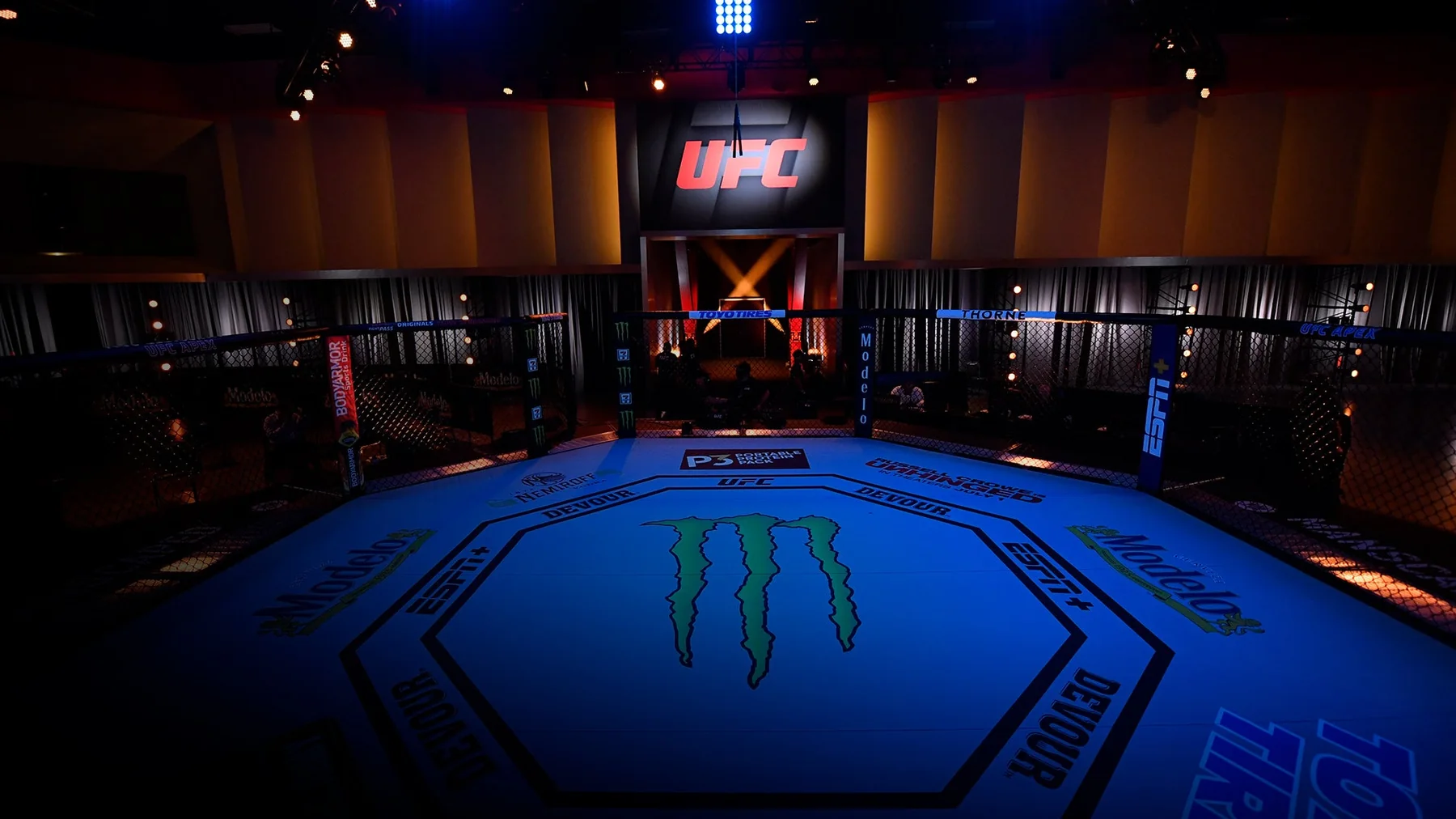
Renato Moicano faces Tom Nolan in the lightweight main event of UFC Fight Night 292 on Saturday, October 31, 2026, at Meta APEX in Las Vegas. The attraction is a clear competitive question: can the younger, longer fighter keep creating offense before the veteran turns their exchanges into grappling? It is a test of how two careers translate into the same five-round fight, rather than a simple comparison of their win totals.
As of October 19, the matchup is scheduled and the result remains unwritten. The official UFC event page lists Moicano vs Nolan as the lightweight headliner. Keep the Moicano vs Nolan event listing available for the card and start-time updates; this preview concentrates on the decisions that should matter once the fight begins.
Their listed professional records, 21-7-1 for Moicano and 11-1 for Nolan, describe different amounts of experience. They do not settle the quality of that experience. A veteran’s losses can contain useful information about elite opposition, while a prospect’s victories still need to be examined for the positions, opponents and pace that produced them. The relevant evidence lies inside those fights, not in treating a cleaner record as an automatic advantage.
For Moicano, the essential question is whether he can make contact on favorable terms and keep the initiative after doing so. For Nolan, it is whether his preferred striking distance survives the first sustained grappling sequence. Both questions can become more demanding over five rounds. A successful first takedown is not necessarily a repeatable route through an entire fight; a sharp first round does not automatically establish late-round control.
The analysis below separates documented past performances from an editorial reading of the matchup. It does not assume a guaranteed title opportunity, a fixed fight-night lineup or a result before the athletes compete. What makes the headliner worth watching is the possibility that each fighter forces the other to answer a question his raw record cannot answer alone.
Moicano’s route: turn entries into sustained offense
Moicano’s most convincing route is to connect phases of the fight. A punch can make Nolan retreat; retreat can create fence contact; fence contact can lead to a takedown or a scramble. The important question is whether Moicano keeps improving his position after that first connection. Judging his chances only by the number of takedowns he completes would miss much of the work that makes his offense dangerous.
What his recent wins show
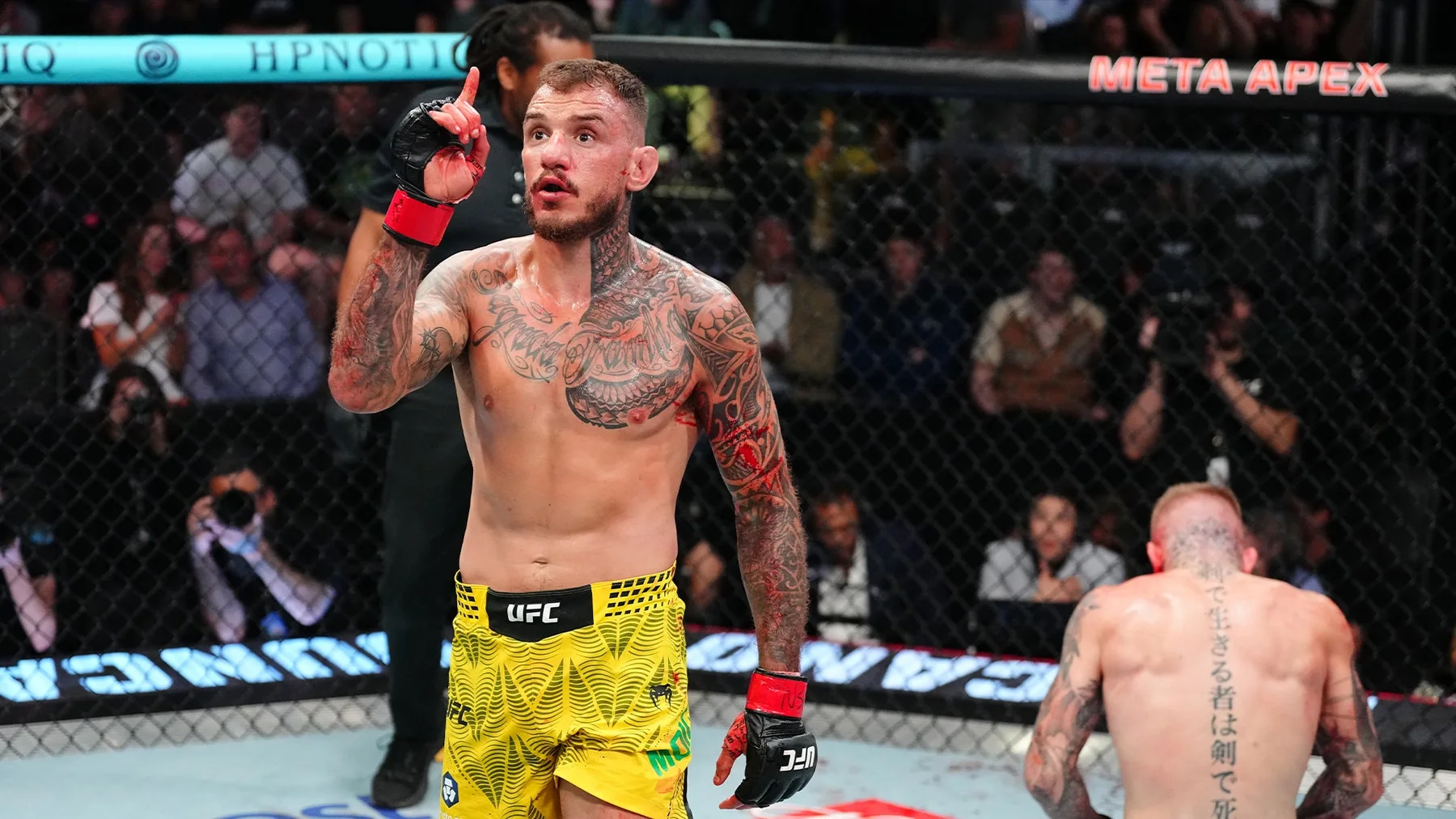
His April 4, 2026 win over Chris Duncan provides a useful example. UFC’s results account describes a hook that dropped Duncan in the second round, followed by ground strikes, a move to the back and a rear-naked choke at 3:14. That sequence matters because the submission did not arrive in isolation. Striking created the opening and pressure on the ground made the next position available.
The official Moicano profile lists eleven submission victories, all by rear-naked choke. For a viewer, that history makes back exposure a more meaningful warning than a generic statement that he is good at jiu-jitsu. If Nolan turns away while trying to stand, watch whether Moicano remains attached and controls the next exchange. A successful escape requires separation, not merely a moment spent upright.
The September 2024 win over Benoît Saint Denis also shows that control can produce a stoppage through damage. That fight ended by doctor stoppage after the second round. Taken together, these performances suggest an opponent cannot defend only the choke and consider the problem solved. Moicano can make prolonged defensive positions costly even when a submission is not immediately available.
Where his losses complicate the picture
His 2025 defeats prevent an easy conclusion that grappling automatically favors him everywhere. Islam Makhachev submitted him in the opening round of their January title fight. Beneil Dariush then beat him by unanimous decision in June. The latter result is particularly useful context because UFC’s recap describes Dariush applying clinch pressure and positional control after Moicano had early striking success.
Nolan is a different opponent from either man, so those losses should not become a prediction by association. They do show why initiative and position matter more than a broad label such as submission specialist. Moicano needs to establish offense without giving away the very control he wants to use himself. His experience offers several possible answers, but it does not remove the risk of being struck during an entry or forced into a difficult reset.
Nolan’s route: keep the fight long and punish entries
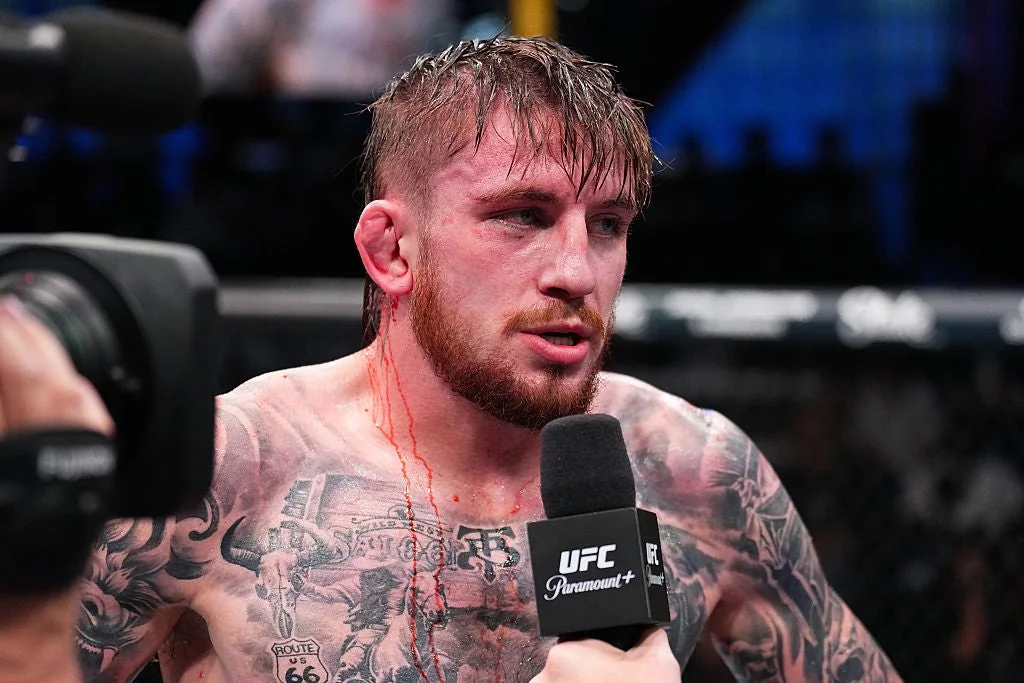
Nolan needs enough distance to recognize Moicano’s approach and enough discipline to regain that distance after an exchange. That does not mean retreating continuously. Giving ground without a useful exit can deliver him to the fence, where Moicano has more opportunities to connect his striking and grappling. The better sign would be Nolan making Moicano restart: an entry interrupted, a short exchange completed and open space restored.
The physical comparison needs care. UFC lists Nolan at 75 inches tall and Moicano at 71, but their listed reaches are 73 and 72 inches. A four-inch height difference is not a four-inch reach advantage. Nolan’s frame may shape the visual matchup, but successful distance management will depend on positioning and timing rather than a measurement alone.
His recent results also deserve more attention than the prospect label. Nolan beat Farès Ziam by unanimous decision on June 6, 2026, after earlier three-round decision wins over Alex Reyes and Viacheslav Borshchev. Those results show experience completing UFC fights, though none proves how he will respond to Moicano’s particular pressure. Ziam is a more recent reference point than Nolan’s early promotional hype, and a useful reason to treat this as a competitive step rather than merely a veteran facing an unknown newcomer.
Nor is Nolan’s offense restricted to striking. His September 2025 victory over Charlie Campbell came by first-round rear-naked choke. That result makes a one-dimensional description misleading. It does not establish parity with Moicano in every grappling position, but it reminds viewers that Nolan can also capitalize when an opponent exposes his back.
Why the Motta loss still matters
Nikolas Motta stopped Nolan with strikes 63 seconds into his January 2024 UFC debut. That is an important boundary on any claim that Nolan can simply overwhelm an experienced opponent with early aggression. A fight can end before the advantages suggested by size, youth or momentum have time to develop.
There is also a limit to what that setback tells us. Nolan subsequently put together five consecutive wins, according to his current UFC profile. The relevant question now is whether his choices remain controlled when Moicano pressures him, not whether one early loss permanently defines him. Punishing an entry and then resetting would answer that question more convincingly than chasing a finish through a messy exchange.
The exchanges that should decide the main event
Three checkpoints offer a practical way to follow this matchup without reducing it to striker against grappler. They concern how contact begins, who controls the exit and whether either man can repeat his preferred work as the fight lengthens. These are analytical questions for the scheduled matchup, rather than claims that either corner has revealed its strategy.
First contact at kicking range
Watch where Moicano stands after Nolan attacks. If Nolan can finish an exchange with space in front of him, he preserves time to recognize the next approach. If his offense leaves him stationary or moving straight toward the fence, Moicano may gain a connection even without winning the initial striking exchange. Conversely, a Moicano entry that repeatedly finishes short gives Nolan opportunities to score and leave.
The useful distinction is between activity and consequence. Several strikes thrown at long range do not automatically prevent pressure. An entry does not automatically establish a takedown threat either. The question is which fighter’s action forces the other to make the next defensive choice. That is a more revealing early signal than deciding the fight from one dramatic exchange.
The fence and the first stand-up
If Moicano puts Nolan against the fence, follow the sequence beyond the first attempt. Does Nolan disengage completely, or does Moicano retain contact and bring him back into another exchange? If the action reaches the ground, does Nolan return to open space or stand with an opponent still attached? Those outcomes create very different demands even if a basic statistics panel records the same number of takedowns.
Moicano’s documented Paris performance supplies the reason to care: he moved through dominant positions while damaging Saint Denis with punches and elbows. Nolan therefore needs to manage both position and incoming offense. From Moicano’s perspective, chasing an immediate submission at the cost of control could surrender a promising sequence. Sustained offense is the stronger sign that his route is working.
Rounds four and five
The scheduled five-round format adds a question that Nolan’s three-round UFC decisions cannot fully answer. Moicano has completed five rounds before, including his short-notice loss to Rafael dos Anjos in 2022. That experience is relevant, but having endured a long fight is different from proving an automatic conditioning advantage in this one.
If they reach the championship-length rounds, watch whether the earlier patterns remain repeatable. Can Nolan still reset after pressure? Can Moicano still create entries without walking into clean strikes? A fighter may win early exchanges through effort that becomes harder to sustain. The late rounds would test the durability of each approach, not merely reward whichever fighter looked busier first.
Two supporting matchups worth following
The October 19 version of UFC’s card also lists Yana Santos against Luana Santos at women’s bantamweight and Azamat Bekoev against Andre Petroski at middleweight. Each offers a more specific reason to watch than an assumption that an entire supporting card must produce knockouts. Lineups can change, so confirm both pairings again during fight week.
Yana Santos vs Luana Santos
Yana arrives with three consecutive unanimous-decision wins in her official history: Chelsea Chandler in August 2024, Miesha Tate in May 2025 and Macy Chiasson in October 2025. Those are useful references for her ability to sustain winning work over three rounds. They give this matchup a different character from a contest built around a veteran’s name without recent results behind it.
Luana brings a judo background and a broader submission record. Her recent UFC results include an americana against Tainara Lisboa in May 2025 and decision wins over Melissa Croden and Karol Rosa. The point is not to assume every clinch becomes a throw. It is to watch who benefits once contact closes the distance and whether a takedown produces useful offense or merely a temporary change of position.
That creates a clear viewing question: can Luana turn transitions into meaningful scoring opportunities against someone with Yana’s recent record of winning complete fights? Conversely, can Yana keep accumulating effective work without offering the younger fighter a favorable grappling exchange? The answer should emerge through repeated sequences, rather than from their shared surname or a single early flurry.
Azamat Bekoev vs Andre Petroski
Bekoev’s UFC start included first-round knockout victories over Zachary Reese and Ryan Loder in 2025. His subsequent defeats are just as relevant: Yousri Belgaroui stopped him in the third round that October, and Tresean Gore submitted him with a third-round guillotine in April 2026. The early finishing threat is documented, but so are recent fights in which he could not keep control of the result.
Petroski beat Rodolfo Vieira by decision in February 2025 before losses to Edmen Shahbazyan, Cam Rowston and Cody Brundage. UFC’s biography also records his wrestling background and several submission wins. That combination makes this a useful test of how each fighter chooses his moments, rather than an uncomplicated power-versus-wrestling matchup.
Watch the cost of initiating grappling and the defensive shape of the fighter who exits it. Bekoev’s loss to Gore gives neck exposure particular relevance; Petroski’s recent stoppage losses make careless exchanges a concern in the other direction. These results identify questions to follow. They do not guarantee that either man repeats an earlier mistake against a different opponent.
Start times, viewing access and the final checks
The scheduled prelim start is 5 p.m. Eastern / 2 p.m. Pacific on Saturday, October 31. The main card starts at 8 p.m. Eastern / 5 p.m. Pacific. UFC’s official event page lists Paramount+ for both portions, and its event announcement says all bouts stream there. These are the United States viewing details verified on October 19, rather than a claim that the same service holds rights in every country.
An 8 p.m. main-card start does not mean Moicano and Nolan enter the Octagon at 8 p.m. The headliner follows the supporting main-card fights, whose duration can vary considerably. Scheduling a reminder only for a guessed main-event time creates an avoidable risk of missing action if earlier bouts end quickly. Connect for the main card if the headliner is your priority, and use the earlier start if you want the complete event.
For account and device preparation, use the UFC viewing guide. Open the service associated with your actual subscription and confirm that you can reach its UFC programming before fight night. A subscription purchased through another platform may require that platform’s viewing route or a supported linking process; an app installation by itself does not establish access.
If the event does not appear or playback fails, the Paramount+ troubleshooting guide separates account access from playback problems. The practical objective is to resolve the problem before a critical exchange begins, particularly if you plan to move from a phone to a television. Do not assume a highlight clip or promotional live show is the full fight broadcast.
Check the updated Fight Night schedule again during fight week for opponent changes, bout order and any revised broadcast times. Weigh-in outcomes and final availability are still future information as of this preview. Searching only for UFC 292 can also return the separate numbered event from 2023; include Fight Night, Moicano vs Nolan and October 31 when checking this card.
Once the broadcast begins, the central questions remain concrete. Can Moicano turn contact into successive offensive positions? Can Nolan finish exchanges with enough space to make the veteran start again? The answers, and whether either approach remains effective over a potential five rounds, are what give this Halloween headliner its interest.
Fight talk
Comments