UFC Lightweight Rankings 2026 Snapshot
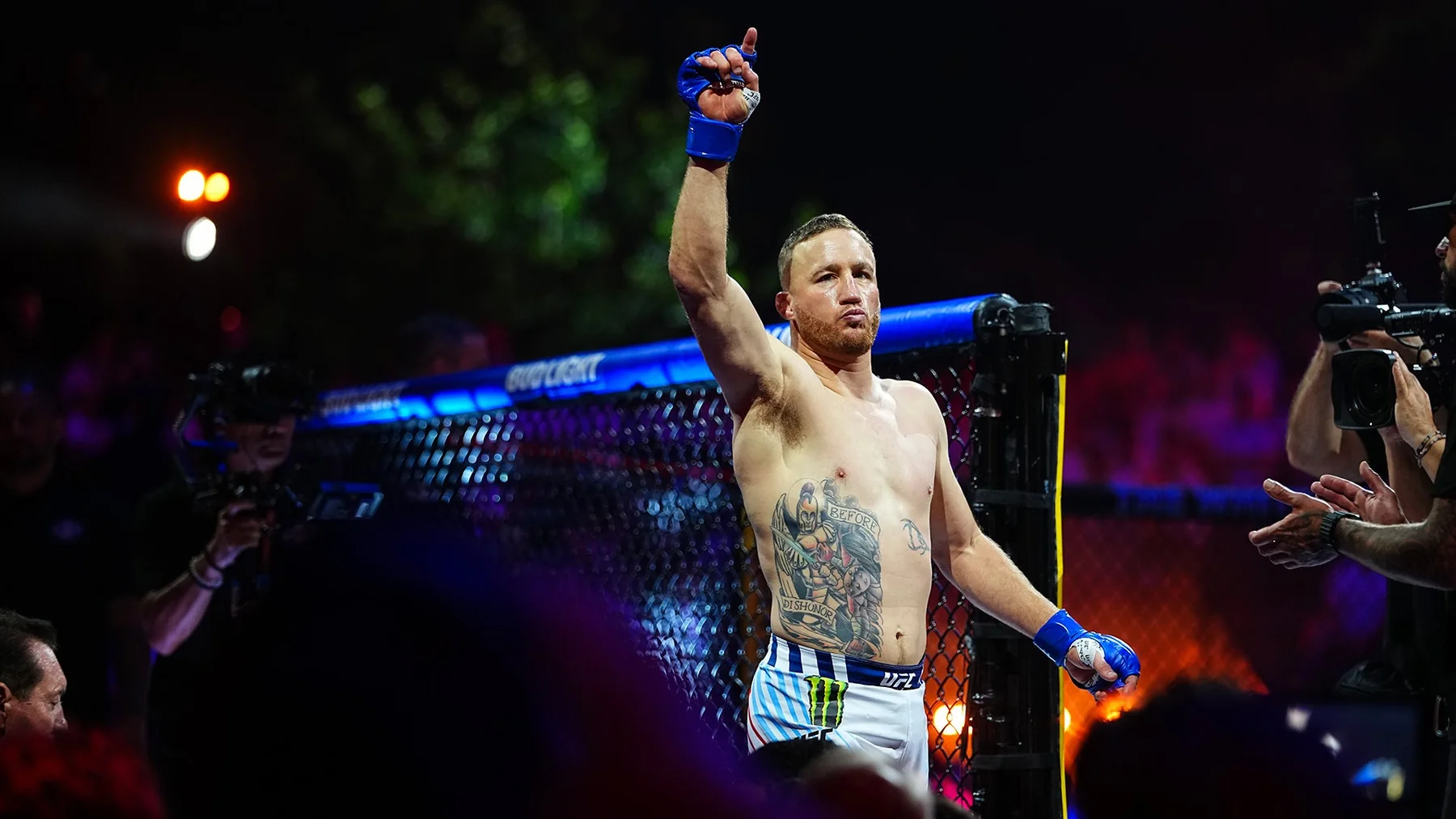
As of August 29, 2026, Justin Gaethje is the UFC lightweight champion and Ilia Topuria is the No. 1-ranked contender on the UFC media-panel list. Arman Tsarukyan sits at No. 2, followed by Charles Oliveira at No. 3. That is the fastest useful answer, but the label matters: the champion is displayed above the numbered contenders, so No. 1 does not mean “co-champion” or “the belt holder.”
This page uses the traditional ranking view visible on UFC.com at the time of our check. UFC also shows a separate Meta ranking view after announcing its data-driven system on June 22, 2026. Those lists can order contenders differently because they are not produced by the same method. Fans who want the machinery behind both systems should read our guide to how UFC rankings work; the purpose here is to interpret the live lightweight order, not repeat the voting rules.
The current 155-pound answer
- Champion: Justin Gaethje
- Leading challenger: No. 1 Ilia Topuria
- Next two: No. 2 Arman Tsarukyan and No. 3 Charles Oliveira
- Snapshot date: August 29, 2026
A ranking is a competitive signal, not a signed bout agreement. Availability, medical clearance, timing, promotional priorities and the result of another matchup can all change who actually receives the next title opportunity. That distinction is especially important at lightweight, where elite contenders bring radically different tests: Topuria’s compact power and timing, Tsarukyan’s wrestling transitions and Oliveira’s submission offense cannot be reduced to adjacent numbers.
Treat every position below as a dated snapshot. Check the current UFC schedule before assuming two ranked fighters are booked, and return after an event involving the Top 15. The table can change without a fighter suddenly becoming better or worse overnight; it records an updated ordering after results, not a permanent talent grade.
Complete Lightweight Top 15
Here is the complete UFC media-panel lightweight order captured on August 29, 2026. The movement and matchup discussion after the table is our editorial interpretation; the names and numbered positions are the dated UFC.com snapshot.
| Position | Fighter | Competitive read |
|---|---|---|
| Champion | Justin Gaethje | Belt holder; separate from contender numbers |
| 1 | Ilia Topuria | First-ranked challenger |
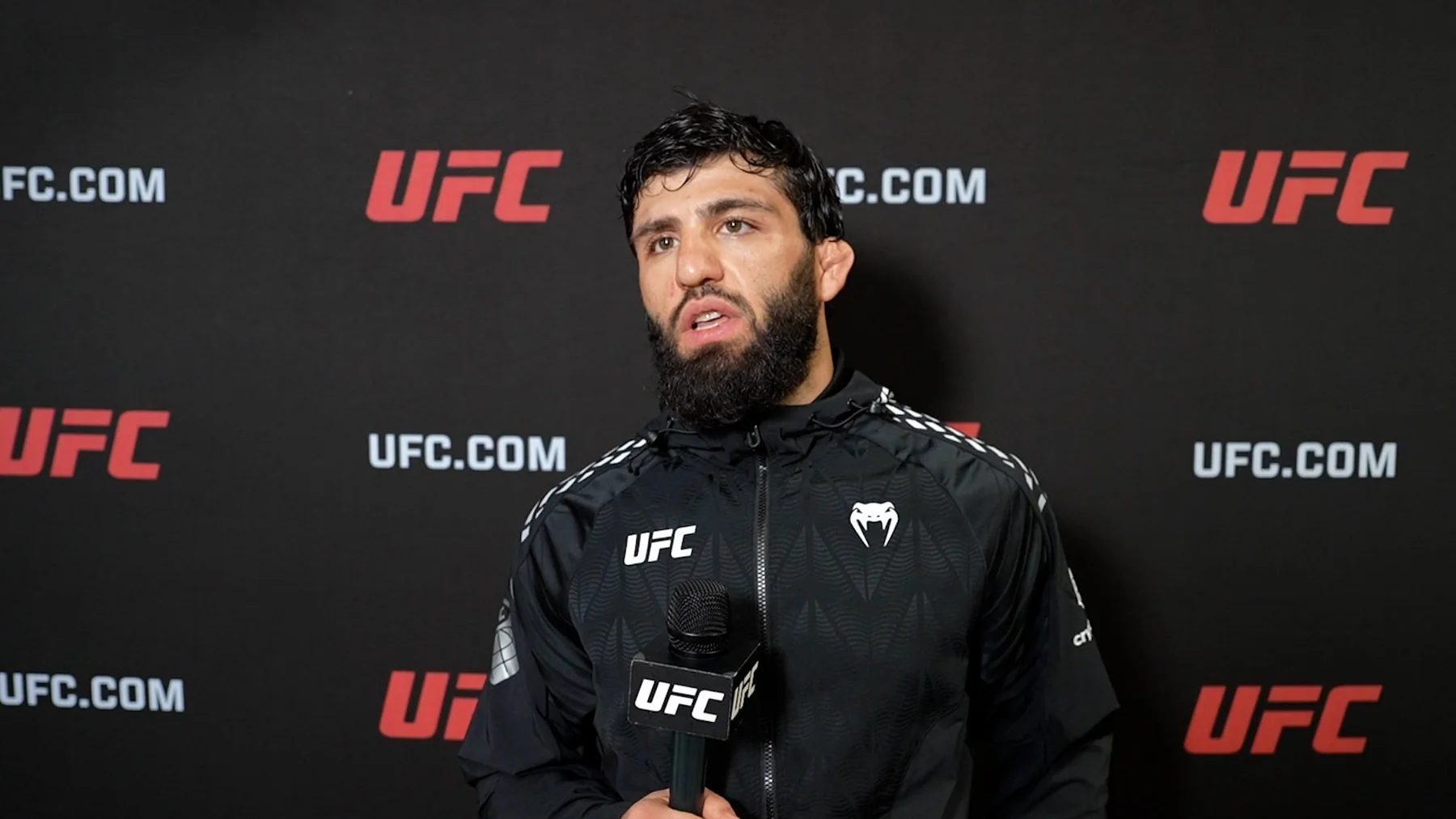
| 2 | Arman Tsarukyan | Elite wrestling-transition threat |
| 3 | Charles Oliveira | Submission and finishing danger |
| 4 | Max Holloway | Volume, durability and five-round experience |
| 5 | Paddy Pimblett | Top-five leverage |
| 6 | Benoît Saint Denis | Pressure and grappling intensity |
| 7 | Mauricio Ruffy | Dynamic striking threat |
| 8 | Quillan Salkilld | Rapidly established ranking foothold |
| 9 | Mateusz Gamrot | Relentless wrestling benchmark |
| 10 | Dan Hooker | Experienced range and attrition test |
| 11 | Renato Moicano | Back-taking and veteran craft |
| 12 | Rafael Fiziev | High-level kickboxing read |
| 13 | Tom Nolan | Newer ranked variable |
| 14 | Beneil Dariush | Veteran grappling and decision-making test |
| 15 | Manuel Torres | Top-15 entry point |
For practical reading, think in three unofficial bands. Nos. 1–5 have immediate championship leverage; Nos. 6–10 can enter that conversation with a high-quality win; Nos. 11–15 are defending or building their ranked foothold. These are not UFC labels. They are a way to understand the consequence of a bout without pretending that every single step carries equal matchmaking value.
A No. 12 fighter beating No. 10 may produce a modest reshuffle. A No. 8 fighter clearly defeating No. 3 can change the title conversation at once. Quality of opposition and recency matter more than simple arithmetic, while the promotion still controls booking. That is why fans should not forecast the next table by mechanically swapping the winner and loser.
Lightweight’s standard upper limit is 155 pounds. Non-title bouts normally allow one extra pound, while championship bouts require the contracted championship limit; our weigh-in and UFC weight-class guide explains that distinction. A scale miss can remove championship eligibility even before the rankings themselves update.
Justin Gaethje and the Lightweight Title Picture
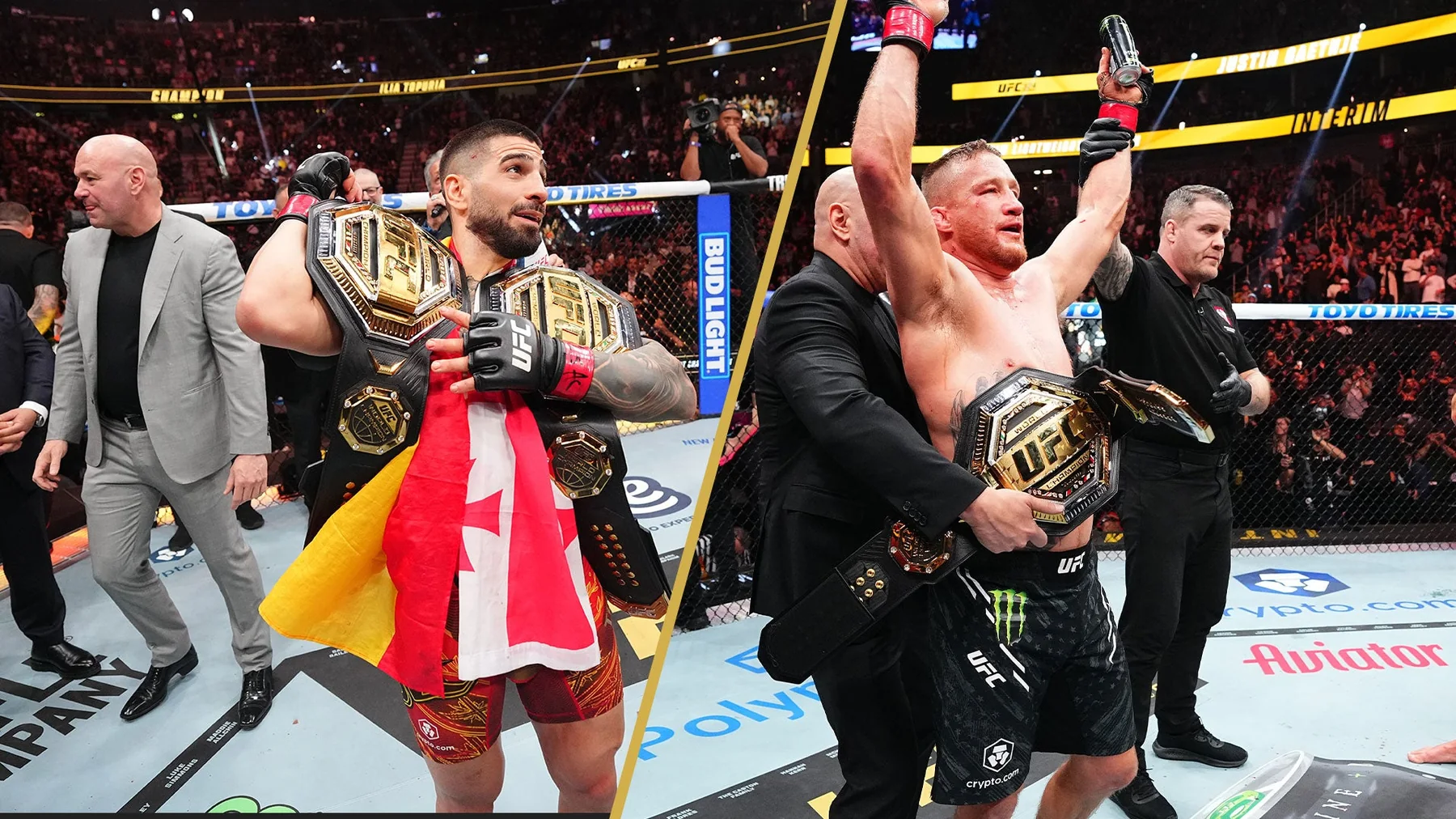
The title picture starts with a confirmed result: Justin Gaethje stopped Ilia Topuria by corner stoppage at 5:00 of Round 4 at UFC Freedom 250 on June 14, 2026. UFC’s official recap says Topuria hurt Gaethje in the second round before Gaethje increased the pressure as the fight progressed. The comeback made Gaethje the undisputed champion and explains why the current No. 1 contender is also the fighter he most recently defeated.
That history makes an automatic “No. 1 gets the next shot” reading too simple. Topuria’s rank recognizes his recent body of work and championship level, but an immediate rematch case must be weighed against the clarity and recency of the loss. The fourth-round corner stoppage was not an ambiguous split decision. On the other hand, Topuria’s early success shows the matchup contained genuine competitive questions rather than four one-sided rounds.
Three different challenger arguments
- Ilia Topuria: No. 1 position, elite finishing threat and evidence that he could hurt the champion; the counterargument is the direct recent loss.
- Arman Tsarukyan: No. 2 ranking and the clearest stylistic change, because his layered wrestling asks different questions of Gaethje; rank alone still does not confirm availability or booking.
- Charles Oliveira: proven submission danger and No. 3 standing; he needs the timing and result landscape to support another championship opportunity.
Our editorial view is that a fresh contender case becomes strongest when it combines a top ranking, a meaningful recent win and a distinct technical challenge. That does not mean the promotion is required to choose Tsarukyan, Topuria or Oliveira in numerical order. UFC matchmaking can account for recovery, contract timing, injury status and event needs—facts that should be confirmed, not guessed.
Gaethje’s own championship performance also changes the tactical baseline. He did not win only through a single early collision; he survived adversity, managed an extended fight and forced a stoppage after four rounds. A challenger must plan for his low kicks and power, but also for a champion who demonstrated the ability to adjust while tired.
Fans can revisit the UFC Freedom 250 event record for the card context. For what is actually next, rely on the confirmed UFC schedule. Until a bout appears there or on an official UFC event page, the challenger discussion remains analysis.
How the Top Five Match Up
The top five cannot be read as five versions of the same challenger. Each changes the champion’s first defensive priority: Topuria demands disciplined pocket exits, Tsarukyan demands layered takedown defense, Oliveira demands submission awareness in every transition, Holloway demands sustainable answers to volume, and Pimblett asks whether his improving all-phase game holds up against championship-level resistance.
No. 1 Ilia Topuria: compact entries and fight-changing power
Topuria showed at Freedom 250 that he could hurt Gaethje, especially during his second-round surge. The problem was sustaining control of the fight as Gaethje recovered and increased the attritional cost. A rematch would revolve around whether Topuria can exit safely after combinations and manage energy when an early finish does not arrive.
No. 2 Arman Tsarukyan: transitions rather than one takedown
Tsarukyan’s value is not simply “he can wrestle.” Elite opponents often defend an initial shot. His threat is the ability to connect attempts, mat returns and positional pressure while still striking well enough to create reactions. Against Gaethje, the key question would be whether he can force repeated defensive cycles without absorbing damaging counters on entry.
No. 3 Charles Oliveira: danger inside imperfect positions
Oliveira makes scrambles expensive because offensive submissions can emerge while an opponent believes he is escaping. His upright aggression can create openings both ways, so the matchup is rarely about risk removal. A contender facing him must distinguish a safe top position from a transition that exposes the neck or back.
No. 4 Max Holloway: accumulated decisions under pressure
Holloway’s volume matters because it forces an opponent to make correct choices repeatedly. Significant-strike totals alone never score a fight; judging is round by round and prioritizes effective striking and grappling. Still, his pace can reveal whether a lightweight maintains footwork, defense and shot selection once the bout becomes an extended exchange.
No. 5 Paddy Pimblett: the top-five verification point
Pimblett’s ranking gives him leverage, but the next level is about proving his strengths against a narrow elite margin. The most informative test would be a matchup that punishes loose entries and forces him to win positions more than once. That is analysis, not an assertion that a particular opponent has been selected.
Do not compare these fighters by mixing statistical categories. Significant strikes are not total strikes, a takedown is not control time, and control does not automatically outweigh damaging offense. Context and round-by-round effectiveness matter. The UFC fighter directory helps fans follow individual records, while the schedule confirms which theoretical matchup becomes real.
Our competitive read: Tsarukyan offers the largest stylistic departure from Gaethje’s recent defense, while Topuria offers the most direct evidence of being able to hurt him. Oliveira and Holloway remain dangerous because their routes to victory are established but different. The ranking order frames those cases; it does not resolve them.
Risers, Gatekeepers and Dark Horses
The most important lightweight movement may come from Nos. 6–10, not from another reshuffle inside the top five. Benoît Saint Denis, Mauricio Ruffy, Quillan Salkilld, Mateusz Gamrot and Dan Hooker each occupy a position from which one convincing win over elite opposition could create a much larger opportunity. “Riser,” “gatekeeper” and “dark horse” are our editorial labels, not official UFC categories.
Mauricio Ruffy has the clearest fresh result
Ruffy, ranked No. 7 in the captured table, stopped Michael Chandler by first-round TKO at 4:29 at UFC Freedom 250. The result supplies recency and visibility, but the next question is more demanding than whether he can produce another highlight. Can he preserve his striking choices when an opponent threatens prolonged wrestling, refuses a predictable exchange or forces him to work late? A top-five test would answer more about his championship readiness than another favorable striking matchup.
Saint Denis and Gamrot stress different parts of a prospect
No. 6 Saint Denis brings pressure that can make a technically sound fighter operate while uncomfortable. No. 9 Gamrot is a different benchmark: his wrestling and persistence can turn a clean first defense into a second and third scramble. A contender who beats either man has not solved the entire division, but has shown a skill that translates upward—composure against pressure or repeatable defensive grappling.
Salkilld is the ranked unknown; Hooker is the experienced stress test
Quillan Salkilld at No. 8 holds a valuable foothold in a division crowded with recognizable names. His ranking creates opportunity and scrutiny at once: future opponents will prepare with more specific film and fewer surprises. Dan Hooker at No. 10 offers almost the opposite profile. His length, toughness and experience can reveal whether a rising fighter has more than an opening-round plan.
The lower five—Renato Moicano, Rafael Fiziev, Tom Nolan, Beneil Dariush and Manuel Torres—should not be treated as filler. They represent grappling craft, kickboxing depth, emerging size and veteran decision-making. For an unranked fighter, beating one is often the first credible proof that his strengths survive a Top 15 opponent. For the ranked veteran, the same bout is about protecting access to meaningful matchups.
Our dark-horse rule is simple: look for a fighter whose recent performance, available matchup and technical breadth can combine into two strong wins, not merely the most spectacular finisher. Use the fighter profiles to inspect records, and the Freedom 250 event page to confirm Ruffy’s result.
What Can Change the Rankings Next
Recheck this lightweight table after any bout involving a ranked fighter, but do not assume every win causes a one-for-one position swap. Rankings synthesize competitive results; they are not a bracket. A clear win over elite opposition usually supplies more leverage than beating a lower-ranked replacement, while inactivity, a move to another division or removal from the active pool can create movement without a head-to-head bout.
- 1. Confirm the bout. Use an official event page or the UFC schedule. A social post, proposed opponent or interview callout is not a signed fight card.
- 2. Check the weigh-in. A scale miss can change whether a bout remains eligible for a championship and can affect how the result is interpreted.
- 3. Read the result precisely. Record winner, method, round and time. For decisions, examine the round-by-round contest rather than using total strikes as a substitute for judging.
- 4. Compare both UFC views. The media and Meta lists may react differently. Always identify which table you are quoting.
- 5. Revisit the title picture. Ask whether the result created a fresh challenger, strengthened an existing case or merely defended a ranking foothold.
Withdrawals and replacements require particular care. A fighter can lose an opportunity without losing a bout, while a short-notice replacement can gain enormous leverage by winning. Neither situation should be described as a formal ranking change until the published list actually changes. Our UFC results hub gives the event outcome; UFC.com remains the source of record for the official ordering used here.
The June 2026 Meta launch adds another update layer. A model designed around performance data can weigh opponent quality, activity and dominance differently from a panel. That does not make every surprising output self-explanatory. Fans should compare the inputs and keep the champion separate from the numbered contenders.
Editorial update standard: this article states the list and capture date, separates UFC-published positions from our tactical tiers, and does not convert rumored matchmaking into fact. If a rank changes, the fighter did not suddenly acquire a new skill overnight; the published assessment changed after new information.
For fight fans, the most useful watchlist is therefore compact: Gaethje’s first defense, Topuria’s response to the Freedom 250 loss, Tsarukyan’s route to an undeniable case, and the first No. 6–10 contender who beats established top-five opposition. Those are the pressure points most likely to reorganize lightweight before the calendar turns.
Fight talk
Comments