Ranking snapshot
Official board date: August 25, 2026. The live UFC page was checked on August 29. This table is a dated standings answer, not a prediction of the next update.
UFC Welterweight Rankings Snapshot: Champion and Top 15
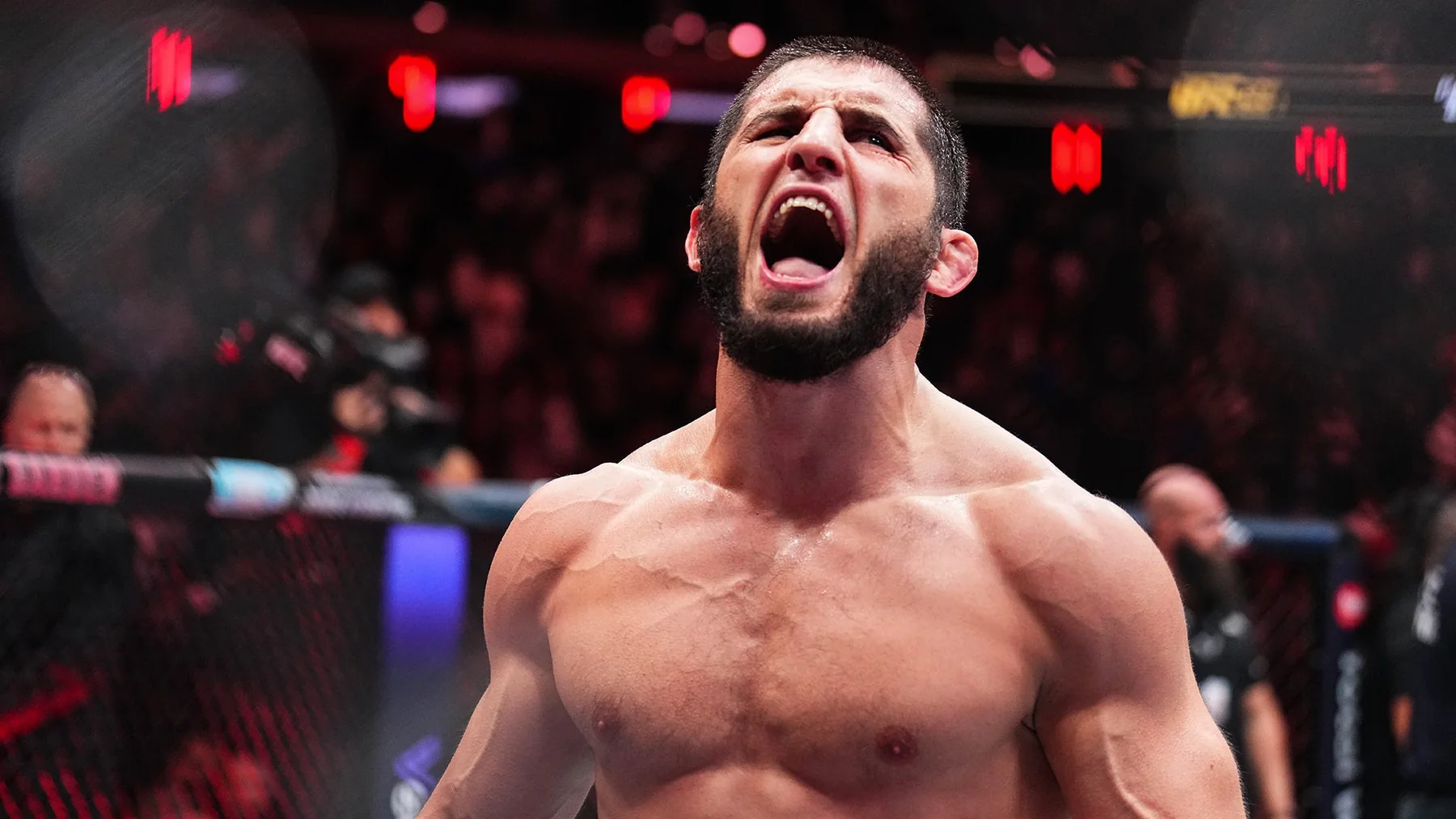
Islam Makhachev is the UFC welterweight champion. Ian Machado Garry is the No. 1 contender on this official snapshot, with Carlos Prates and Michael Morales immediately behind him. UFC displays the champion separately from the numbered challenger board, so contender No. 1 is not another label for the belt holder.
| Position | Fighter | Competitive tier |
|---|---|---|
| Champion | Islam Makhachev | Undisputed champion |
| 1 | Ian Machado Garry | Immediate challenger tier |
| 2 | Carlos Prates | Immediate challenger tier |
| 3 | Michael Morales | Immediate challenger tier |
| 4 | Jack Della Maddalena | Former champion/title tier |
| 5 | Gabriel Bonfim | Upper contender |
| 6 | Sean Brady | Experienced contender |
| 7 | Belal Muhammad | Former champion |
| 8 | Leon Edwards | Former champion |
| 9 | Kamaru Usman | Former champion |
| 10 | Joaquin Buckley | Top-10 pressure fighter |
| 11 | Yaroslav Amosov | Top-15 riser |
| 12 | Uroš Medić | Top-15 finisher |
| 13 | Mike Malott | Ranked development tier |
| 14 | Daniel Rodriguez | Veteran test |
| 15 | Neil Magny | Entry position/veteran test |
The third column is editorial shorthand, not part of the official board. It describes competitive role rather than awarding an extra rank. Recent form, opponent quality, availability and matchup value can all separate two fighters who appear close numerically.
Welterweight is the 170-pound class; our UFC weight-class guide explains why non-title bouts may use a one-pound allowance while championship bouts do not. For the data factors and post-event cadence behind this 2026 board, read how UFC rankings work. The rest of this article focuses on the current fighters and title race rather than repeating that methodology.
Islam Makhachev Sets the Standard at 170 Pounds
Beating Islam Makhachev now requires a challenger to solve a five-round sequencing problem, not merely defend the first takedown. At UFC 330 on August 15, 2026, Makhachev retained the welterweight belt over Ian Machado Garry by unanimous decision. The official scores were 49-46, 49-46 and 48-47, close enough to show resistance but clear enough to preserve the champion's control of the division.
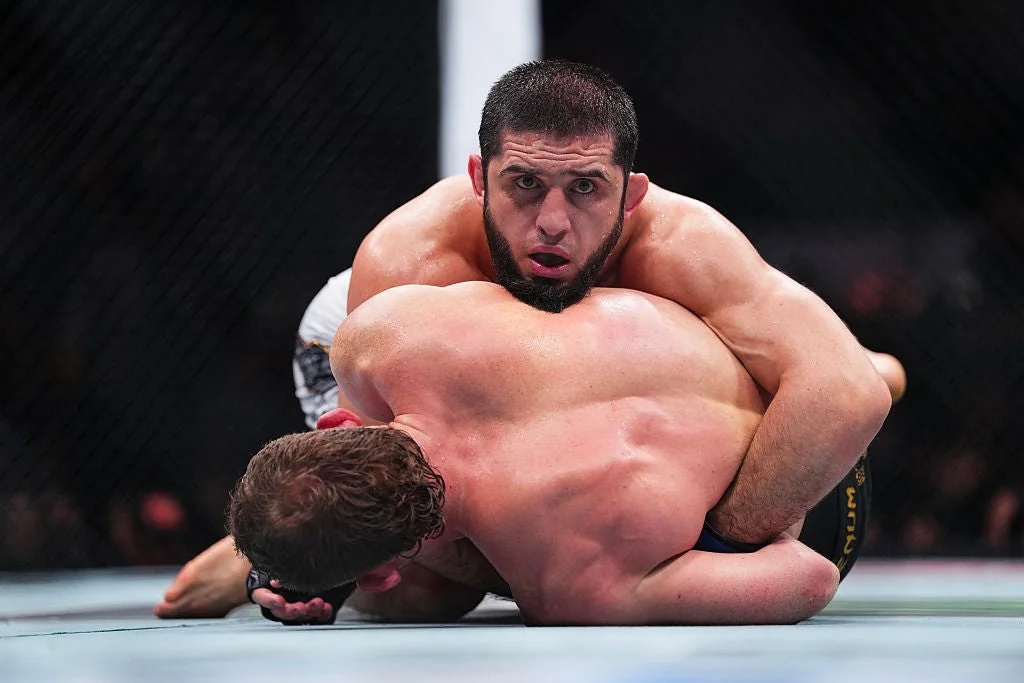
The fourth and fifth rounds explain the technical standard better than a career label such as “grappler.” UFC's recap says Makhachev returned to his wrestling in the fourth, taking Garry down multiple times and staying attached. In the fifth he put the challenger on the canvas, took the back and maintained the position to the horn. Garry landed the better strikes during parts of the fourth, an important reminder that control and effective offense must be read round by round rather than collapsed into one statistic.
What the next challenger must do
Protect every transition
The first sprawl is only the start. A challenger must break grips, avoid exposing the back during stand-ups and reset far enough away that Makhachev cannot immediately reconnect.
Bank effective offense early
Distance success has to produce visible, round-winning impact. Low-output safety can leave too little margin once clinch and mat-control sequences accumulate.
Make him pay for entries
Uppercuts, knees and intercepting combinations matter only if thrown with balance. Overcommitting can hand the champion the body lock or reactive shot he wants.
Preserve late-round decisions
Fatigue changes stance, reactions and get-up speed. Championship preparation must include making correct choices after 20 minutes, not just winning fresh exchanges.
UFC 330 extended Makhachev's promotion-record run to 17 consecutive wins and made him the fifth athlete to defend UFC championships in two divisions. Those achievements support his standing; they do not make him unbeatable. They tell contenders how much layered evidence is required. Our detailed UFC 330 scorecard analysis examines the title fight further. Here, its purpose is to define the standard against which the ranked 170-pound field must be judged.
Ranks 1–5: The Immediate Title-Challenger Pool
Carlos Prates owns the freshest finishing argument, while Ian Machado Garry retains the most complete five-round contender résumé on this snapshot. Michael Morales brings unbeaten momentum, Jack Della Maddalena carries former-champion experience, and Gabriel Bonfim has the division's cleanest recent five-round breakthrough. The order is official; the comparative title claims below are editorial.
No. 1 Ian Machado Garry
Garry lost his title challenge to Makhachev at UFC 330, yet he made the champion work across five rounds and remains No. 1 on the Aug. 25 board. His prior five-round win over Prates matters: Garry controlled the first three rounds with activity, range changes and timed level changes before surviving Prates' late rally. The missing evidence is simple—a fresh win after the title loss.
No. 2 Carlos Prates
Prates has the strongest recent finish in the group. He stopped former champion Jack Della Maddalena at 3:17 of Round 3 in Perth on May 2. His pressure and power can punish a retreating opponent, and the five-round loss to Garry showed he can remain dangerous late. A title case must weigh both pieces: the elite knockout and the tactical loss to the contender immediately above him.
No. 3 Michael Morales
Morales is 19-0 on his official profile, with 14 knockout wins. He stopped Sean Brady at 3:27 of Round 1 at UFC 322 after also finishing Gilbert Burns and Neil Magny in the first round. That sequence demonstrates speed, power and defensive reactions against increasingly accomplished opposition. It does not yet show how he manages a fourth or fifth round against the champion's pace.
No. 4 Jack Della Maddalena
Della Maddalena won the belt from Belal Muhammad in May 2025, then lost it to Makhachev and was stopped by Prates. His boxing combinations and championship experience remain relevant, but consecutive losses to the champion and No. 2 contender create a clear requirement: rebuild with a current ranked win rather than rely on former status.
No. 5 Gabriel Bonfim
Bonfim jumped from prospect to contender by beating former champion Belal Muhammad 50-45 on every card on June 6. A complete five-round sweep answers endurance and process questions that an early finish cannot. Moving from that win into the title tier will require showing the same composure against a younger, faster threat or one of the Top 4.
If UFC wanted the freshest result, Prates has a direct argument. If it wanted undefeated upside, Morales is obvious. If it wanted to reward the official No. 1 after he rebuilds, Garry remains central. Bonfim needs only one more elite comparison to become difficult to deny, while Della Maddalena first needs reversal. No one in this group receives a title shot merely by waiting; the next confirmed matchup determines whose evidence improves.
Ranks 6–10: Proven Names Under Pressure
Sean Brady is the only fighter in this group carrying a fresh welterweight win. Belal Muhammad, Leon Edwards and Kamaru Usman have championship history but adverse current results, while Joaquin Buckley must rebound from a wide decision loss. At this point in the division, reputation explains why a matchup is difficult; it does not replace current performance.
| Rank | Fighter | Current evidence | Next requirement |
|---|---|---|---|
| 6 | Sean Brady | Beat Buckley 30-25, 30-25, 30-27 at UFC 328 | Convert a dominant rebound into a Top-5 test |
| 7 | Belal Muhammad | Lost every round to Bonfim after losses to Della Maddalena and Garry | Stop the slide with a current ranked win |
| 8 | Leon Edwards | Recent losses to Muhammad, Brady and Prates | Re-establish defensive consistency and win now |
| 9 | Kamaru Usman | Competed at middleweight in July and lost to Du Plessis | Clarify division and produce a relevant win |
| 10 | Joaquin Buckley | Lost a one-sided three-round decision to Brady | Repair grappling sequences and rebuild momentum |
Brady's rebound is more than a name win
The UFC 328 cards—two 30-25s and a 30-27—show that Brady did not edge Buckley in one exchange. He built separation across the fight after being stopped by Morales in his previous appearance. For title evaluation, that is valuable because it shows response to defeat and the ability to impose a grappling game on an explosive pressure striker. The next step should answer whether that control holds against the faster, longer fighters above him.
Former champions have different rebuilding problems
Muhammad's 50-45 loss to Bonfim followed defeats to Della Maddalena and Garry. Edwards has lost to Muhammad, Brady and Prates, the last by second-round knockout. Usman beat Buckley over five rounds in 2025, then moved to middleweight and lost a decision to Dricus Du Plessis on July 18, 2026. Those are three separate cases: accumulated losses, a need to restore defensive form, and cross-division uncertainty.
Fans should not guess when Usman will leave the welterweight board or how far any veteran will fall. The August 25 media-panel table is the official All Rankings answer until it changes. This article treats recency, inactivity and divisional activity as editorial pressure points, not as disclosed weights behind each panel vote. Only new fights provide evidence to reverse direction; our rankings-method guide explains the media/Meta distinction.
Ranks 11–15: The Entry Point Is More Dangerous Than It Looks
The bottom five are producing more current finishing evidence than several names above them. Yaroslav Amosov, Uroš Medić, Mike Malott and Neil Magny all enter this snapshot off stoppage wins. Daniel Rodriguez is the exception after a 30-second loss, which illustrates how quickly a lower Top-15 position can change hands.
No. 11 Yaroslav Amosov
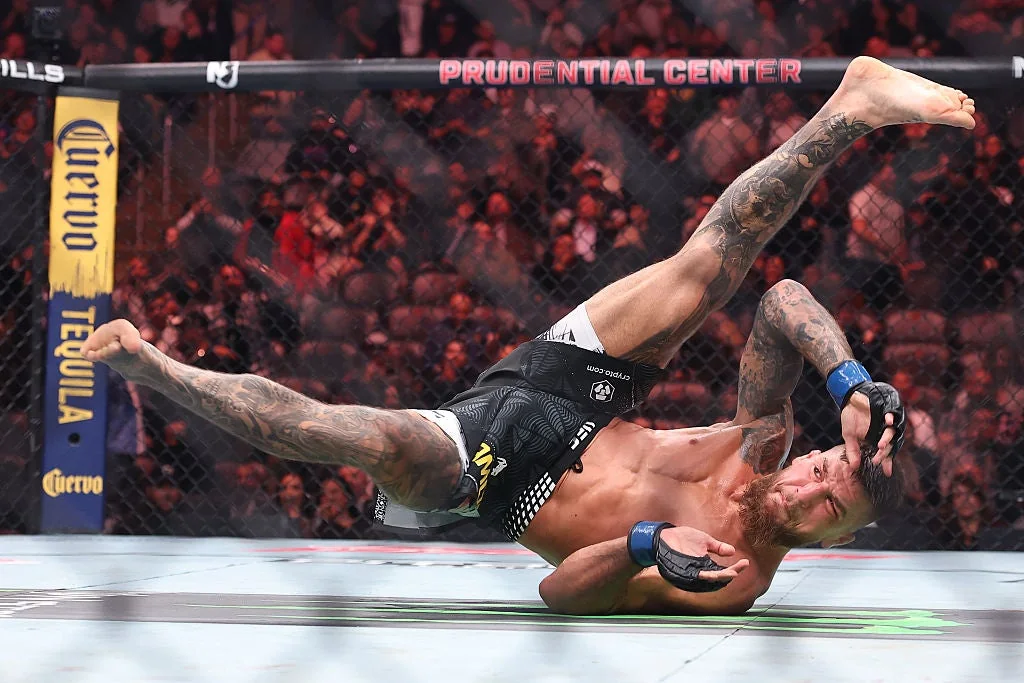
Amosov submitted Joel Álvarez with an arm-triangle at 1:13 of Round 2 at UFC 328. UFC's bonus recap noted that it was only his second Octagon appearance and that he moved to 30-1. His control skill and previous championship experience outside UFC make him an unusual “new” ranked fighter, but a Top-10 matchup is still the cleanest UFC-specific calibration.
No. 12 Uroš Medić
Medić needed only 30 seconds to stop Daniel Rodriguez in the first UFC Belgrade main event on August 1. That result supplies recency, a ranked opponent and a decisive finish. It does not show how his high-output offense performs in a long tactical fight, making an opponent who survives the opening storm a useful next test.
No. 13 Mike Malott
Malott's official profile lists four straight wins and a third-round TKO of Gilbert Burns at 2:08 on April 18. Six knockout wins and six submissions make him dangerous in more than one phase. His listed October 17 bout with Buckley, if still confirmed on the UFC schedule, is a direct bridge toward the Top 10.
Nos. 14–15: Rodriguez and Magny
Rodriguez's Belgrade loss creates immediate pressure to stabilize his place. Magny moved the other direction at UFC 330, stopping Ramiz Brahimaj at 3:20 of Round 2. UFC's recap identified it as Magny's 25th UFC victory. The achievement explains his durability, while the finish proves he remains an active competitive test rather than a résumé name alone.
This tier can reorder the middle quickly because each winner offers a different threat: Amosov's control, Medić's sudden offense, Malott's two-phase finishing and Magny's experience under adversity. The test is whether those strengths persist against the Top 10. A lower rank opens the door; repeated wins against better opposition determine whether the fighter walks through it.
How to Read the Welterweight Title Race from Here
The Aug. 25 ranking identifies competitive position; it does not announce Makhachev's next challenger. Fight fans should use four checks before turning a numbered list into a title-shot prediction: the date of the official table, the quality of each contender's freshest result, the problem that contender presents to the champion, and whether either fighter already has a confirmed booking.
- 1. Start with the timestamp and source view. This article uses the August 25 All Rankings media-panel board. The separate Meta board has its own date and automatic Monday cadence, so do not mix an order from one with the method of the other. Recheck the same All Rankings view after the next welterweight result.
- 2. Compare the newest elite win. Garry owns the No. 1 position and the previous five-round win over Prates. Prates, however, owns the division's sharpest recent high-level finish: a third-round stoppage of former champion Della Maddalena. Morales adds an unbeaten record and a first-round finish of Brady. Those are different arguments, not interchangeable résumé lines.
- 3. Ask what the fight would actually test. Garry's length, movement and round management would ask Makhachev to close space repeatedly. Prates brings long-range power and 19 career knockout wins, but Garry has already shown that he can make Prates work through five rounds. Morales offers speed and explosive counters, while Bonfim's 50-45 sweep of Muhammad supplies the clearest evidence of sustained five-round control. Style informs the question; it does not manufacture an official decision.
- 4. Verify the booking. A confirmed fight can change the route faster than debate can. UFC officially lists No. 10 Buckley against No. 13 Malott as the October 17 Edmonton main event. That fight is not for the title, but its winner can demand a higher-ranked assignment. Use the live UFC schedule to separate signed matchups from callouts and fan-made cards.
Applied today, that framework leaves a competitive field rather than a fictional certainty. Garry has the ranking lead; Prates has the freshest former-champion finish; Morales has undefeated momentum; Bonfim has a complete five-round statement. The next official booking may clarify the route, or another result may shape the panel's next published order first. The disciplined fan conclusion is therefore simple: identify the strongest cases, explain the matchup evidence, and wait for UFC to confirm the title fight.
Fight talk
Comments