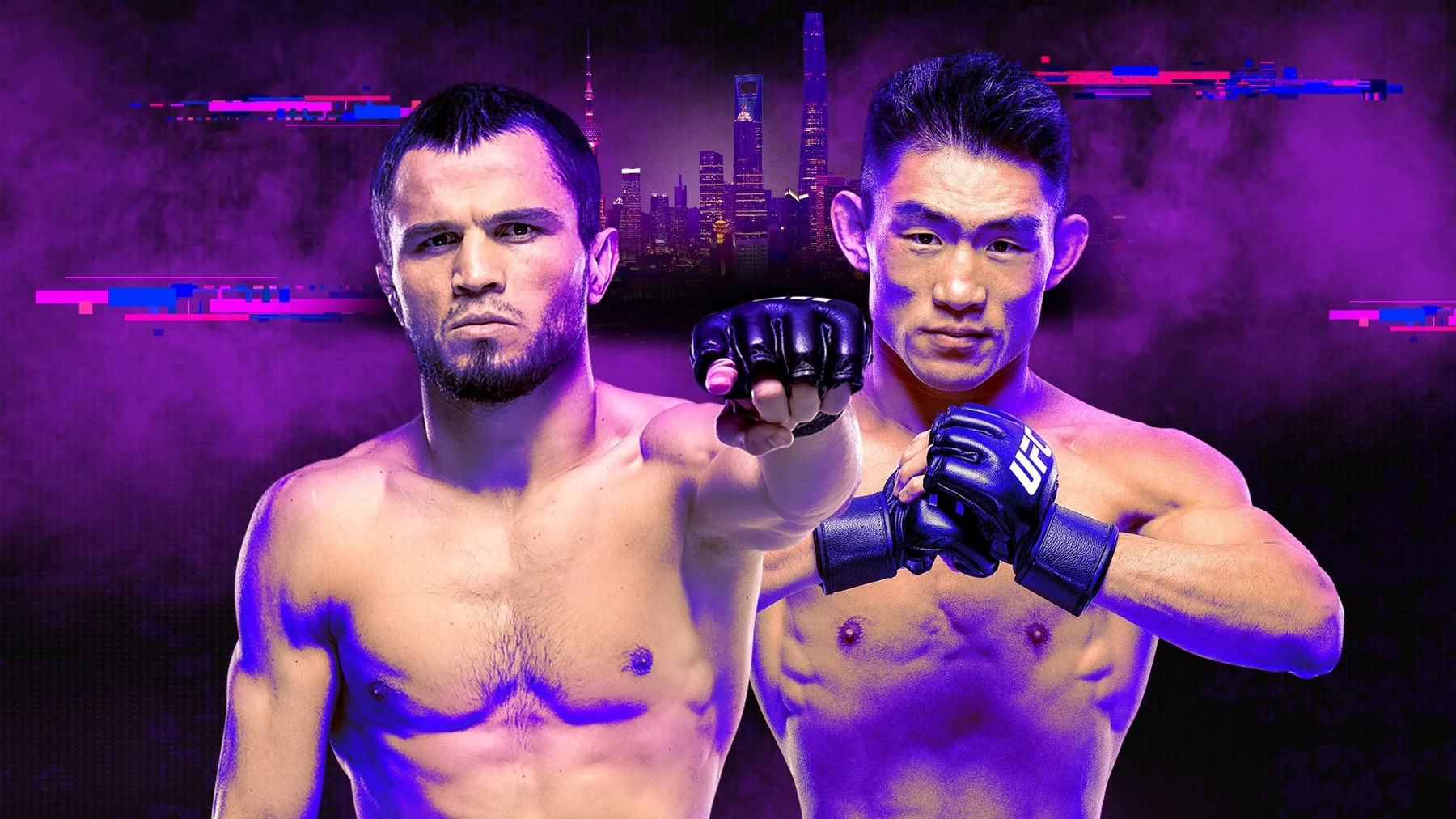
UFC Shanghai 2026 ended with Song Yadong delivering the defining win of his career: a second-round knockout of former title challenger Umar Nurmagomedov. This analysis starts with the finalized official result, then separates the mechanics visible in the finish from the larger conclusions fans may be tempted to draw about the bantamweight title race.
UFC Shanghai result: the verified headline
Song Yadong defeated Umar Nurmagomedov by KO/TKO at 1:48 of Round 2 in the UFC Shanghai main event on August 29, 2026. UFC's final event data identifies the ending strike as a punch to the head at distance, while the promotion's published highlight labels the outcome a knockout. The five-round bantamweight bout took place at Oriental Sports Center in Shanghai, China.
| Official field | Final value | Why it matters |
|---|---|---|
| Winner | Song Yadong | Moves to 24-9-1, 1 NC in the UFC feed |
| Method | KO/TKO — punch to head at distance | A stoppage, not a decision or technical ruling |
| Round/time | Round 2, 1:48 | The scheduled five-round fight ended early |
| Event state | Final | All six main-card fights are finalized in official event data |
That source hierarchy matters because UFC's editorial results and scorecard pages were still showing live-event placeholders immediately after the card. A live label is not stronger than the promotion's underlying event feed after it changes the event and each fight to Final. The separate UFC highlight supplies a second official confirmation of the headline method and time. Readers can use the site's UFC Shanghai event page for the card record rather than an old preview snapshot.
The result is an upset with real sporting weight. Nurmagomedov entered as a recent championship challenger and leaves with a 20-2 record in the official data; Song beat him before the fight reached the long wrestling-and-conditioning examination many expected. It is still important to state only what the win proves. Song owns a stoppage over an elite contender, and his fighter page now has a career-defining result. The UFC has not converted that achievement into a guaranteed title shot merely because the crowd, stakes and finish made a persuasive case.
Everything that follows treats the method, round and time as fact. Descriptions of choices, openings and future matchmaking are analysis. That distinction keeps a surprising finish from turning into an invented official narrative.
How Song Yadong created the second-round knockout
Song created the finish by surviving Nurmagomedov's best first-round control phase, returning the fight to open space, and stopping both takedown attempts in Round 2. The knockout was sudden; the change that made it possible was not. Once Nurmagomedov could no longer turn his entries into control, Song was free to make his faster, harder pocket exchanges decide the fight.
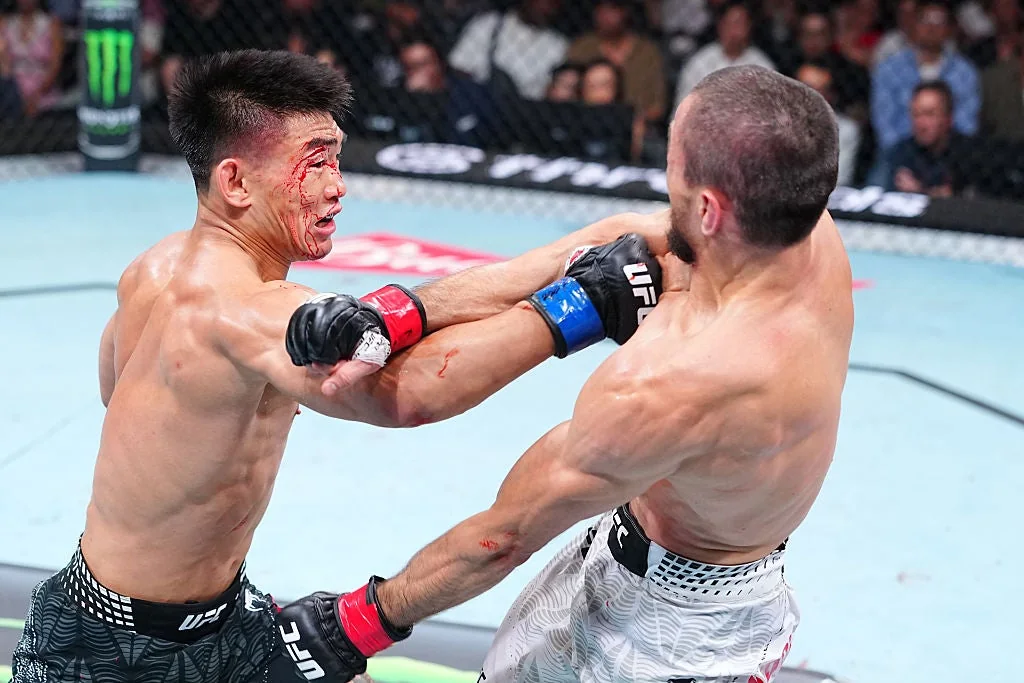
The opening round belonged to Nurmagomedov on every official card, 10-9. UFC's official statistics record him landing seven of 10 significant strikes, completing his only takedown attempt and accumulating 1:58 of control. Song threatened a guillotine during the transition and eventually stood, but that does not retroactively make the bottom phase a win. The useful achievement was damage limitation: he conceded the round without being trapped there for the remaining three minutes or forced into a desperate escape that exposed his back.
Round 2 changed at the entry layer. Nurmagomedov attempted two takedowns and completed neither. That zero-for-two line is more informative than saying Song simply “outstruck a wrestler,” because it identifies how the striking window stayed open. Denying a shot does not score a knockout by itself; it prevents the opponent from choosing the next phase. Song could plant, track the head and exchange without immediately having to build from guard.
Round 1
Nurmagomedov: 1/1 takedowns, 1:58 control, all three judges 10-9.
Round 2 entry battle
Nurmagomedov: 0/2 takedowns, no control time.
Decisive exchange
Song: only knockdown, official ending recorded as a head punch at distance.
The final statistics show Song landing six of 13 significant strikes in the partial second round, four to the head. Recaps describe him finding an uppercut before the final right-hand sequence, while UFC's immutable result field uses the broader label “punch.” The conservative reading is strongest: Song disrupted the level-change threat, retained the range where his hand speed mattered, hurt Nurmagomedov with a head punch and finished before a recovery scramble could begin.
That is repeatable process, not proof of permanent immunity. Song's striking threat grows when he can force repeated resets; Nurmagomedov may win a longer fight if he chains entries instead. The lesson is narrower and more useful: Song did not need to dominate every minute. He needed one clean defensive sequence to preserve the phase in which his power carried the largest consequence.
What failed in Umar Nurmagomedov's game plan
Nurmagomedov's wrestling worked once; his failure was reconnecting the entries, control and safe exits after Song adjusted. Calling this a night when “the wrestling did not work” erases the first round that all three judges awarded him. The more precise diagnosis is that a successful first layer stopped reproducing itself.
Round 1 established a credible template. Nurmagomedov completed one takedown from one attempt, held 1:58 of control and landed more significant strikes. He could score at range, use Song's reactions to enter, then make the top phase consume time. That is not cosmetic control: it won a completed round 10-9 on three independent official cards.
The breakdown appeared when Song forced the same plan to restart. Nurmagomedov went zero for two on takedowns in Round 2, registered no control time and was stopped at distance. Every failed entry carries a second problem against a compact puncher. The attacker must recover stance, bring the head back onto a safe line and decide whether to exit or strike. Song did not have to become the better wrestler everywhere; he had to make those recovery beats expensive.
| Layer | What worked | What failed |
|---|---|---|
| Range striking | 13 of 21 significant strikes overall | Volume edge could not absorb the only knockdown |
| Takedown entry | 1/1 in Round 1 | 0/2 in Round 2 |
| Top phase | 1:58 control in Round 1 | No Round 2 control to slow Song |
| Reset | Safe enough through five minutes | Finished by a head punch at distance |
The totals reveal why judging a fight by landed-strike margin can mislead. Nurmagomedov finished ahead 13-11 in significant strikes and was still decisively stopped. MMA scoring and fight outcomes prioritize effect, not spreadsheet accumulation. Song's knockdown and finish carried infinitely more consequence than a two-strike advantage built before it.
For Nurmagomedov, the corrective question is not whether to abandon kicking or wrestling. It is how to disguise the next shot after an opponent has read the first, and how to exit when the chain fails. More feints, safer head position and a secondary clinch connection could reduce the naked reset Song punished. Those are coaching possibilities, not confirmed corner instructions.
The loss also should not erase the evidence on Nurmagomedov's fighter page: he won a round against an elite bantamweight and reached his strongest phase. It shows that having the right phase available is different from being able to summon it on demand against an opponent who has already felt the entry.
Main-card results and performances that mattered
UFC Shanghai's main card produced five KO/TKO finishes in six fights, with Song Yadong and debutant Bilal Hasan earning Performance of the Night. The card was more than one upset: Denise Gomes removed a top local contender from the immediate win column, Kai Asakura delivered another quick bantamweight finish, and Liu Ce won a furious debut that rewarded both light heavyweights.
| Winner | Opponent | Official result |
|---|---|---|
| Song Yadong | Umar Nurmagomedov | KO/TKO (punch), R2 1:48 |
| Denise Gomes | Yan Xiaonan | KO/TKO (elbow), R1 4:49 |
| Kai Asakura | Aoriqileng | KO/TKO (punches), R2 0:34 |
| Sumudaerji | Alex Perez | Unanimous decision (29-28, 29-28, 29-28) |
| Liu Ce | Levi Rodrigues Jr. | KO/TKO (punch), R1 4:26 |
| Bilal Hasan | Nilson Rojas | KO/TKO (punch), R2 2:28 |
Gomes' first-round stoppage of Yan is the most consequential supporting result. Yan entered as the No. 4 contender on UFC's event materials, while Gomes was No. 14. Rankings do not update automatically from one finish, but beating an opponent that far above her gives matchmakers a reason to accelerate Gomes and forces the strawweight queue to be reconsidered.
Asakura's stoppage of Aoriqileng at 34 seconds of Round 2 matters differently. He did not beat a ranked contender, so it should not be sold as a title eliminator. It does give a former RIZIN champion another UFC result around which to build. Sumudaerji, meanwhile, won the night's only main-card decision, sweeping the official totals 29-28 against Perez. On a card dominated by impact moments, completing and winning a three-round rematch supplied a different kind of evidence.
The two debut stories deserve separation from hype. Liu knocked out Rodrigues in the final minute of Round 1, and UFC awarded their bout Fight of the Night. Hasan stopped Rojas with a second-round punch and joined Song among the Performance of the Night winners. Those bonuses identify entertainment and immediate execution; they do not establish that either newcomer is ready for a ranked opponent after one UFC appearance.
UFC's bonus report lists a sold-out attendance of 16,188. That number helps explain the promotional value of home-region successes, but it should not change the sporting reading of each matchup. The final methods above come from UFC's finalized event feed, and the site's UFC results hub is the better place to follow later record updates.
What the upset means for bantamweight
Song is now a credible next challenger, but Shanghai did not award him a title fight. UFC 333 already has champion Petr Yan scheduled to face No. 1 contender Merab Dvalishvili on October 24, 2026. Song's knockout changes the queue behind that official booking; it does not cancel or leap inside it.
The rankings checked on fight day still reflected the pre-Shanghai order: Yan as champion, Dvalishvili No. 1, Nurmagomedov No. 2, Sean O'Malley No. 3, Mario Bautista No. 4, Cory Sandhagen No. 5 and Song No. 6. Rankings are a delayed media vote, so reproducing those numbers as if they already priced in the knockout would be a category error. The important fact is whom Song beat, not the number temporarily printed beside each name.
Official next title fight
Petr Yan vs Merab Dvalishvili at UFC 333. This is booked, not projected.
Song's strongest case
Back-to-back stoppages of Deiveson Figueiredo and former challenger Nurmagomedov.
Unresolved obstacle
O'Malley beat Song by decision in January and remains above him in the checked order.
Song's 2026 record tells the honest version of his claim. He lost a decision to O'Malley in January, then submitted former flyweight champion Figueiredo in May and knocked out Nurmagomedov in August. The two finishes create momentum and breadth: one submission, one knockout, two veteran contenders. The O'Malley loss keeps the queue debatable if both are available. UFC's own bonus coverage says Song is firmly in the title conversation, which is meaningful promotional language but not a bout agreement.
There are three defensible outcomes after UFC 333. Song could challenge the Yan-Dvalishvili winner; he could fight O'Malley to settle the head-to-head objection; or he could meet another leading contender if champion timing requires it. The first rewards the best new result, the second produces a clean sporting answer, and the third keeps him active at the risk of losing his position. None has been announced.
Nurmagomedov's route is less dramatic than “back of the line.” A knockout loss removes the immediate title-shot argument, especially with UFC 333 already booked, but his first-round success and previous résumé preserve top-level relevance. A rebound against a contender outside the title pairing would test whether the Shanghai failure was a correctable transition problem or a repeatable vulnerability.
Fans should monitor the UFC schedule and official announcements, not treat a post-fight callout as a contract. Song has earned leverage. The promotion still decides timing, opponent and location.
What to watch next for Song, Umar and China's UFC pipeline
The next reliable signals are an official booking for Song, Nurmagomedov's cleared return, and the Road to UFC Season 5 finals—not a rumored 2027 Shanghai date. The 2026 weekend proved that the market and talent pathway are active. It did not announce when UFC will next stage a mainland China card.
For Song, the decision tree starts after UFC 333. Watch for language stronger than “in the conversation”: an opponent, event, location and official UFC listing. Waiting for the Yan-Dvalishvili winner maximizes the title argument but may create a long inactive stretch. Taking another contender fight keeps his momentum visible but risks the leverage he earned. Only a booking will show which tradeoff his team and UFC accept.
For Nurmagomedov, health comes before matchmaking. A knockout loss should be followed by any required medical clearance, then a matchup that tests the failed transition without pretending he needs to rebuild from zero. The most informative return would pair him with a contender who can punish entries and force resets. An immediate rematch with Song is not necessary to learn whether he can disguise and chain his offense better.
The larger China story needs two scoreboards. UFC reports that 16,188 attended the sold-out event and calls it the highest-grossing show in SPD Bank Oriental Sports Center history. Those are strong demand signals. The competitive card was mixed, however: Song, Sumudaerji and Liu Ce won, while several other Chinese athletes lost. A healthy regional program is not measured by sweeping one night; it is measured by producing athletes who return, improve and reach ranked opposition.
Road to UFC supplies that slower mechanism. Season 5 semifinals ran in Shanghai on August 28, immediately before the Fight Night, with finalists advancing toward an opportunity for multi-fight UFC contracts. Song's own arc illustrates the possible distance: he debuted in Shanghai as a 19-year-old in 2017 and returned almost nine years later as the home headliner who stopped a former title challenger.
Distribution and local operations also outlast one result. UFC and Migu announced that their Greater China relationship extends through 2031, with Migu described as the exclusive co-organizer for mainland events. That is infrastructure, not a promise of a particular city or date. Fans should use the updated UFC schedule when the promotion announces the next event.
Shanghai's durable conclusion is therefore layered. Song owns a verified elite knockout and a legitimate title claim. Nurmagomedov owns a clear technical problem to solve, not a vanished career. China has a sold-out audience, recurring media partnership and prospect funnel. Each next step should be judged when it becomes official rather than filled with attractive rumors.
Fight talk
Comments