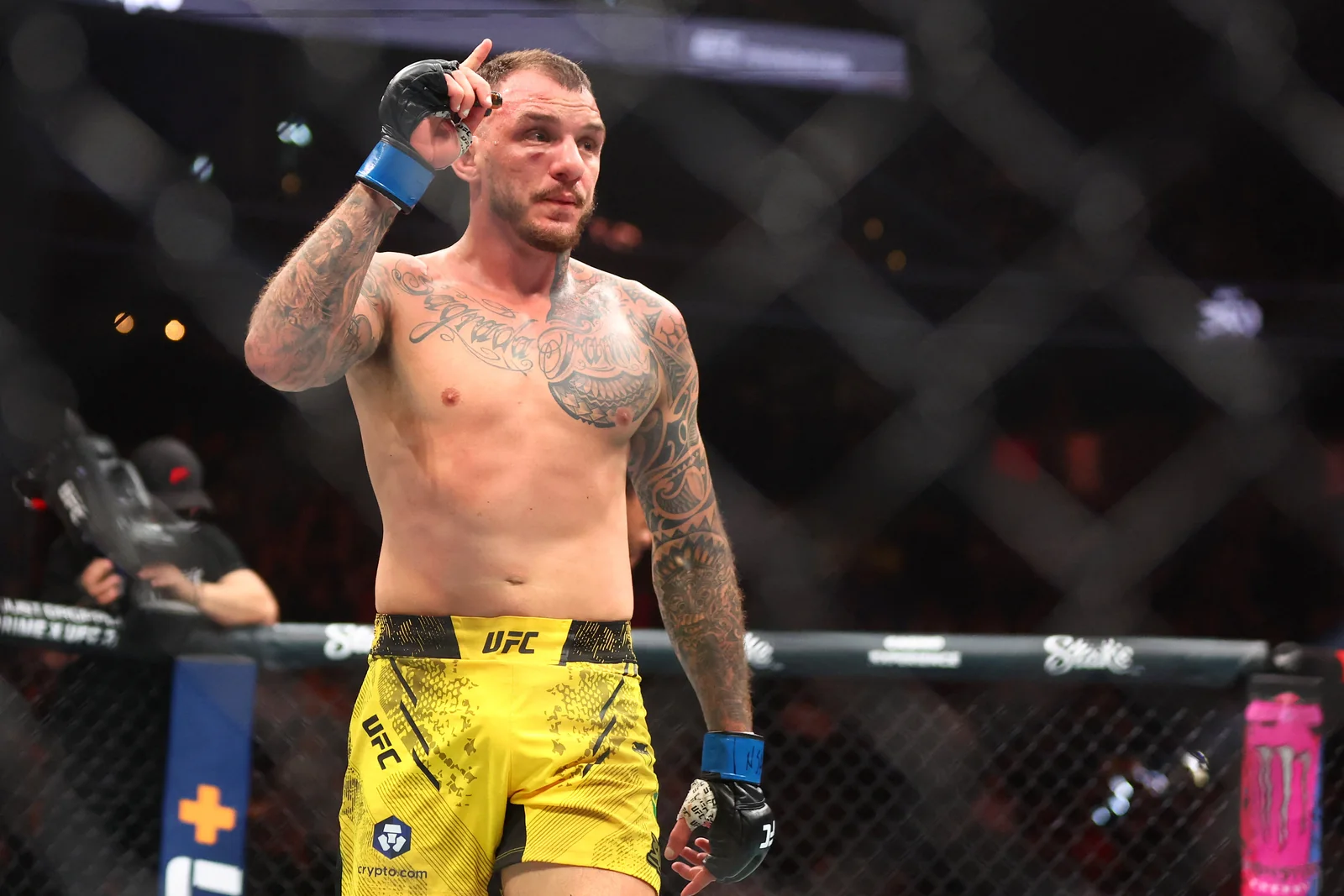
Moicano wants to finish his deal before deciding
Renato Moicano has expressed an interest in free agency after completing his UFC contract. He has not announced that he is leaving immediately after facing Tom Nolan. In his October 28 interview with MMA Fighting's Mike Heck, the lightweight said he had three fights left entering UFC Vegas 123 and wanted to complete the agreement before evaluating what comes next.
That makes this a story about an experienced fighter weighing his options, with an immediate competitive assignment still in front of him. As of October 29, 2026, Nolan remains the next opponent and Saturday's main event remains part of his UFC career. A headline about testing the market can be accurate while still creating the wrong impression if the remaining work disappears from the reader's view.
Three fights includes the Nolan main event
The count begins with the October 31 bout. It does not mean Nolan plus three additional fights. If the contest proceeds and counts toward the agreement as expected, the ordinary reading of Moicano's account would leave two afterward. That arithmetic explains his public statement; it is not a review of the unseen contract or a guarantee about future arrangements.
There is also no calendar deadline hidden inside that count. Two remaining appearances do not establish two particular events, a certain number of months or a final departure date. Availability and the next agreement between fighter and promotion still have to produce actual matchups. Moicano's words describe his preference for completing the current deal, rather than a published schedule of his last three UFC appearances.
For fight fans, the difference is practical. The result against Nolan will update his recent form and help shape the next matchup conversation. It will not automatically convert him into a free agent. Nor does interest in outside work remove the importance of the fight he has accepted. His position can be evaluated after each appearance without treating every interview as an exit announcement.
Our Moicano–Nolan fight preview covers the card and matchup itself. The question here is how that assignment fits a longer career decision. Moicano has reached a stage where competitive results, family commitments and other work all influence what continuing to fight is worth to him. Understanding those separate considerations provides a clearer picture than counting down to a departure he has not scheduled.
The statement also leaves room for his judgment to change. Wanting to discover his value does not require rejecting a worthwhile UFC arrangement later. Equally, a successful night does not commit him to extending the deal. The useful starting point is the plan he actually expressed: do the remaining work, then assess the opportunities available.
His recent fights show what he brings to the market
Moicano's competitive identity gives the contract discussion substance. He has a long UFC history, a recognizable grappling threat and recent experience of both winning a main event and falling short against elite opponents. Those elements are more useful than assuming his “Money” nickname establishes what another organization would pay. A market can value a personality, but the next opponent still has to deal with the fighter.
The short-notice title opportunity had a different context
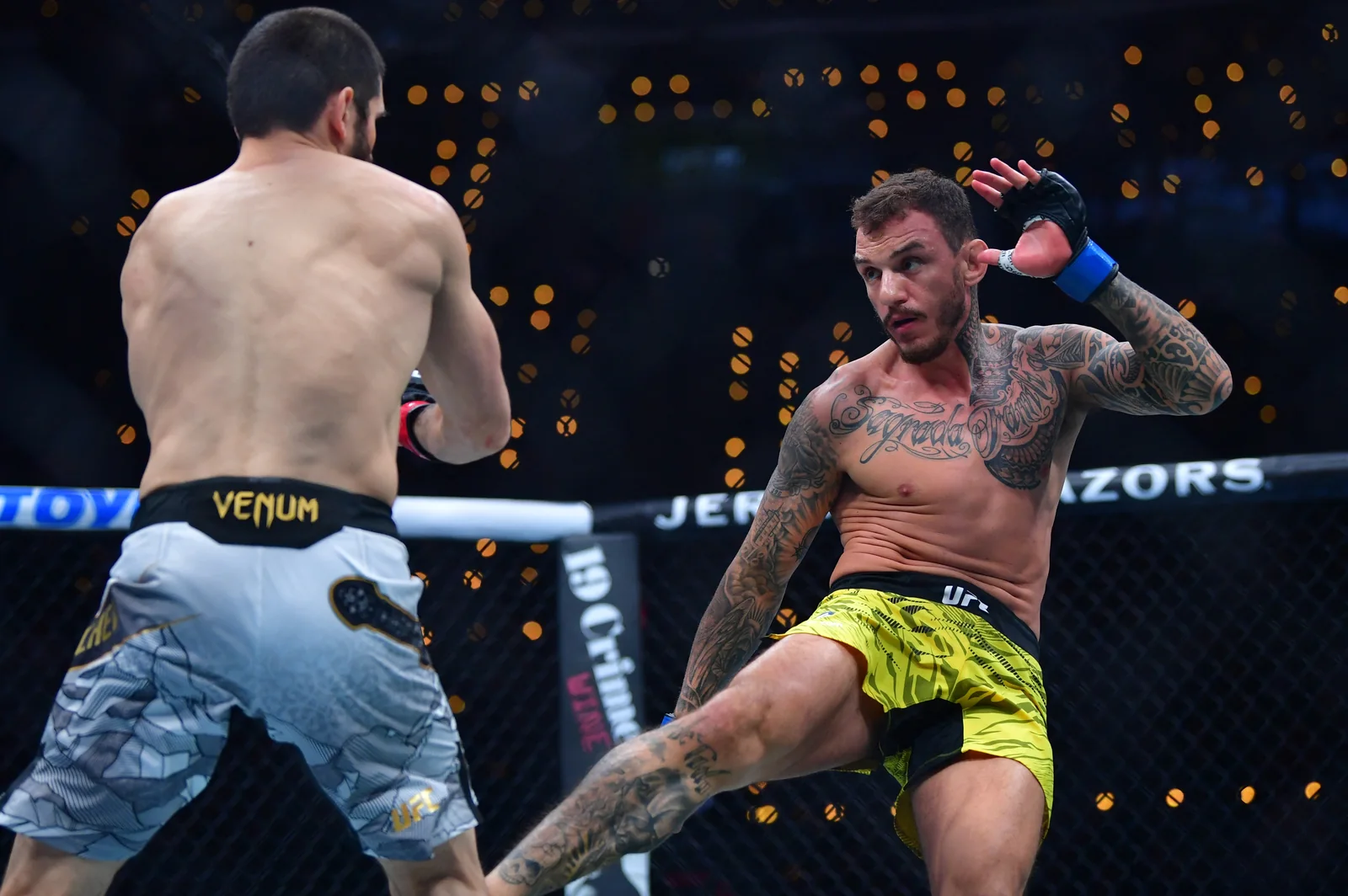
At UFC 311 in January 2025, Moicano was already scheduled to face Beneil Dariush when Arman Tsarukyan withdrew from the lightweight championship main event. UFC announced the replacement on January 17, the day before the event. Moicano entered the title fight against Islam Makhachev on a four-fight winning streak, with three finishes during that run.
“Short notice” here refers to preparing for a different opponent and championship assignment, rather than a fighter arriving without any camp. That distinction does not erase the result: Makhachev submitted him at 4:05 of Round 1. It explains why a careful assessment separates the difficulty of the late change from what the champion demonstrated when they fought. Neither heroic framing nor dismissing the loss as meaningless gives the complete picture.
The Dariush contest eventually happened at UFC 317 in June, ending in a unanimous-decision defeat for Moicano. Taken together, those results challenged the momentum from his earlier streak. They did not erase wins over Brad Riddell, Drew Dober, Jalin Turner and Benoît Saint Denis, whose different result methods also show why his lightweight career cannot be reduced to a single submission statistic.
The Duncan win restored a working strength
Against Chris Duncan on April 4, 2026, Moicano returned to a dependable finishing route. The official result was a rear-naked choke at 3:14 of Round 2. UFC's main-event recap described sharper striking, a second-round knockdown and the move to back control before the submission.
That progression matters technically. A rear-naked choke is not merely a grappling move waiting at the end of a takedown. Creating the opening can begin on the feet; securing the back then forces an opponent to protect the neck while managing position. The threat is more demanding when striking has already disrupted the opponent's balance and defensive choices. The Duncan result demonstrated a connection between phases, rather than an isolated grappling credential.
For a prospective opponent, denying comfortable transitions is therefore a more relevant task than reacting to his public persona. For Moicano, another composed performance would supply fresh evidence that this approach still works at his current stage. It cannot guarantee favorable negotiations, but it would be a concrete sporting contribution to the conversation.
Why he chose to fight Nolan now
Nolan offered Moicano something that repeated attempts to arrange the Brian Ortega rematch had not delivered: a fight on a workable date. In the October interview, Moicano described frustration after two planned 2026 meetings with Ortega fell through, then explained why he did not want to accept another proposed November pairing. That account concerns availability and his own decision; it does not establish why Ortega was unable to compete.
The original matchup has sporting history. Ortega submitted Moicano with a third-round guillotine at UFC 214 in July 2017, when both competed at featherweight. A rematch years later at lightweight would have brought a familiar name and an old result back into discussion. Familiarity, however, does not ensure a contest happens on the date a veteran needs. The next useful opportunity can be a different opponent altogether.
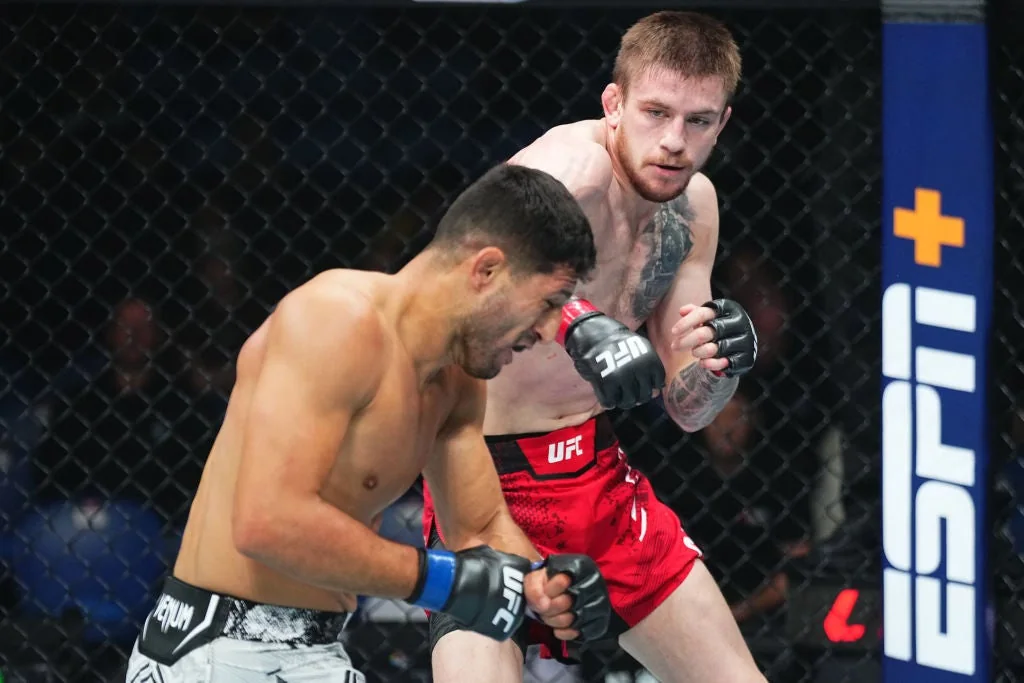
Nolan should also be understood as an opponent with his own momentum, rather than a convenient contractual appearance. His UFC history documents five consecutive victories after a debut defeat to Nikolas Motta. Those wins include a first-round rear-naked choke against Charlie Campbell and a unanimous decision over Farès Ziam in June 2026. The variety matters because a taller opponent with a winning streak cannot safely be reduced to a striking target or a name to check off a contract.
Family timing matters as much as the next ranking
Moicano told Heck that his wife was expecting twins in December and that he already had two children. He wanted to compete before the family demands increased and anticipated time away afterward. Those personal details explain the urgency more directly than a theory that accepting Nolan proves dissatisfaction with UFC. An athlete can want a bout promptly for reasons that have little to do with where he hopes to sign later.
There is a practical distinction between willingness to fight and the ability to accept every offered date. Training a camp, recovering from competition and being present for a growing family all require time. The interview gives the reason this particular window appealed to him. It does not supply a fixed return date after the birth, and it should not be stretched into a medical or retirement prediction.
For viewers, the immediate consequence is to assess Saturday on its own terms. Nolan is trying to extend a streak and establish himself against a long-serving contender. Moicano is trying to build on the Duncan victory within a schedule that suits his life. Their different motivations can coexist. The current UFC schedule is the place to follow confirmed assignments; a desired pace or a canceled rematch cannot fill in future dates.
Outside ventures widen his choices
Moicano described several activities beyond his own bouts: YouTube, a gym, managing fighters in Brazil and an MMA show planned for December 5. MMA News's account of the interview preserves that list alongside his interest in possible boxing or media work. The important point is the range of work he wants available, rather than a verified claim that any particular venture already replaces his fighting income.
Those roles use different parts of a fighter's experience. Teaching involves explaining a technique repeatedly to people with different abilities. Managing another athlete means working on that person's opportunities rather than preparing one's own game plan. Producing a show involves supporting a contest as an organizer. Making videos can keep a personality visible between bouts, but popularity and competitive form do not move in lockstep.
There is a concrete reason not to treat them as one effortless retirement package. Every activity consumes time that could otherwise go to training, recovery or family. Having alternatives can widen the choices available when a contract ends; it does not demonstrate that each alternative is already a dependable business. Subscriber counts and viral clips would be poor substitutes for actual financial information, which Moicano did not make public in this interview.
Boxing would represent a particularly substantial competitive change. His UFC success includes connecting punches with takedowns, positional advances and rear-naked chokes. A boxing contest would remove the takedown and submission threats that shape an opponent's defensive reactions in MMA. Good hands are valuable in both sports, but a fighter cannot assume the same openings survive when the other athlete no longer has to defend a level change.
That is why a possible boxing appearance needs its own matchup analysis if it becomes real. Opponent experience, agreed weight and the contest's format would matter more than the general appeal of two recognizable names. At present, Moicano's mention supplies a direction he might explore, not a booked boxing bout, a named opponent or a promised payday.
The broader career logic is understandable without inventing numbers. Someone who has competed in UFC since 2014 has spent years building skills and a public identity. He may want to use both in ways that do not always require another camp and another fight. For supporters, following that transition can be interesting alongside his remaining lightweight appearances. It should not obscure the fact that those appearances still demand preparation against opponents who have their own ambitions.
What would actually change his UFC status?
A new agreement, the completion of the current one or an attributable departure announcement would change the contract story. Saturday's result will change the sporting story first. Keeping that order straight allows fight fans to assess what Moicano does against Nolan without pretending to know the next negotiation. His stated desire to test the market gives the remaining appearances an added dimension, but does not decide their aftermath in advance.
UFC's official preview identifies this as Nolan's first five-round assignment. That adds a useful competitive question beyond the names and ages. Managing distance and grappling effort over a potentially longer contest can expose decisions that a shorter fight never reaches. Five scheduled rounds create that possibility; an early finish could end the test before endurance becomes central.
A Moicano submission would extend the relevance of a familiar weapon, but the route would still matter. Did he create the opening with strikes, force it through persistent wrestling or capitalize on a scramble? A decision could show a different kind of success if he repeatedly solves exchanges over the full contest. Conversely, a difficult performance would need to be assessed against Nolan's specific work rather than dismissed as proof that business interests made Moicano lose focus.
The same discipline applies if Nolan wins. A younger fighter beating a veteran can signal development without showing that the veteran has no remaining competitive value. The method, the turning points and Moicano's response afterward would give a more useful basis for discussing his next opponent than age alone. No single result supplies the private figures or preferences that would determine whether a future contract appealed to him.
After the event, listen for what Moicano actually says about the next stage: another UFC matchup, a period devoted to family, continued completion of the deal or a changed preference. A confirmed bout would provide a date to follow. A statement about taking time away would provide context without guaranteeing how long the absence lasts. His plans should be updated from those concrete developments rather than forced to match an earlier headline.
For now, the strongest reading remains straightforward. He wants to honor the existing commitment while preserving the ability to evaluate his career afterward. Nolan is the immediate test, and the next two reported contract appearances remain unscheduled in this account. The question worth watching is whether Moicano continues to deliver the performances that make those choices interesting—and what combination of competition, compensation and family life he eventually decides is worth pursuing.
Fight talk
Comments