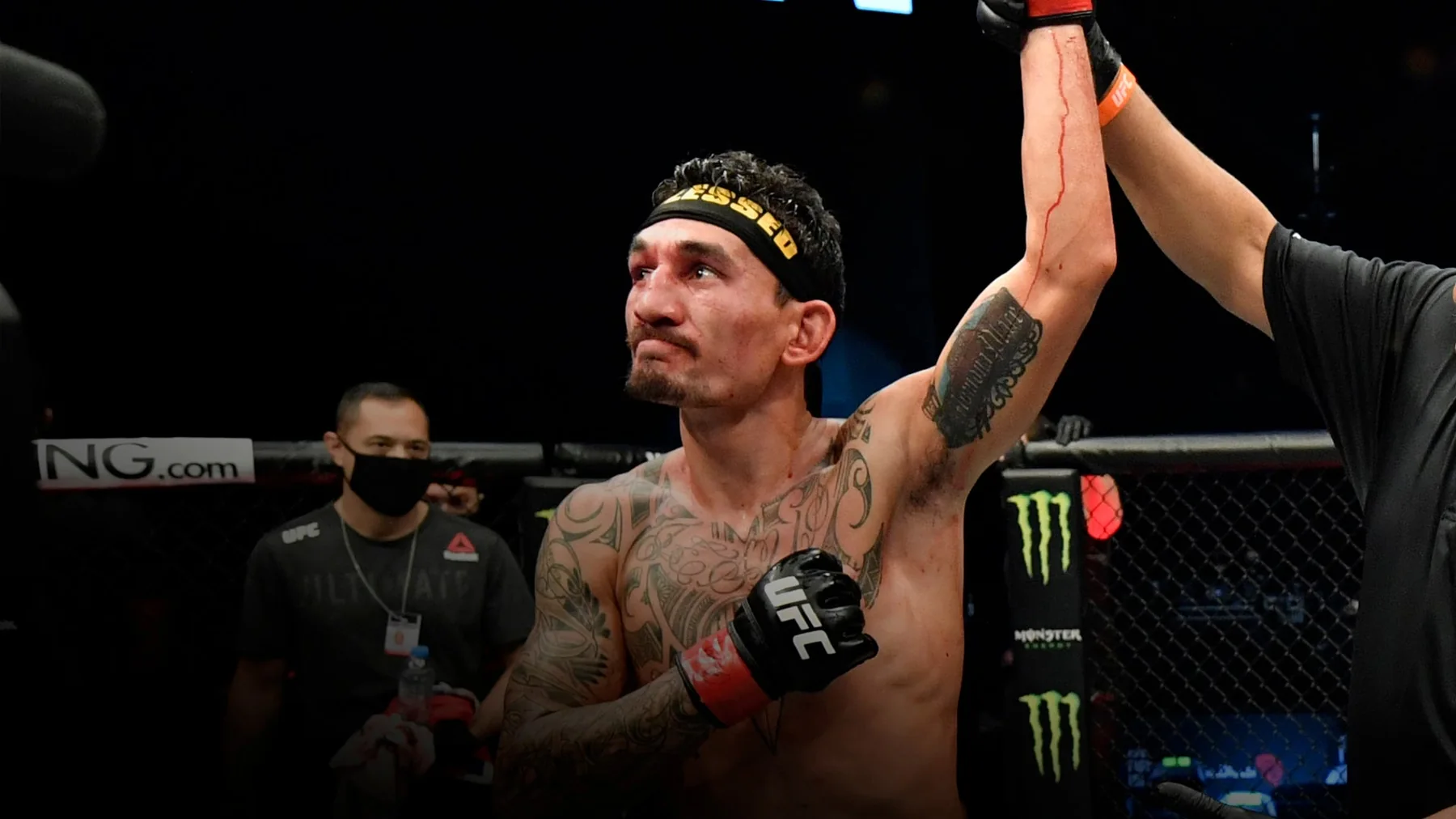
UFC statistics describe what happened in a fight; they do not automatically tell you who won a round. Significant strikes, total strikes, takedowns and control time answer different questions, and live displays may not be the final record. This guide explains how to read those numbers, use them alongside the action and avoid turning a count into a judges' score.
Where to look for UFC statistics during and after a fight
During an event, start with the official UFC event page and the authorized broadcast's statistics display. Afterward, use the completed bout record at UFCStats for detailed review when it is available. Do not treat the UFCStats completed-event archive as a guaranteed second-by-second live feed. An event page, a broadcast graphic and an archived fight sheet can differ in timing and purpose.
Keep three questions separate: what actions were counted, what result was announced and what the judges scored. A running significant-strike comparison answers the first. A winner and method answer the second. Official scorecards answer the third. None is a replacement for the other two. The live UFC event overview helps you find the card, while confirmed UFC results provides the outcome once bouts finish.
| Statistic | First question to ask |
|---|---|
| Significant strikes | Which qualifying strikes landed, and where? |
| Total strikes | How much recorded striking activity included shorter shots? |
| Takedowns | How many attempts succeeded, and what offense followed? |
| Submission attempts | What finishing threats did the action actually show? |
| Control time | What happened during that positional advantage? |
For historical comparisons, the official UFC Record Book separates career, fight, round and event records. Its stated coverage begins at UFC 28. A leaderboard is therefore a defined dataset, not automatically a record of every MMA contest a fighter has ever contested.
Before making a comparison, identify the source, update time and scope. A provisional graphic halfway through Round 2 cannot fairly be compared with a completed three-round total. A blank entry need not mean zero action. Check whether the bout is finished and whether the numbers are populated before drawing a tactical conclusion.
Significant strikes and total strikes measure different things
A significant strike is a statistical category, not a declaration that the strike caused significant damage. UFC's athlete statistics glossary defines the category as strikes at distance, plus power strikes in the clinch and on the ground. A jab can qualify. A short, less forceful shot while holding an opponent can appear in total strikes without appearing in the significant category.
Total strikes include the significant strikes; they are not a separate pile to add on top. If a fighter lands 30 significant strikes and 50 total strikes in a hypothetical round, the total is 50, not 80. The difference helps you identify where shorter exchanges contributed to activity. It does not tell you that the 20 other shots had a particular point value.
Read landed and attempted before reading accuracy
A landed/attempted entry describes both output and success. In a hypothetical comparison, 20 of 40 is 50 percent, while 25 of 100 is 25 percent. The first fighter is more accurate in this example; the second lands more. Neither percentage alone establishes superior effective striking, because the exchange still needs context: clean impact, target, defense and what the opponent was doing.
Accuracy can fall when a fighter uses range-finding jabs and volume to create a later opening. Feints can help create that opening, but they should not be confused with counted strike attempts. Accuracy can rise when a grappler has secured a position where selected shots are easier to land. Those are possible tactical explanations, not conclusions you can obtain from a percentage by itself. Rewatch the sequence before labeling one fighter inefficient or passive.
Use target and position splits without counting strikes twice
Head, body and leg splits describe where strikes landed. Distance, clinch and ground splits describe the position in which they occurred. The same body punch can belong to both the body total and the distance total. Add entries within one complete set of categories when checking a total; do not add both sets together as if they were different punches.
Use the splits to ask better questions. Did body work change an opponent's reactions? Did attacks to the legs limit movement? Did a long-range advantage disappear once the fight reached the fence? Those questions connect the numbers to MMA. The chart directs your attention; footage shows the technique and consequence. A high head-strike count is not a reason to ignore a smaller number of meaningful body or leg attacks.
Takedowns, submissions and control time need context
A grappling statistic is a starting point for describing an exchange, not its complete value. The UFC Record Book lists takedowns landed, attempts and submission attempts as different measures. To understand the fight, connect those counts to what followed: an advance to a threatening position, damaging offense, a credible finishing attempt or an opponent's escape.
Control time describes duration. It can reveal how much of a round one fighter spent imposing position, but it is not a clock that awards automatic judging points. Ask what the controlling fighter achieved and what the opponent did from underneath. A top position with meaningful ground strikes and a submission threat is different from holding without productive offense, even if the displayed time is similar.
Submission attempts need the same care. A count does not grade how close the opponent came to tapping or losing consciousness. A briefly attempted grip and a deep threat demanding sustained defense can look very different on footage. Do not conclude that two listed attempts were twice as effective as one. Look at the finishing danger and its consequence within the round.
A takedown percentage does not describe the whole exchange
In a hypothetical comparison, one completed takedown from one attempt is 100 percent; four from ten is 40 percent. The first percentage is higher, but the second fighter completed more takedowns. Neither tells you how long position lasted or whether the takedowns led to effective offense. A clean completion followed by an immediate escape can produce a very different exchange from one that leads to a back take.
Watch the sequence around the entry. A fighter may connect several wrestling actions, changing from one attack to another as the opponent defends. The effort can influence pace and later exchanges, but merely trying hard is not proof of scoring success. Likewise, a defender who stops a shot may still absorb an effective strike afterward. Successful defense keeps the fight available; it does not automatically outweigh the opponent's offense.
The practical question is “what did the grappling produce?” rather than “who had the larger number?” Use counts to locate the decisive passages, then watch how those passages developed. That method lets you appreciate chain wrestling and positional skill while staying cautious about claims that control or a completion percentage decided the judges' result.
Read each round before the full-fight total
A full-fight total compresses several separate contests into one row. Under the round-by-round framework explained in the ABC MMA Officials Handbook, judges evaluate rounds. A large statistical advantage in one round does not carry unused points into the next. That is why the first useful step is changing the sheet from totals to rounds.
Consider a deliberately fictional example. Fighter A lands 30 significant strikes to Fighter B's five in Round 1, then trails 15 to 20 in each of the next two rounds. A leads the fight total 60 to 45, but B has the larger strike count in two rounds. That does not establish a 29-28 score for either fighter: impact and grappling still matter. It simply shows why cumulative volume and individual-round advantages are different ideas.
Pay attention to duration as well. A five-round decision gives a fighter more time to accumulate strikes than a three-round decision. A first-round finish provides much less exposure. Rate statistics can help normalize time, but they still need an adequate sample and a clear denominator. A few explosive seconds should not be treated as a reliable estimate of an athlete's sustainable pace.
When replaying a close decision, write a short account of each round before checking the overall totals. Note the clearest effective attacks, the grappling outcomes and any major shift. Then use the statistics to test your memory. This is more informative than deciding the winner from the last row and forcing every round to support it.
A round can also change internally. One fighter may lead early while another creates the strongest late offense. The final count helps summarize volume, but footage shows the sequence and consequence. Preserve that distinction when discussing why a bout felt different from its stat sheet.
A real example: Holloway and Kattar's striking record
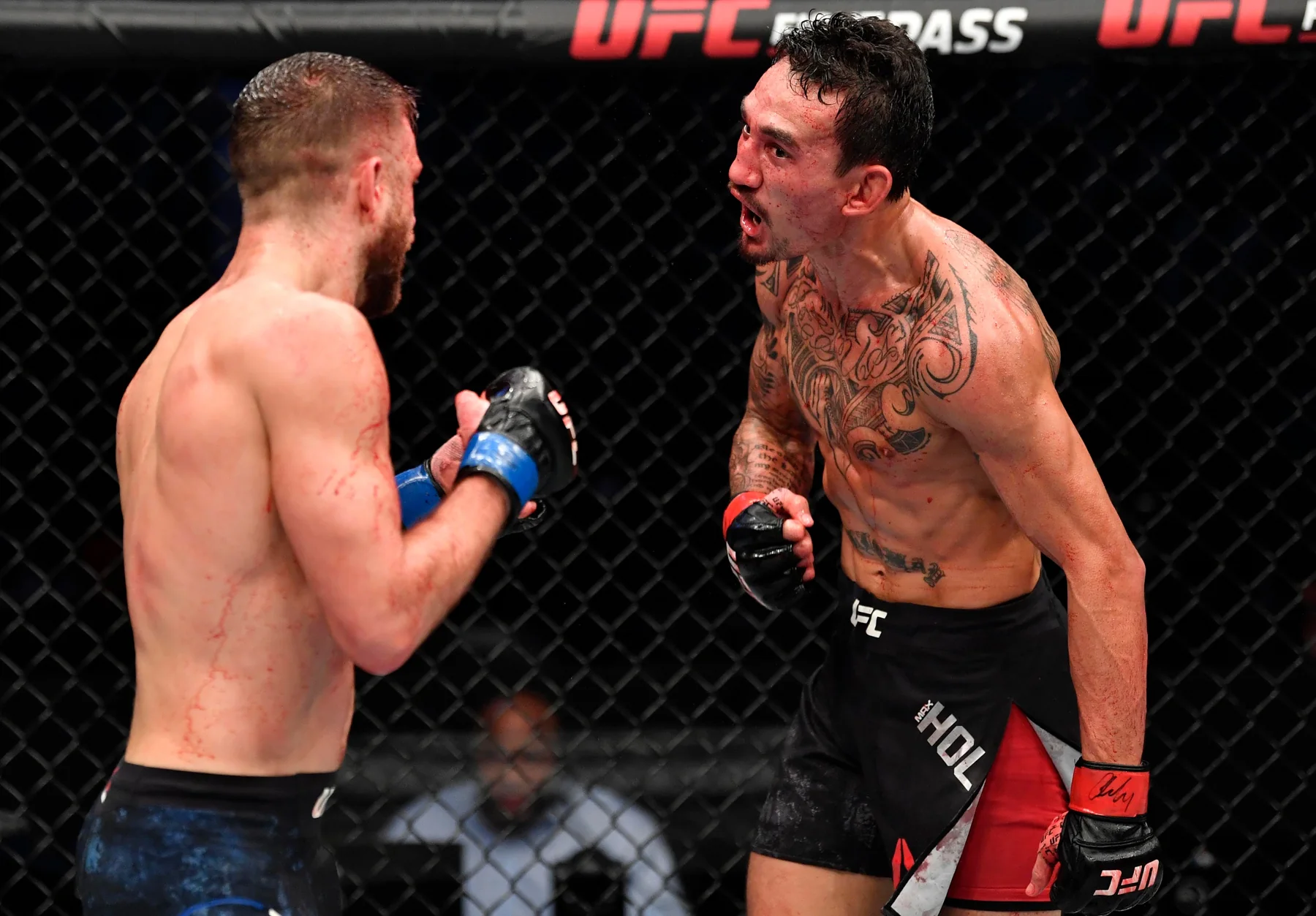
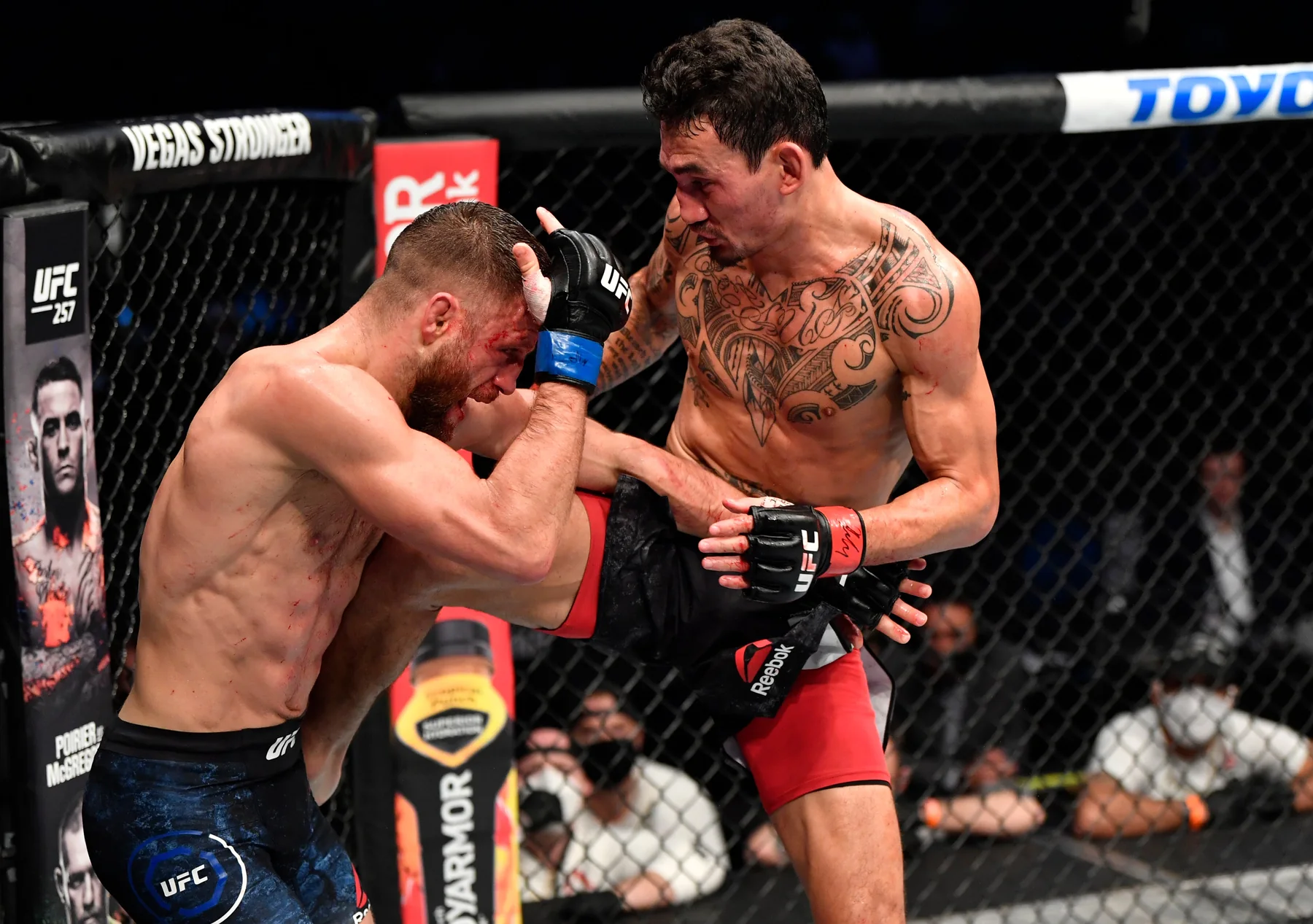
Max Holloway's January 16, 2021 performance against Calvin Kattar in Abu Dhabi is a useful historical example because the volume was extraordinary and the result was decisive. UFC's official retrospective recorded 445 significant strikes for Holloway and 133 for Kattar. The official result was a unanimous decision, with scores of 50-43, 50-43 and 50-42.
The first lesson is identifying the metric. Those 445 were significant strikes landed by one fighter in one bout. They are not both fighters' combined total, not Holloway's career count and not a score in judging points. Over 25 minutes, 445 equals an average of 17.8 significant strikes landed per minute in this particular fight. That calculation describes this performance; it is not a claim about his career average.
The second lesson is connecting volume to technique. UFC's event report described straight punches, body work, elbows and changes in attacking rhythm that repeatedly left Kattar defending. The important viewing task is following how those attacks linked together, rather than treating each recorded connection as equally valuable.
The third lesson is respecting the result's own language. A 50-43 card tells you about a judge's round scores; it is not produced by subtracting 133 from 445. A different fight can have a wide statistical gap concentrated in one round, a damaging low-volume exchange or influential grappling. This bout demonstrates an outstanding combination of pace and effective offense, not a universal threshold at which a particular score becomes mandatory.
Use it as a reference for what a high-output performance can look like. Then return to the actual matchup you are analyzing. Another featherweight with fewer landed strikes may be solving a different opponent and a different tactical problem. Context keeps an exceptional record useful without making it the standard every fighter must copy.
Why UFC statistics cannot tell you the judges' score
A stat sheet is not an automated scorecard. Judging considers the effectiveness of MMA offense within each round, while statistics count selected actions. The applicable commission's rules and the date of the bout matter. Do not apply the latest explanatory wording retroactively to every fight in the archive or assume every jurisdiction adopted revisions at the same time.
Effective offense comes before secondary control criteria
The ABC's July 2025 judging clarification prioritizes the effect of successful striking and grappling. Aggressiveness or fighting-area control become secondary considerations when no even marginal effective-offense advantage can be identified. Merely maintaining a dominant position is not the same as demonstrating productive offensive dominance.
That is why a long control-time figure can require more explanation than a short damaging exchange. The clock gives duration, but the action establishes effect. Similarly, a higher significant-strike count does not assign identical importance to every landed strike. Defense helps a fighter remain in the contest; it does not itself replace effective offense as the basis of a round's advantage.
As a viewing exercise, describe the strongest attack without mentioning a number. Explain the connection, reaction and follow-up. Then add the relevant statistics. This keeps the mechanism visible: what the fighter did to the opponent, rather than simply how many actions appeared in a column.
Separate official scorecards from media live scores
A broadcaster, reporter or fan may publish a running score while the fight is happening. That is an observer's assessment unless explicitly identified as an official disclosure. It is not proof of what the judges have written. After the bout, consult the official UFC scorecards collection when the relevant cards are available.
Compare the rounds where opinions differ. “I had Fighter A winning” is less informative than identifying the disputed round and the effective offense you believed separated it. If the final totals look surprising, revisit those specific rounds before calling the result mathematically impossible. The Perez–Dumont scorecard analysis shows how a particular decision can be examined round by round.
Statistics can support criticism and sharpen discussion, but they cannot reveal every judge's view of impact. An honest conclusion may be that the counts are clear while a close round remains arguable. That is more useful than presenting a volume comparison as a rule the officials were required to follow.
A five-minute routine for understanding any UFC stat sheet
Read in the same order each time: scope, rounds, striking, grappling and outcome. This suggested routine keeps you from jumping to the most dramatic number before establishing what it measures. Five minutes is a useful starting exercise, not a claim that every close fight can be settled that quickly.
- Identify the scope. Note the date, source, completed or in-progress status, and whether the row covers a round, a bout or a career.
- Break the fight into rounds. Write down where each fighter created the clearest effective offense.
- Read the striking categories. Check landed/attempted, then target and position. Do not double count significant strikes inside total strikes.
- Read the grappling alongside footage. Match completions, attempts and control duration to the offense or finishing threats they produced.
- Compare the official outcome. If the fight reached a decision, review the actual round scores rather than a commentator's estimate.
When one figure surprises you, turn it into a question. A high completion percentage invites a closer look at entries and position. A large leg-strike share invites a look at movement and stance changes. A long control spell invites a look at productive offense. The number should guide a replay selection rather than end the discussion.
For a future matchup, resist treating past averages as a prediction machine. Opponent quality, stance, defensive reactions and the phase in which a fighter is comfortable all affect what can happen next. A career rate collects many different situations. The coming opponent creates one specific situation that deserves its own analysis.
The aim is to become a more attentive fight fan: precise about the metric, cautious about its limits and interested in the technique behind it. You do not need every column to enjoy a bout. You need enough understanding to recognize which numbers clarify the action and which still require watching the exchange.
Fight talk
Comments