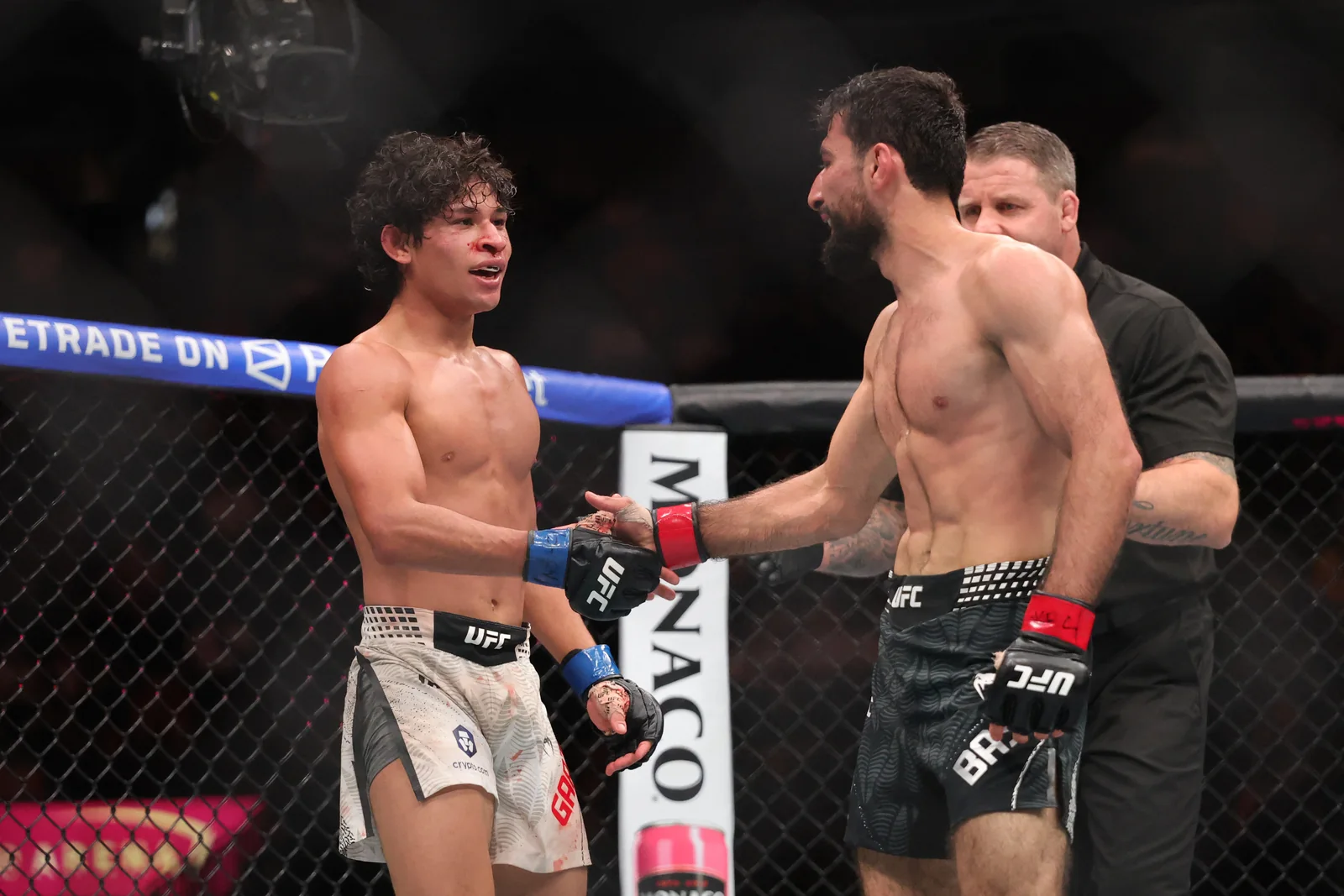
Farid Basharat's UFC exit is a confirmed change of employer with an incomplete public explanation. As of October 29, 2026, the useful question is what the available statements establish—and which popular explanations still require evidence.
The departure is confirmed; the full reason is not
Farid Basharat left the UFC after completing his contract, despite winning all seven of his bouts in the promotion. The public record does not provide a complete, independently established explanation for the decision against renewing him. That distinction answers the headline question more accurately than saying an unbeaten fighter was dismissed for being boring, refusing opponents or upsetting matchmakers. Those explanations have different evidentiary foundations and should not be combined into one established cause.
Guilherme Cruz's October 14 reporting described a completed deal with no new offer. Basharat's own public statement subsequently confirmed his departure. His UFC athlete history records a unanimous-decision victory over John Garza on July 11, 2026, at UFC 329. A sporting defeat therefore does not explain the immediate change in roster status.
Contract expiry is different from losing a fight
Fight fans often use “cut,” “released” and “not re-signed” interchangeably. Here, the reported sequence is that Basharat fulfilled the existing agreement and did not receive a replacement. That wording matters because a reader otherwise might picture a scheduled fight being canceled or an agreement being terminated halfway through. Neither follows simply from the news that his name disappeared from a roster.
It also helps explain why the undefeated record generates a legitimate sporting question without answering the contractual one. Wins demonstrate successful performances against the opponents actually faced. They cannot reveal discussions between representatives, establish the terms of an unshared agreement or tell a reader what either side would have accepted. An offer amount, a deadline or a dispute about a particular clause would each require its own evidence. None should be manufactured to fill the silence.
The concern for the division is straightforward. Removing a fighter who keeps beating UFC opposition changes the available matchups. Other contenders lose a potential opponent; viewers lose a way to test how that fighter compares with the next level. Our bantamweight contender guide supplies the surrounding division context, although any dated ranking must be read alongside subsequent roster changes.
That leaves two reasonable positions available at once: questioning whether UFC retained a deserving contender, and acknowledging that the full business explanation is undisclosed. A critical assessment does not need a guessed motive. The strongest version of the story starts with what happened, identifies who supplied each explanation and makes clear which question the next statement would actually answer. An unbeaten record gives the debate its force; it does not give outsiders access to private negotiations.
How a vague answer became a reputational dispute
The controversy escalated because a general explanation was offered in response to a question about a named fighter. In an October 18 report from UFC Edmonton, White discussed reasons fighters sometimes are not retained, including difficulties arranging bouts. Readers could reasonably connect those examples to Basharat because his departure prompted the question. That connection was understandable; it still was not evidence of a particular rejected opponent.
What Basharat disputed
In his statement reproduced by MMA Mania, Basharat denied declining fights during his UFC tenure and said neither a fresh contract nor another opponent had been offered after his latest appearance. Those are his assertions about his own dealings. They should be credited to him rather than presented as a review of every private communication between management and the promotion.
His objection also concerned employment beyond UFC. If another promoter understood the exit as evidence of unreliability, an ambiguous answer could affect how that promoter assessed him. That is why this was more than an argument over whether supporters enjoyed his fights. Technical performance and willingness to accept work are different subjects. A fighter can defend his reputation on the second question without persuading everyone about the entertainment value of the first.
What White actually walked back
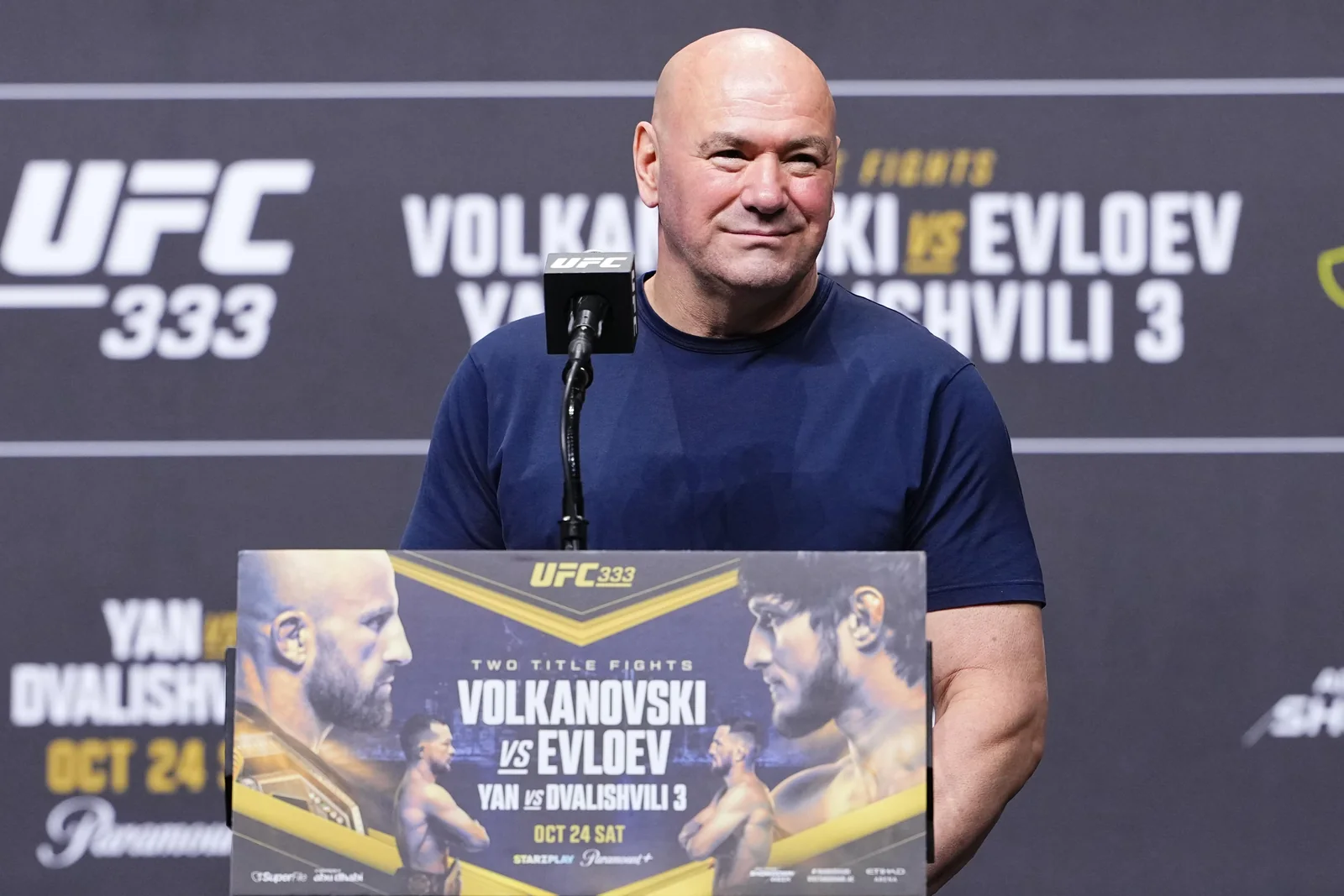
The clarification did not begin only after Saturday's fights. MMA Fighting's October 22 account of the UFC 333 press conference already recorded White saying his examples were general. “I wasn't pointing him out, specifically,” he said. That earlier date matters when reconstructing what viewers knew before the event rather than compressing the whole exchange into one post-fight moment.
MMA Mania's October 26 account added White's regret about the impression created and his statement that he had no personal or professional problem with Basharat. Sherdog subsequently highlighted Basharat's brief public acknowledgement of the clarification. Acceptance of an apology is not acceptance that the original roster decision was justified.
The result is a narrower conclusion than either side's loudest supporters might prefer. No specific refused bout was established in these public exchanges. White clarified the target of his remarks, while the non-renewal remained in place. Treating the clarification as proof of a hidden personal feud would go beyond the evidence just as surely as treating the first answer as proof of difficult behavior.
Seven UFC wins explain why fight fans care
Basharat's case is compelling because the run was sustained across different opponents and several seasons. He did not leave with a perfect record based on one successful debut. His seven UFC wins began with Da'Mon Blackshear at UFC 285 in March 2023 and continued through July 2026. The promotion's own fight history documents that progression, making the sporting question more concrete than a general argument about overlooked prospects.
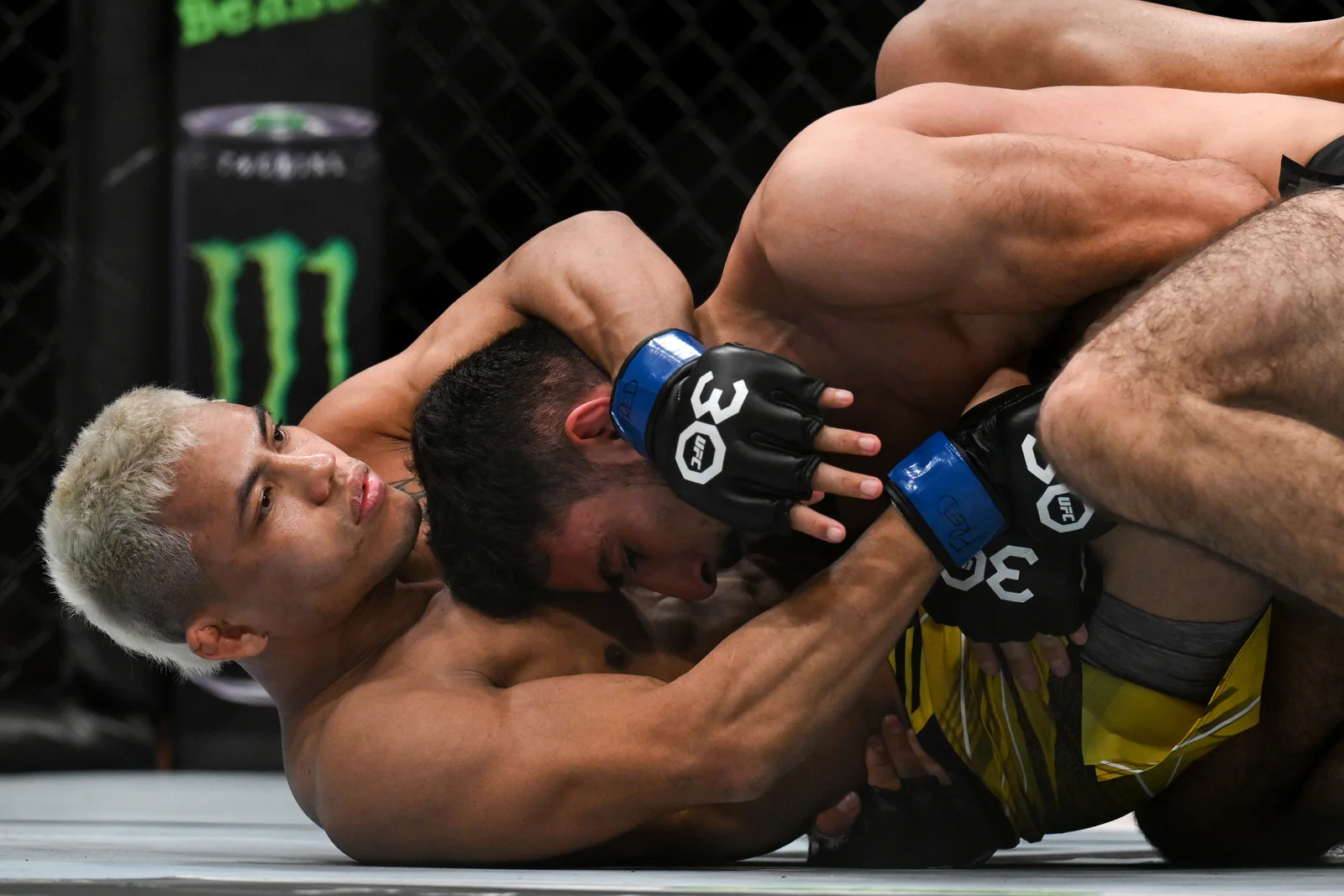
The finish against Kleydson Rodrigues also complicates the shorthand that he simply cannot end fights. UFC's Paris results record an arm-triangle submission at 4:15 of Round 1 on September 2, 2023. That is a particular demonstrated method against a particular opponent. It supports calling him a proven submission winner in the Octagon; it does not establish that he would reproduce the finish against every elite bantamweight.
Decisions over Taylor Lapilus in January 2024 and Victor Hugo in October 2024 followed. At UFC 320 the next year, Basharat beat Chris Gutierrez. The official result lists three 29–28 scores. Those numbers describe a unanimous victory with at least some round-level competition. They are more informative than treating every decision as either total domination or fifteen minutes without meaningful action.
The 2026 wins add another useful distinction. Jean Matsumoto lost to Basharat by split decision on February 7; Garza lost unanimously in July. A split decision records disagreement among the judges, not a deduction from the winner's official record. Equally, a unanimous decision does not automatically mean every minute was one-sided. Understanding those terms lets fans discuss the performances without making the record do work it cannot do.
The Contender Series victory over Allan Begosso belongs to the route into UFC, not to the seven-bout UFC total. Mixing those categories can accidentally inflate the streak and weaken an otherwise strong argument. The important number here is seven victories after joining the roster, with no UFC defeat between them. His broader professional record answers a different question.
For future opponents, this history suggests someone who repeatedly solved enough of a matchup to leave with the result. What remains untested is the next competitive level that supporters wanted to see. It is reasonable to regret losing that test without declaring him the uncrowned champion. A contender's claim grows through named opponents and completed performances; an unbeaten label can introduce the argument, but cannot finish it.
Does an entertainment explanation settle the argument?
There is evidence for discussing style as part of Basharat's experience. It is his account of feedback he received, rather than an inference drawn only from six decision wins. In the October 19 MightyCast interview, he discussed the response to his performances. The publicly accessible opening transcript includes his account that criticism of his style arose during his second UFC contract.
MMA Knockout's account of that interview describes his disappointment after the Matsumoto bout: he thought the action might earn Fight of the Night recognition, then heard that the performance had not impressed the promotion. This is relevant testimony. It still comes through a fighter recounting conversations and feedback, not a jointly agreed explanation published by him and UFC.
A decision is a result, not a style diagnosis
Calling a decision “boring” is an evaluation of the viewing experience. The result itself says the scheduled fighting time ended and the judges selected a winner. It does not tell us whether the exchanges involved dangerous submissions, defensive escapes, punishing strikes or long stretches without effective offense. Those are questions to examine in the actual bout. A submission winner can be cautious for much of a fight; a decision winner can create repeated danger without finding the finish.
For a useful technical discussion, ask what each phase produced. Did a takedown lead to damaging attacks or a credible submission? Did striking pressure force defensive decisions, or mainly move the opponent around? Did the opponent's choices prevent exchanges that one fighter wanted? These questions can explain why two viewers respond differently without pretending enjoyment is an official scoring category.
Roster decisions and round scoring also operate at different levels. A judge must assess the action within a completed round under the applicable criteria. Promotional enthusiasm cannot change that task. Conversely, winning a round does not itself disclose the promotion's future matchmaking plans. Our UFC rankings explainer helps keep competitive ordering separate from the question of which contracts and matchups get made.
The editorial criticism can therefore be stated clearly: a promotion loses competitive depth when a repeatedly successful fighter leaves before reaching the strongest available opposition. Supporters do not need to prove a malicious motive to hold that view. They also should not turn the view into a claim that every decision-based fighter faces identical treatment. Basharat's experience is a specific case with specific statements. The dissatisfaction is understandable, but the explanation remains strongest when the fighter's reported feedback, White's clarification and independent sporting analysis retain their separate identities.
What to watch for in Basharat's next chapter
Basharat's next competitive step is easier to assess with his own earlier ambitions in view. In UFC's July 7 interview, before the Garza bout, he wanted an opponent above him who could reward a win with meaningful upward movement. He anticipated that critics might dismiss beating a short-notice newcomer. That tension preceded the exit: he wanted to prove himself against stronger opposition, while the fight immediately available offered a different test.
The opponent change illustrates the problem. Ethyn Ewing was the original assignment; Garza replaced him. Basharat described adapting the tactics while keeping the same aim of winning. The sporting frustration is that dealing successfully with a replacement does not create the same evidence as beating the original opponent. It also should not erase the work involved in adjusting late. A future promoter's first opponent will tell us whether his next chapter finally supplies the upward test he was seeking.
His training choices give that question a technical dimension. In an October 2025 UFC interview, Basharat discussed spending the preceding year at American Top Team. He named Mike Brown, Artem Levin, King Mo and Steve Mocco among the experienced coaches available there and described refining his existing range of skills. These were his assessments of development, rather than an independent measurement that every part of his game improved by a particular amount.
The next bout can test that account in concrete ways. Can he turn a wrestling entry into sustained offense against an opponent who repeatedly gets back up? Can he maintain useful striking exchanges without relying on a finish to validate them? Can he keep his defensive choices intact when a recognizable contender increases the pace? Those are more informative questions than whether he can produce a viral moment. They connect his claim of being well rounded to problems an actual opponent can impose.
A new promotional agreement or opponent had not been established in the sources examined by October 29. The PFL connection often raised by supporters concerns his brother Javid's career; it is not evidence that Farid signed the same arrangement. White also left a UFC return possible without committing to a near-term reunion. Neither point should become an invented next-fight listing.
When the announcement does arrive, the useful details will be the opponent, the date and what a successful performance makes available afterward. Basharat's stated goal before leaving was a more rewarding competitive step. A promotion that gives him that step would answer an important part of the sporting criticism, even if the complete explanation for his UFC non-renewal remains private. His career now needs another demanding matchup, rather than another argument conducted entirely through the meaning of his unbeaten record.
Fight talk
Comments