Ranking snapshot
Official board date: August 25, 2026. This guide checked the live UFC rankings page on August 29, 2026. Treat the table as a dated snapshot, because results from a later card may not appear until the next rankings update.
UFC Bantamweight Rankings Snapshot: Champion and Top 15
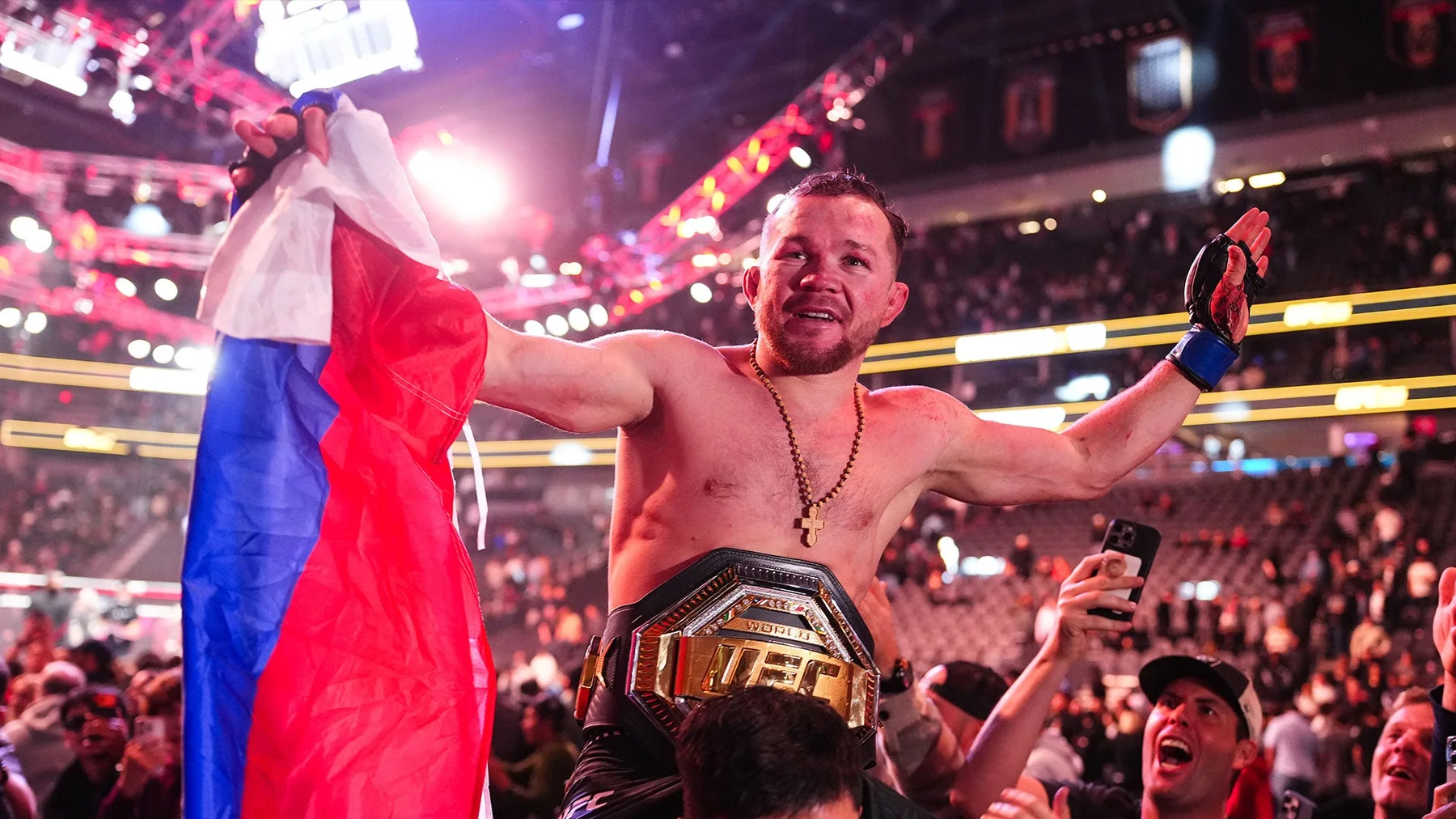
Petr Yan is the UFC bantamweight champion on the official board used for this guide. Merab Dvalishvili is the No. 1 contender, followed by Sean O'Malley and Umar Nurmagomedov. That distinction matters: UFC displays the champion outside the numbered challenger list, so No. 1 means the leading ranked contender, not the champion.
| Position | Fighter | Reading the position |
|---|---|---|
| Champion | Petr Yan | Holds the undisputed belt |
| 1 | Merab Dvalishvili | Leading ranked challenger |
| 2 | Sean O'Malley | Immediate title-tier contender |
| 3 | Umar Nurmagomedov | Immediate title-tier contender |
| 4 | Mario Bautista | Upper-contender tier |
| 5 | Cory Sandhagen | Upper-contender tier |
| 6 | Song Yadong | Upper-contender tier |
| 7 | Aiemann Zahabi | Top-10 proving ground |
| 8 | David Martinez | Top-10 proving ground |
| 9 | Deiveson Figueiredo | Ranked veteran |
| 10 | Marlon Vera | Ranked veteran |
| 11 | Payton Talbott | Developing contender |
| 12 | Raul Rosas Jr. | Developing contender |
| 13 | Raoni Barcelos | Lower Top-15 test |
| 14 | Farid Basharat | Lower Top-15 test |
| 15 | Marcus McGhee | Entry position |
The third column is an editorial tier, not another official ranking. It helps explain the practical distance between a number and a championship opportunity. UFC matchmaking still considers availability, recent results, timing and the value of a specific matchup; the standings do not function as a tournament bracket.
This table transcribes UFC.com's All Rankings view dated August 25, 2026—the media-panel board, not the separate All Meta Rankings calculation dated August 22. Because those parallel products use different methods and do not produce the same order, no Meta-model input should be used to explain a number in this table. Our UFC rankings guide explains that distinction. Fans unfamiliar with the division limit can also review the UFC weight-class rules: men's bantamweight is the 135-pound division, with the championship-bout limit fixed at 135 rather than the one-pound non-title allowance.
The Championship Tier: Yan, Dvalishvili, O'Malley and Nurmagomedov
The strongest immediate case belongs to Merab Dvalishvili, but the rankings do not make a trilogy automatic. Petr Yan and Dvalishvili are 1-1 across ten rounds. Dvalishvili's pace and repeated wrestling entries controlled their first meeting in March 2023; Yan reversed the competitive picture at UFC 323 on December 6, 2025, winning 49-46, 49-46 and 48-47 to reclaim the belt. UFC's official recap highlighted Yan's forward pressure and body attacks, especially late, rather than reducing the result to takedown defense alone.
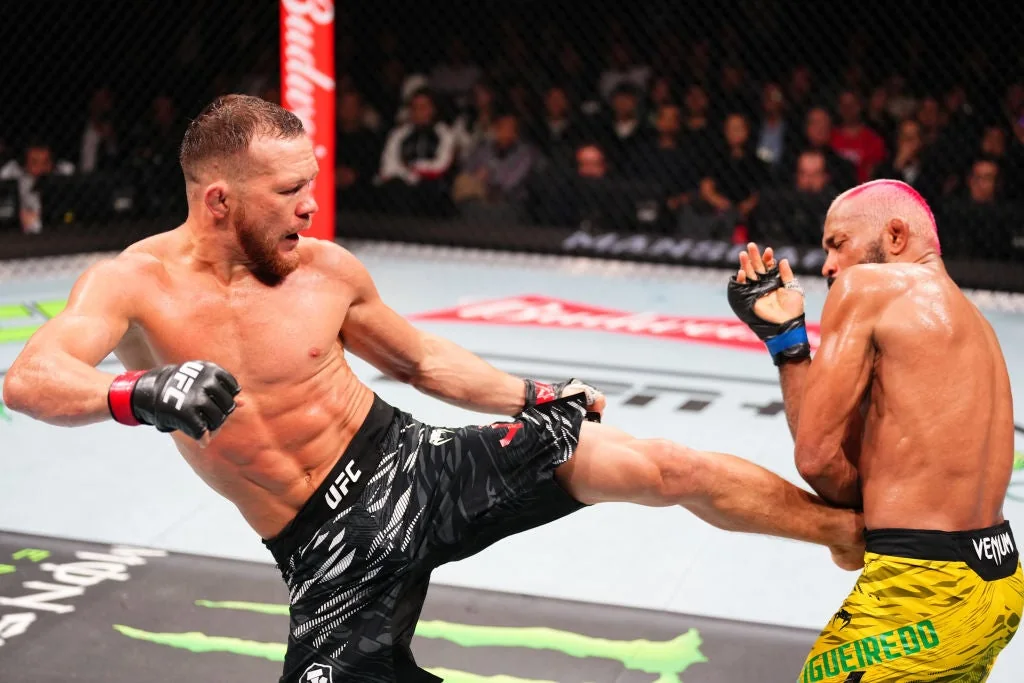
That history makes Dvalishvili the most established challenger on competitive merit. His 2025 schedule included victories over Umar Nurmagomedov, Sean O'Malley and Cory Sandhagen before the Yan loss. The editorial question is timing: a third bout is easy to justify, but UFC may still ask the former champion to produce a fresh win while another contender builds a new matchup. Rankings measure placement; they do not publish the promotion's booking priorities.
O'Malley offers a different test
Sean O'Malley returned with a unanimous-decision win over Song Yadong at UFC 324 on January 24, 2026. At range, his length, stance changes and counter timing create a cleaner striking puzzle for Yan than Dvalishvili's volume wrestling. Yet the title case cannot ignore O'Malley's two losses to Dvalishvili: a five-round decision in 2024 and a third-round submission in 2025. Beating a ranked striker restored momentum; proving that his defensive layers hold against elite chain wrestling would strengthen the argument further.
Nurmagomedov's position needs a date stamp
Umar Nurmagomedov sits No. 3 on this Aug. 25 board. His value is obvious: disciplined kicking at distance, efficient entries and sustained top control can force Yan to defend every phase. But this article was checked on the day of the Shanghai event, after the board's stated update date. Fans should not assume a same-day result is already reflected. That is precisely why the table is presented as a snapshot rather than a timeless pecking order.
Title-tier takeaway
Dvalishvili has the deepest recent championship résumé, O'Malley supplies the biggest pure striking contrast, and Nurmagomedov poses the most layered range-to-grappling problem. The next challenger should be judged by a confirmed result and booking—not by treating No. 1, No. 2 and No. 3 as scheduled turns.
Ranks 4–8: The Contender Gate Where One Win Can Change Everything
Mario Bautista has the clearest upward result in this cluster. At UFC 329 on July 11, 2026, he defeated Cory Sandhagen by unanimous decision, with all three judges returning 29-28. The result carried unusual context: Sandhagen had submitted Bautista in 3:31 of the first round when Bautista accepted his UFC debut on short notice in 2019. Winning the rematch seven and a half years later showed development across a complete three-round fight, not merely revenge.
Bautista's No. 4 position places him at the edge of the championship tier. The remaining question is whether one more win is necessary or whether timing opens a title opportunity. A three-round victory over an elite contender is meaningful; a five-round main event can answer different questions about pace management, late-fight decision-making and the ability to sustain layered offense after an opponent has adjusted.
No. 5 Cory Sandhagen
Sandhagen remains one of the division's most varied strikers, changing stance, attack height and rhythm while mixing opportunistic grappling. The Bautista loss lowers immediate momentum, but his long experience against elite opposition makes him a demanding measuring stick. He needs a current win more than a theoretical style argument.
No. 6 Song Yadong
Song followed a close decision loss to O'Malley with a second-round guillotine of former flyweight champion Deiveson Figueiredo on May 30. That submission matters because it broadens the threat beyond his compact boxing and physical counters. His Aug. 29 Shanghai headliner falls after the board date, so readers should wait for the next official update before assigning movement.
No. 7 Aiemann Zahabi
Zahabi's disciplined decisions had built a seven-fight streak before Sean O'Malley knocked him out with a right hand at 4:02 of Round 2 at UFC Freedom 250. The loss does not erase the run, but it shows the cost of narrow defensive margins against a longer, faster counter striker. Re-establishing momentum against another ranked style is the practical next step.
No. 8 David Martinez
Martinez is the disruptive riser in the group. His official profile lists a 14-1 record, ten knockout wins and a February victory over Marlon Vera. Those numbers signal finishing danger, but rankings become more predictive only as a prospect meets different levels of wrestling, pace and defensive striking. His listed September 12 bout with Dan Ige is exactly the kind of scheduled test fans should confirm on the UFC schedule.
The cluster's lesson is simple: one quality win can move a fighter into title discussion, but the nature of the win still matters. Bautista owns the best recent ranked victory; Sandhagen carries the broadest elite experience; Song has added a submission to his recent tape; Zahabi must rebound; Martinez is still converting promise into proof.
Ranks 9–15: Veterans, Prospects and the Risk of Being Leapfrogged
The lower Top 15 is not a waiting room; it is the division's fastest-changing proving ground. Deiveson Figueiredo and Marlon Vera carry recognizable résumés, while Payton Talbott, Raul Rosas Jr., Farid Basharat and Marcus McGhee are still defining their ceiling. Raoni Barcelos sits between those groups as the kind of technically experienced opponent who can expose a prospect before hype becomes proof.
Veteran value depends on current results
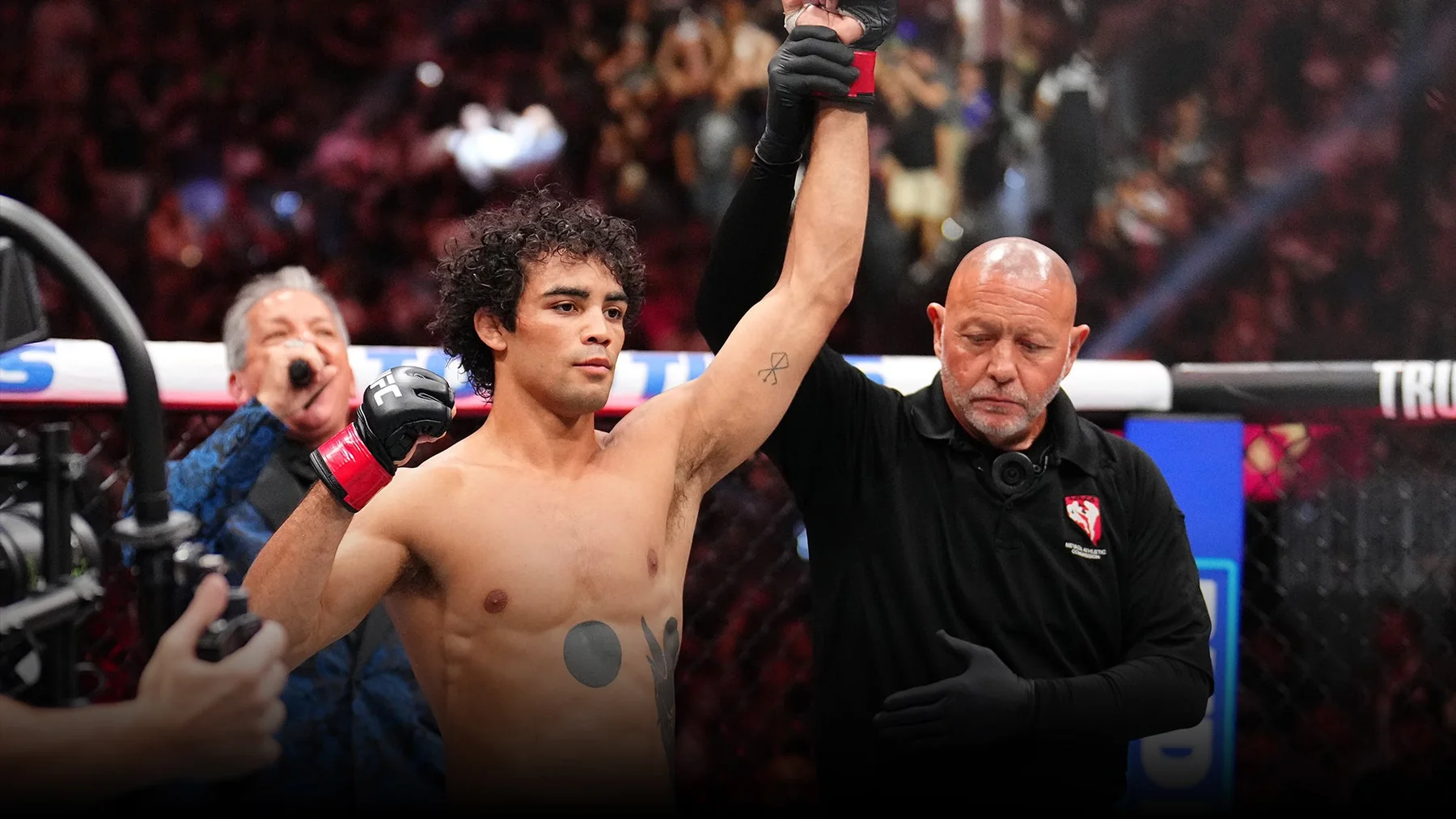
Figueiredo, ranked No. 9 on this snapshot, remains dangerous in transitions and finishing exchanges, but Song Yadong submitted him with a guillotine at 4:42 of Round 2 on May 30. Vera at No. 10 has spent years facing the division's strongest names, yet David Martinez's February win over him transferred immediate ranking value to a newer contender. Experience raises the difficulty of beating a veteran; it does not freeze that veteran's position.
Talbott shows how a prospect should be evaluated
Talbott's rise is more useful when read as a sequence. Raoni Barcelos handed him his first professional loss at UFC 311. Talbott then beat Felipe Lima and faced Henry Cejudo at UFC 323. Against the former two-division champion, he scored two first-round takedowns and won 30-27 on every card. The significance was not Cejudo's name by itself; it was Talbott showing composure, shot selection and phase-to-phase development over three rounds.
The remaining entry tier
- Raul Rosas Jr., No. 12: youth and grappling upside create attention, but ranked staying power requires answers against opponents who deny early control.
- Raoni Barcelos, No. 13: a veteran benchmark whose experience can punish rushed development.
- Farid Basharat, No. 14: his decision win over John Garza at UFC 329 preserved upward momentum; a ranked opponent is the next clearer measurement.
- Marcus McGhee, No. 15: the official profile lists eight knockouts in 11 wins and a June decision victory. Entry at No. 15 gives him visibility, not protection.
For fans, the right question is not “who has the biggest name?” It is who can beat a ranked opponent with a different skill set, then do it again before a new winner passes them. That is this article's editorial test for contender momentum, not a disclosed scoring formula for the media-panel board. Our UFC rankings guide explains how the panel list differs from the separate Meta calculation.
What the Rankings Say About Bantamweight Matchmaking
The rankings identify competitive neighborhoods; they do not solve the matchup. For matchmaking analysis, this article separately considers opponent quality, win type, trajectory, recency and inactivity. Those are transparent editorial lenses—not a claim about how each media voter produced the August 25 order. The next question is whether the fighter's tools answer the specific problems presented by the champion and other contenders.
Four questions behind a useful ranking matchup
- 1. Who controls the first layer? A long striker may win at open range, but that advantage disappears if an opponent safely reaches the fence or clinch.
- 2. What happens after the first defense? Stopping one takedown is different from breaking a chain of attempts, returning to the feet and resetting without absorbing offense.
- 3. Does the approach survive five rounds? Three-round output, decision-making and recovery do not automatically scale to a championship pace.
- 4. How strong was the evidence? A finish over a highly ranked opponent can answer more than a narrow win over someone outside the Top 15, although method alone never replaces opponent context.
Yan is a useful example. His official profile lists 5.16 significant strikes landed per minute, 86 percent takedown defense and 1.70 takedowns of his own per 15 minutes. Those figures describe a champion who can defend entries, counter in combinations and change phases. They do not mean he will stop 86 percent of any particular challenger's attempts; the percentage comes from past UFC opposition and matchup conditions.
Dvalishvili's profile lists 5.97 takedowns per 15 minutes and an average fight time above 17 minutes. His pressure can make an opponent defend repeatedly, yet Yan's UFC 323 win proved that a second meeting can look different after tactical adjustment. O'Malley's range and counter power punish reckless entries, but Dvalishvili submitted him at UFC 316. Those results reject simplistic MMA math: Yan beating Dvalishvili and Dvalishvili beating O'Malley do not pre-determine Yan versus O'Malley.
For fans projecting the next title challenger, the best process is to start with the dated Top 15, check the latest confirmed result, then compare phase-specific questions. Finally, verify that the bout is actually announced on the UFC schedule. A rumored pairing should never be presented as a consequence of rank alone.
That approach also explains why this current-division guide does not repeat our full article on how UFC ranking products differ. This section starts with the media-panel order, then adds technical questions without pretending the list predicts styles or guarantees a booking.
What Could Change the Bantamweight Rankings Next
The first change to watch is already waiting outside this snapshot. Song Yadong knocked out No. 3 Umar Nurmagomedov with a right uppercut in Round 2 at UFC Shanghai on August 29, 2026. The official UFC bonus report called it a Performance of the Night. Because the table above carries an August 25 update label, that result is not yet represented there.
Song's win should create movement, but this guide will not invent the exact new numbers. The responsible sequence is to record the result, wait for UFC to publish the next dated All Rankings media-panel board, then update the table and snapshot date together. The automatic “by Monday” cadence belongs to the separate Meta product, not the table used here. Predicting Song at a specific position before publication would turn analysis into a false official ranking.
Three confirmed pressure points
- The post-Shanghai vote: Song beat a higher-ranked former title challenger by finish. Opponent level, method and freshness make an editorial case for movement, but only the next published media-panel board can establish the exact rank.
- Yan–Dvalishvili III: the fighters' official UFC profiles list a third bout for October 24, 2026. It will settle the belt immediately, even though the rest of the contender order will continue to depend on other results.
- The next Top-15 crossovers: Bautista needs to convert his Sandhagen victory into a top-tier opportunity, while Martinez, Talbott and the entry group need wins that hold up against ranked opposition.
A simple freshness check for fans
- 1. Read the date above any ranking table.
- 2. Check whether a relevant division bout happened after that date.
- 3. Confirm the new order on UFC's official page rather than a social screenshot.
- 4. Use the current UFC schedule to separate announced bouts from rumors.
Bantamweight is too deep for one result to answer every title question. Song's Shanghai finish changes the contender conversation; Yan and Dvalishvili's scheduled trilogy controls the championship; O'Malley and Bautista still own strong current cases. The official board will decide the numbers, while confirmed bookings decide which competitive questions the Octagon answers next.
This article will remain useful only if its snapshot date moves with the same All Rankings table. For a deeper explanation of the media panel and the parallel Meta board—without mixing their rules—consult the separate guide to how UFC rankings work in 2026.
Fight talk
Comments