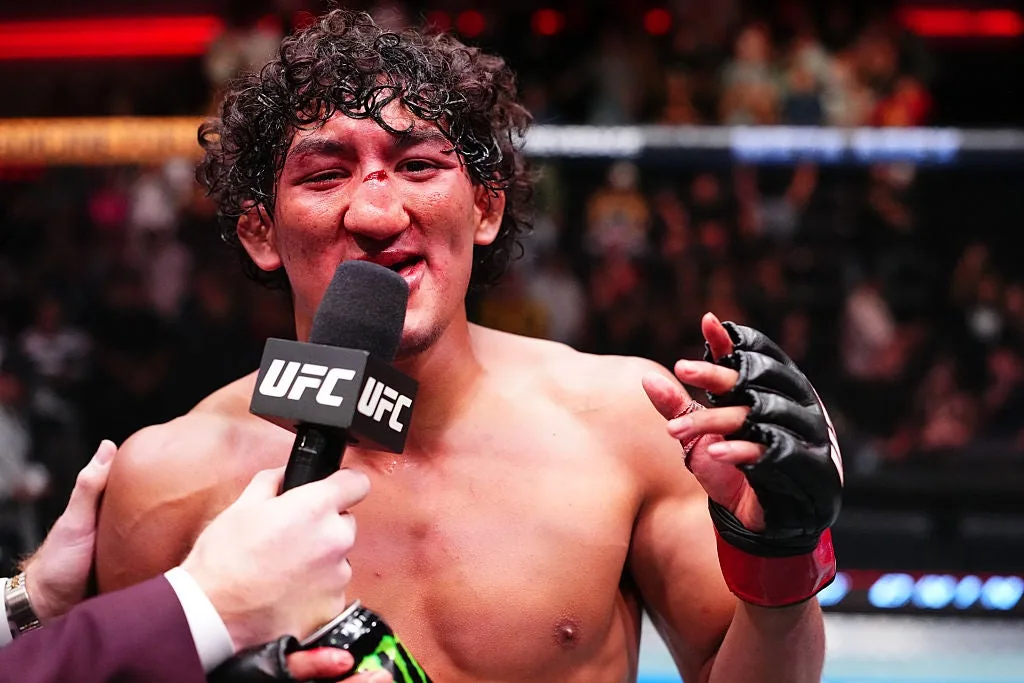
Raul Rosas Jr. defeated Raoni Barcelos at 1:38 of Round 5 in the September 26, 2026 UFC Fight Night main event at Meta APEX in Las Vegas. The night included a unanimous decision for Ailin Perez over Norma Dumont, a 57-second submission in Luis Hernandez's UFC debut, and two very different endings to The Ultimate Fighter 34 finals. Below is the complete five-bout Main Card and seven-bout Prelims, followed by the scorecard and fight context that a list of winners cannot show.
Who won at UFC Fight Night: Rosas Jr. vs Barcelos?
Rosas Jr. is the main-event winner, but the 12-fight card was more than a single late finish. The completed results below bring the five Main Card bouts and seven Prelims into one place. Times are elapsed time in the listed round. Decision scores are the judges' totals, while a submission, technical knockout (TKO), knockout (KO), or disqualification (DQ) ends a bout before a three- or five-round decision is required. The UFC's official scorecards and the complete MMA Fighting results support the card record.
| Card | Winner | Opponent | Official outcome |
|---|---|---|---|
| Main | Raul Rosas Jr. | Raoni Barcelos | Fifth-round stoppage, 1:38 |
| Main | Ailin Perez | Norma Dumont | Unanimous decision, 29–28 ×3 |
| Main | Luis Hernandez | Sedriques Dumas | Submission, standing guillotine, R1 0:57 |
| Main | Ilimbek Akylbek | Mahammadali Osmanli | DQ, illegal knee, R1 2:19 |
| Main | Tina Black | Melissa Amaya | TKO, strikes, R2 3:19 |
| Prelims | Brady Hiestand | Rinya Nakamura | Submission, rear-naked choke, R2 4:07 |
| Prelims | Rodolfo Vieira | Robert Bryczek | Unanimous decision, 30–27 ×3 |
| Prelims | Christian Edwards | Rodolfo Bellato | TKO, left hook, R3 1:47 |
| Prelims | Elves Brener | Josiah Harrell | TKO, strikes, R1 4:14 |
| Prelims | Montel Jackson | Ricky Simon | TKO, strikes, R2 2:39 |
| Prelims | Alatengheili | John Castaneda | Split decision, 29–28, 28–29, 29–28 |
| Prelims | Yazmin Jauregui | Vanessa Demopoulos | TKO, strikes, R1 1:02 |
There are two small but important labeling differences in widely read results pages. MMA Fighting lists the Rosas Jr. finish as a KO, while UFC's fight coverage calls it a TKO; both record Rosas Jr. as winner at 1:38 of the fifth. MMA Fighting also calls Brener's finish a KO, while the UFC scorecard index records a TKO. We use “stoppage” for the main event here and the UFC label for Brener in the table, then examine the ending in context below. For scores from other events, see the UFC results hub; this recap is fixed to the September 26 card.
How did Rosas Jr. beat Barcelos after four difficult rounds?
The final result reversed the fight's scoring direction. Rosas Jr. took the opening round on many observers' cards, but Barcelos's body work, counterpunching and repeated takedowns changed the middle rounds. CBS Sports reported that the three official judges had Barcelos ahead 39–37, 39–37 and 39–36 after four. Those were live scores in a bout that never reached a decision; Rosas Jr. won by a recorded fifth-round stoppage instead. That tension explains why the result deserves more than a bare “Rosas Jr. def. Barcelos” line.
Rounds one through four: the fight before the finish
Rosas Jr. came out throwing calf kicks and straight punches, then held his ground when Barcelos answered with uppercuts, hooks and attacks to the body. Barcelos completed a takedown in the first, yet Rosas Jr. scrambled back up and kept punching. The opening frame showed a more willing exchange from the younger fighter than a simple wrestle-first script would suggest. It also set a punishing pace: the fighters were trading at close range, and both accumulated visible facial damage as the bout lengthened.
The second round pushed the tactical balance toward Barcelos. He repeatedly found Rosas Jr.'s body, used right hands as Rosas entered, and mixed in takedowns. Rosas Jr. still scored with his left hand and kept returning fire, but his volume was less steady. In the third, Barcelos swept into a back position; Rosas Jr. turned through and spent a spell on top landing punches before Barcelos stood and resumed his offense. Those shifts are why the round is more informative than a single grappling statistic. Position changed hands, and the damage on the feet mattered between scrambles.
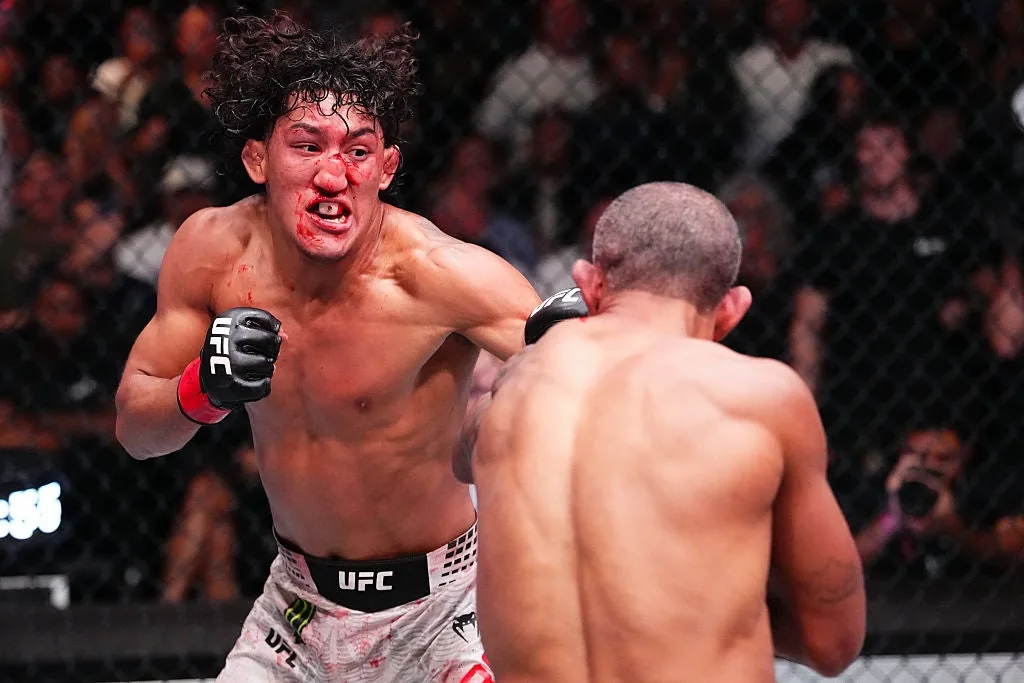
Round four was Barcelos's strongest sustained stretch. He put Rosas Jr. down more than once, took the back, and attacked the neck while Rosas Jr. fought the hands and survived. MMA Fighting's round-by-round account scored the bout even at 38–38 after four; that was its reporter's unofficial card. CBS's report of the official cards had Barcelos ahead on all three, including one 10–8 fourth round. The difference is a reminder to keep media scoring separate from the actual judges' record.
Round five: the recorded stoppage and its limits
Rosas Jr. started the last round with fresh forward pressure. Barcelos initially took him down and moved behind him, but Rosas Jr. escaped, punched his way back into the exchange and then completed a trip near the fence. Barcelos became unresponsive during that sequence, and referee Herb Dean stopped the fight at 1:38 of Round 5. UFC's official bonus coverage describes a fifth-round stoppage; CBS calls the result a TKO, while MMA Fighting and Sherdog use KO wording. The shared, secure facts are the winner, round, clock and abrupt end. The visible sequence does not establish a medical cause, and a result label is not a diagnosis.
Rosas Jr. deserved credit for continuing to compete after Barcelos's fourth-round control and for creating the final exchange. Barcelos's work through four rounds also remains part of the sporting record. For his condition after the bout, read the separate dated Raoni Barcelos medical update, which keeps confirmed health statements apart from fight analysis.
What happened on the rest of the main card?
The four bouts before Rosas Jr.–Barcelos produced four different kinds of result: a close three-round decision, an immediate submission, a rules disqualification and a second-round TKO. Reading them as four interchangeable “wins” hides the sporting story. Perez had to persuade the judges; Hernandez forced a tap; Black earned a stoppage; and Akylbek Uulu advanced through Osmanli's illegal action.
Ailin Perez vs Norma Dumont: the co-main decision
Ailin Perez defeated Norma Dumont 29–28 on all three judges' cards. Perez's late first-round takedown and half-guard work gave the bout a clear grappling phase, while much of the second and third rounds was a cautious exchange of jabs, low kicks and feints. Dumont found kicks and counters and prevented Perez from simply holding her down throughout. In the final minute, Perez pressed her into the fence and landed a few short strikes. That is a narrower story than the months of rivalry and sharp words suggested before the fight.
The official unanimity concerns the result, not a claim that every observer agreed on each round. Sherdog's live scorers favored Dumont 29–28, while the three appointed judges all favored Perez. That discrepancy can be discussed without declaring a judging error from a rough impression of activity. MMA's scoring asks which fighter produced more effective striking or grappling in each round; a late takedown or fence clinch matters for what it achieved, not merely for how long it lasted. The UFC's Perez winner interview confirms the unanimous decision.
Luis Hernandez's rapid UFC debut
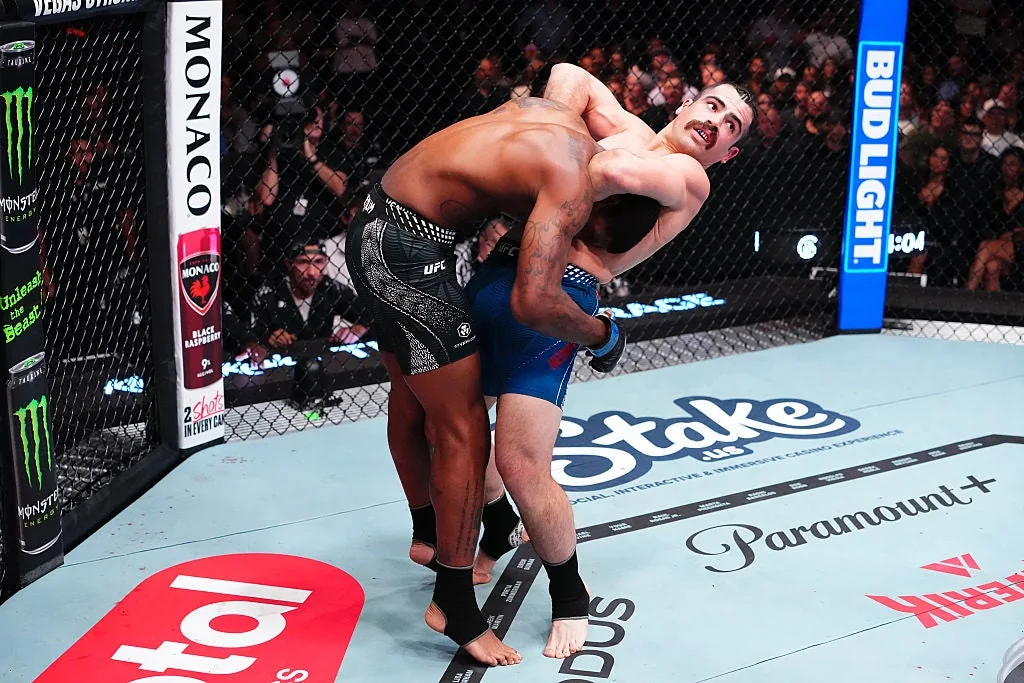
Luis Hernandez accepted a late replacement opportunity after Mickey Gall left the matchup and needed 57 seconds against Sedriques Dumas. An overhand left helped him close distance; he moved into the clinch, secured a guillotine and brought the hold upright until Dumas tapped. The UFC finish clip gives the official clock as 0:57 of Round 1. That precise time is consistent with the full-card records, even though one paragraph in UFC's bonus story described it loosely as 50 seconds. His debut showed finishing composure on short notice; one rapid finish alone does not prove how he will handle longer UFC fights.
The Ultimate Fighter 34 finals: Black and Akylbek Uulu
The women's strawweight final had a conventional competitive finish. Tina Black, whose legal name is Valesca Machado, hurt Melissa Amaya during the first round, then found the right hands and follow-up strikes that prompted a second-round stoppage at 3:19. UFC presents her as TUF 34 strawweight winner Tina Black; some record and play-by-play pages use Valesca Machado. They refer to the same fighter, a useful clarification when comparing databases. The finish gave Black a decisive finale result after a season in which she had already shown both finishing ability and the patience to win a longer bout.
The bantamweight final ended for a different reason. Mahammadali Osmanli landed an illegal knee on a downed Ilimbek Akylbek Uulu during the first round, and the contest was stopped at 2:19. The recorded outcome is a disqualification loss for Osmanli and a victory for Akylbek Uulu. It should not be written as Akylbek Uulu knocking out or submitting Osmanli; neither happened. Nor does a first-round DQ reveal who would have won three legal rounds. It gave the TUF finalist the official win, while leaving a narrower technical sample to assess than Black's two rounds of striking and finish.
Which prelims shaped the card?
Seven prelims preceded the five-fight main card, and five ended before the final horn. The UFC's detailed prelim recap is useful here because it separates the actual route to victory from the result shorthand: four striking stoppages, one rear-naked choke, and two decisions with very different score lines.
Fast finishes from Jauregui, Jackson, Brener and Edwards
Yazmin Jauregui opened the event with the quickest prelim finish. Returning after a two-year absence, she backed Vanessa Demopoulos toward the fence with a right hand, maintained a flurry as Demopoulos retreated, and forced the referee's intervention at 1:02 of Round 1. It was a TKO by strikes, not a three-round test of her pace. Its significance is that the returning strawweight immediately showed sharp timing and finishing urgency; the next matchup will tell more about how those tools hold up against sustained resistance.
Montel Jackson's second-round TKO over Ricky Simon carried a longer history. Simon had handed Jackson his first professional loss in Jackson's 2018 UFC debut. This time Jackson used his long straight punches to set the range, dropped Simon with a one-two in Round 2, and finished with follow-up punches at 2:39. Simon found wrestling moments in the first, so the result was not a matter of Jackson landing one isolated lucky strike. Jackson repeatedly put the straight-punch threat in front of Simon until it produced the decisive opening.
Elves Brener stopped Josiah Harrell at 4:14 of Round 1. Harrell had looked for takedowns, but Brener defended a late entry, reset and landed a right hook that sent him down; follow-up punches completed the TKO. The UFC's official record calls it a TKO even though some results pages shorten the sequence to KO. Christian Edwards supplied the comeback among these four: Rodolfo Bellato had clipped him and made the first two rounds difficult, but Edwards pressed in the third, landed a left hook and finished at 1:47. The result was Edwards's first UFC win, earned through a change in initiative after a closely fought opening ten minutes.
Hiestand's return and the decisions for Vieira and Alatengheili
Brady Hiestand closed the prelims with a rear-naked choke of Rinya Nakamura at 4:07 of Round 2. He had been away since June 2024, and the return did not depend on a single opportunistic grab. Hiestand pressed to grapple, threatened an anaconda earlier in the second, then took Nakamura's back and secured the final choke. The UFC recap lists it as his fourth consecutive win and third consecutive finish, giving the comeback a meaningful bantamweight context.
Rodolfo Vieira's unanimous decision over Robert Bryczek was scored 30–27 by all three judges. Vieira put Bryczek down early and spent much of Round 1 working from top position. Later rounds involved more fence pressure than clean open-mat offense. That distinction matters: the official sweep tells readers who the judges believed won each round, while the bout's tactical story is Vieira imposing enough grappling and position to limit Bryczek's offense.
Alatengheili's win over John Castaneda was much narrower: two judges marked 29–28 for Alatengheili and one marked 29–28 for Castaneda. Castaneda's lead-leg attacks and early work made him competitive, while Alatengheili found more striking exchanges and wrestling as the fight wore on, particularly in the third. A split decision means the judges disagreed on the winner; it does not mean one judge saw a draw. Together, these seven results show why a card's prelims are more than waiting time before the headline bout.
What do the scorecards, bonuses and highlights show?
The official judges' paperwork answers a different question from the result line. In the main event it shows Barcelos ahead through four rounds, as reported by CBS, but there was no judges' decision because the fifth-round stoppage ended the contest. For Perez–Dumont, the official verdict was a completed unanimous decision, 29–28 on all three cards. Readers who want to compare rounds should start with the UFC's official scorecard page, then watch the relevant bout. An unofficial reporter's score is useful analysis, but it does not change the outcome entered by the commission and promotion.
UFC's September 27 bonus announcement named Rosas Jr. vs Barcelos as Fight of the Night. It named Luis Hernandez and Yazmin Jauregui as the two Performance of the Night recipients. Hernandez's short-notice submission and Jauregui's 62-second return finish each had the instant impact a performance award recognizes. The main-event award recognizes the intensity of the contest; it is neither a different scorecard nor an explanation of Barcelos's post-fight health.
Where can fans check the official highlights?
For the decisive sequences, UFC hosts a Hernandez submission highlight and a Jauregui finish highlight. Its Rosas Jr. Octagon interview is a post-fight interview, not a replay of every round. UFC also posts Black's TUF final finish and Edwards's third-round stoppage on their own clip pages. A clip can show the final moment vividly, yet omit the entries, defense and round-to-round adjustments that gave it meaning.
For that fuller view, Paramount+ lists an on-demand Rosas Jr.–Barcelos bout replay dated September 26. Its page prompts viewers to sign up, and viewing depends on their account and territory. Watching the whole fight is especially helpful here: the early exchanges, Barcelos's middle-round grappling and Rosas Jr.'s final-round urgency are all part of the result, while one highlight alone cannot stand in for the scorecards.
What competitive questions remain after the card?
Rosas Jr.'s sixth consecutive win and first UFC main-event victory put another significant name on his résumé. The fight also showed a demanding next area of evaluation. He traded effectively early and found energy for a fifth-round finish, yet Barcelos's body attacks and repeated takedowns left him behind on the official cards after four. A higher-ranked assignment would test whether Rosas Jr. can preserve his offense while denying those positions over a full five rounds. He asked for a top-six or top-seven opponent in his post-fight remarks, according to CBS Sports; a fighter's request is not a confirmed booking.
Perez's unanimous win over a fellow top-five women's bantamweight gives her an important result in a small contender pool, though the close, low-output rounds will remain part of how that performance is evaluated. Hiestand's fourth straight win and third straight finish make his call for a ranked bantamweight easier to understand; it does not place a date or opponent on the calendar. Jauregui's fast return and Hernandez's 57-second debut earned bonuses, but each will be judged further when a future opponent asks a different question than this card did.
The TUF 34 winners leave with different kinds of evidence. Black stopped Amaya through sustained strikes in Round 2; Akylbek Uulu's official victory came from a first-round disqualification. Both results count, but they offer different amounts of legal fight action for projecting the next test. No opponent or date for either winner was established in the official event materials reviewed on September 28. For confirmed future matchups, follow the upcoming UFC events calendar and look for a named bout and event announcement. This article records what happened on September 26; any later fight, ranking movement or Barcelos health update needs its own dated confirmation.
Fight talk
Comments