UFC Flyweight Rankings 2026 Snapshot
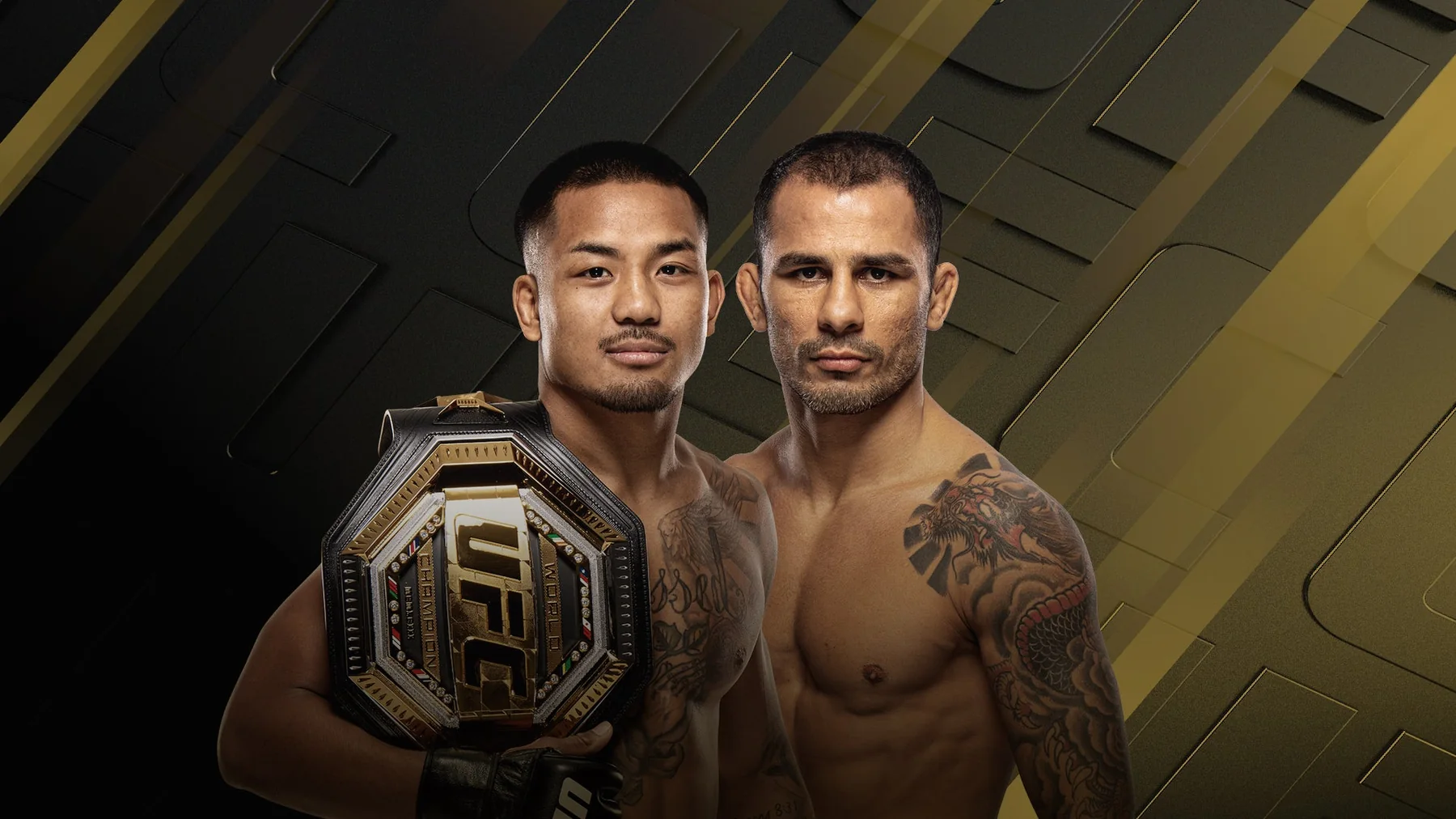
Joshua Van is the UFC men’s flyweight champion as of August 29, 2026, and Alexandre Pantoja is the No. 1-ranked contender on the UFC media-panel list. Manel Kape is No. 2, Brandon Royval No. 3 and Tatsuro Taira No. 4. The champion is displayed above the numbered Top 15, so Pantoja leads the challenger order without being listed as belt holder.
This article covers men’s flyweight at 125 pounds. Women’s flyweight is a separate UFC division with its own champion and ranking. UFC.com also presents a Meta ranking view following the June 2026 launch of a data-driven system, so we identify the media list used here. Our rankings explainer compares the methods.
Champion
Joshua Van
No. 1
Alexandre Pantoja
No. 2
Manel Kape
Limit
125 pounds
Speed is only the entry requirement at elite flyweight. The strongest fighters combine pace with layered scrambles, responsible exits and technical choices that survive five rounds. A rank describes current competitive position; it does not prove that one fighter automatically beats everyone below him.
Our weight-class guide explains the standard limit and championship weigh-in requirement. A missed limit or opponent replacement can alter title stakes while the published rank remains temporarily unchanged.
Treat proposed fights as editorial discussion until an official event page confirms them. We distinguish published positions and results from our technical forecasts throughout, and timestamp every list so fight fans can see exactly when it was checked.
Complete Flyweight Top 15
The following is UFC.com’s media-panel men’s flyweight order captured August 29, 2026. The tactical descriptions are our editorial shorthand.
| Rank | Fighter | Competitive read |
|---|---|---|
| Champion | Joshua Van | Pace and late-round offense |
| 1 | Alexandre Pantoja | Championship grappling craft |
| 2 | Manel Kape | Explosive counter striking |
| 3 | Brandon Royval | High-pace scramble danger |
| 4 | Tatsuro Taira | Positional grappling threat |
| 5 | Kyoji Horiguchi | Veteran movement and timing |
| 6 | Lone’er Kavanagh | Rising top-ten foothold |
| 7 | Asu Almabayev | Grappling pressure |
| 8 | Brandon Moreno | Championship experience |
| 9 | Amir Albazi | Submission and control threat |
| 10 | Ramazan Temirov | Top-ten consolidation |
| 11 | Alex Perez | Veteran speed benchmark |
| 12 | Steve Erceg | Technical range test |
| 13 | Tim Elliott | Unorthodox veteran test |
| 14 | Tagir Ulanbekov | Grappling foothold |
| 15 | Charles Johnson | Top-15 entry point |
Our practical bands are Nos. 1–5 for immediate leverage, Nos. 6–10 for a top-tier breakthrough and Nos. 11–15 for foothold defense. They are not UFC policy. A win crossing a band usually answers more than a one-place reshuffle, especially if it proves a fighter can handle a different phase.
Movement can also come from another fighter’s inactivity or departure. An upward arrow does not always represent a new win. Read the result behind the movement and compare the same ranking system each time.
At flyweight, a narrow numerical gap often hides large stylistic differences. Pace, scramble recovery and five-round decision-making deserve more weight than a simple comparison of finish totals.
Explore individual records through the fighter directory; rank alone is never a complete prediction.
Joshua Van and the Championship Picture
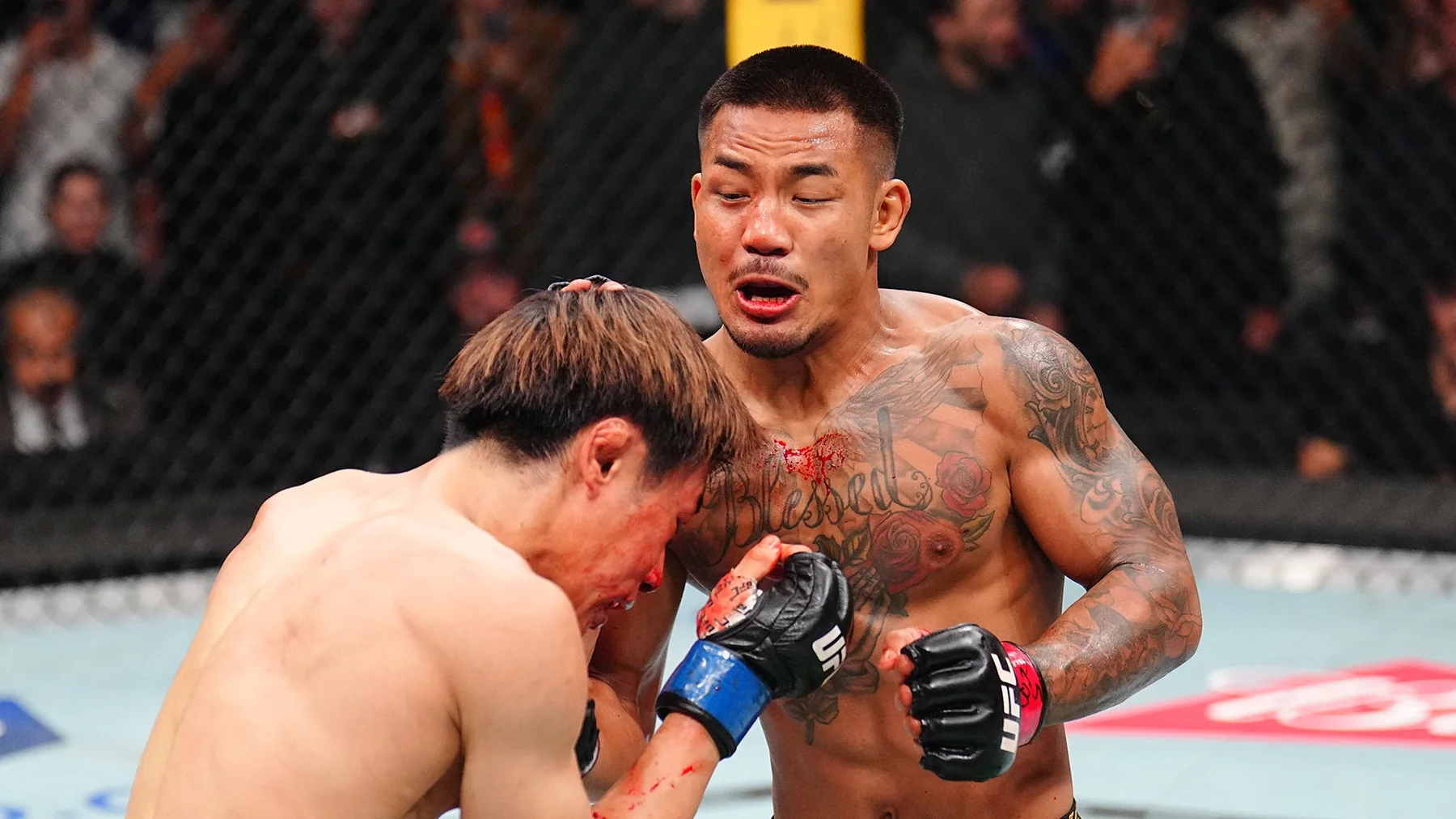
Joshua Van defended the flyweight title by stopping Tatsuro Taira with strikes at 1:32 of Round 5 at UFC 328 on May 9, 2026. The late finish is important beyond the result line: it confirms Van could preserve meaningful offense into a championship round after an elite contender had forced a long, technical fight.
The next challenger question begins with Alexandre Pantoja at No. 1. His position, championship experience and grappling craft create a strong case. Manel Kape at No. 2 offers a different striking-speed problem, while No. 3 Brandon Royval can turn clean positions into prolonged scramble sequences. Taira remains No. 4, but the direct fifth-round loss to Van weighs against an immediate repeat unless new results change the context.
What each leading contender would test
- Pantoja: whether Van can manage back takes, clinch-to-ground transitions and veteran championship pacing.
- Kape: whether Van can pressure without entering a fast, accurate counter lane.
- Royval: whether Van can keep technical order in a high-volume, submission-aware scramble.
- Taira: whether either fighter can make a different adjustment before another late phase, balanced against the recent direct result.
Our editorial read gives Pantoja the clearest present case because rank and championship-level experience align while offering a distinct test. That is not an announcement. Availability, medical clearance and UFC event planning must be confirmed. Kape or Royval could strengthen a fresh claim with a relevant elite win.
Van’s fifth-round finish also changes how opponents should plan. It is unsafe to assume the champion’s output naturally fades before the final horn. A challenger must win early rounds without spending so much energy that Van’s pace becomes decisive late. Conversely, Van cannot rely on late recovery against every style; Pantoja’s positional control or Kape’s counter timing may change which phases are available.
Title matchmaking is not a numeric queue. The strongest case combines position, result quality, timing and a viable opponent. A fighter can be No. 1 while recovery delays him, or lower-ranked while a major win creates urgency.
Confirm Van–Taira on the UFC 328 page and check the schedule for the next official defense.
How the Top Five Create Different Problems
Elite flyweight is decided by connected actions: the strike that creates the shot, the defense that begins a scramble and the exit that prevents the next attack. The top five emphasize different links in that chain.
No. 1 Alexandre Pantoja: survive positional persistence
Pantoja’s danger extends past the first takedown or back-take attempt. He can stay attached through transitions and make an opponent defend hands, hooks and posture in sequence. Escaping one position without a safe separation only begins the next problem.
No. 2 Manel Kape: enter without advertising
Kape’s speed and counter accuracy punish predictable pressure. An opponent must disguise entries with feints and avoid ending combinations square in front of him. Passive distance is not enough; giving him time can let him select the cleaner explosive moment.
No. 3 Brandon Royval: impose order on a scramble
Royval thrives when transitions stay open. Long limbs, volume and submission awareness can turn a defensive exchange into offense immediately. The answer is not refusing every scramble, but knowing when to stabilize position rather than chase a low-percentage finish.
No. 4 Tatsuro Taira: deny clean positional advancement
Taira’s grappling becomes most effective when he advances rather than merely holding. Van’s late UFC 328 finish proved the champion could remain dangerous into Round 5; a future opponent still must stop Taira from building control earlier without exhausting himself.
No. 5 Kyoji Horiguchi: read veteran movement
Horiguchi’s experience and movement can make a younger fighter waste attacks. The challenge is cutting space without overreaching, then maintaining defensive responsibility after finally creating contact. Chasing speed with more speed often produces mistakes.
Numbers need disciplined language. Significant strikes are not total strikes; takedowns do not report control duration; submission attempts vary in danger; control does not automatically outweigh damaging offense. Judges evaluate effective striking and grappling by round, so cumulative totals cannot substitute for analysis.
Our scouting read is that Pantoja creates the deepest positional test, Kape the sharpest counter-speed test and Royval the least orderly fight. Taira’s long-form grappling remains elite despite the title loss, while Horiguchi tests decision-making against experience. Rank frames the stakes; style determines the route.
Use the fighter directory and verified results to inspect those routes.
The Deep 125-Pound Contender Field
The flyweight breakthrough zone is Nos. 6–10, where one elite win can turn a ranking foothold into a title-eliminator case. Lone’er Kavanagh, Asu Almabayev, Brandon Moreno, Amir Albazi and Ramazan Temirov bring youth, grappling and championship experience into the same narrow band.
Kavanagh and Almabayev need top-five proof
Kavanagh at No. 6 and Almabayev at No. 7 are positioned close enough to gain major leverage. The important test is not simply beating another ranked fighter; it is showing their preferred game survives a prepared opponent with elite scramble recovery. Can Kavanagh maintain striking structure when grappling pressure interrupts rhythm? Can Almabayev create damage or submission danger after the first control phase?
Moreno is a championship-experience benchmark
Brandon Moreno at No. 8 has operated at championship level. A rising contender who beats him must show more than athletic speed. Five-round awareness, defensive rebuilding and composure after losing a phase all matter. Conversely, Moreno can rebuild his own title case by proving experience still controls the division’s newer pace.
Albazi and Temirov can change the bracket from below
Albazi’s grappling threat at No. 9 and Temirov’s No. 10 foothold give the middle of the list real instability. A clear win over No. 5–7 would force a larger reassessment than a narrow result against a lower opponent. The performance must show transferable tools, not just a favorable style.
Nos. 11–15 are not a waiting room. Alex Perez, Steve Erceg, Tim Elliott, Tagir Ulanbekov and Charles Johnson offer speed, technical range, awkward rhythm and grappling tests. An unranked fighter who defeats one earns evidence that his strengths survive a prepared Top 15 opponent.
Our dark-horse standard favors breadth. Look for a contender who can win after his first takedown is defended or his first striking rhythm is disrupted. A highlight shows possibility; a successful adjustment shows a skill more likely to transfer upward.
Explore current records through the fighter directory and confirm the next test on the UFC schedule.
What Can Move the Rankings Next
Update the flyweight picture only after separating four records: the announced card, official weigh-in, verified result and published ranking. A requested opponent is not a booking. A booking creates competitive stakes but no result. A result creates evidence, while UFC’s next table determines the published movement.
- Confirm the bout and division. Both fighters should appear on an official event page or the UFC schedule. Do not infer a title fight from rank alone.
- Check weigh-in status. A miss can change championship eligibility; a replacement changes preparation and opponent quality.
- Record the full result. Winner, method, round and time matter. For decisions, study effective striking and grappling round by round rather than one total.
- Name the ranking system. Media and Meta tables should never be combined into an invented consensus.
- Ask what transferred. Did the winner keep technique when the fight moved from striking to wrestling, or succeed only in the expected phase?
The first pressure point is Van’s next defense. Pantoja holds No. 1 and offers championship grappling experience. Kape and Royval can strengthen alternative cases through elite wins, while Taira’s path must account for the direct UFC 328 loss. None of those sentences reports a booking; they describe how current evidence shapes contender logic.
The second pressure point is the No. 5–8 corridor. Horiguchi’s experience, Kavanagh’s rise, Almabayev’s grappling and Moreno’s championship background make cross-band fights highly informative. A contender who wins outside his preferred phase may leap in practical title relevance even if the published number moves gradually.
Flyweight results demand more than highlight review. A rapid sequence can contain a defended takedown, a reversal and a damaging strike within seconds. Clips may begin after the setup or end before the escape. The official result identifies what happened; complete footage and precise statistics explain how.
Inactivity and removals also need careful wording. If one fighter leaves the list, others can rise without competing. That is a real published change but not evidence of new performance. Similarly, a cancellation produces no competitive winner. Keep administrative movement separate from cage achievement.
The Meta ranking era adds a useful comparison, not a shortcut. A performance model can value opponent quality, activity and dominance differently from a panel. When orders differ, examine the assumptions. Do not quote the table that favors a preferred fighter while hiding the system name.
Evidence standard: the list was captured August 29, 2026. Van’s defense comes from UFC 328’s official result. Tactical profiles, breakthrough bands and challenger recommendations are UFCSchedule.net editorial analysis.
After the next card, begin with the verified UFC results. Note the method and decisive phase, then compare the updated media and Meta lists. Ask whether the performance answered a known weakness or repeated a comfortable strength.
That careful sequence keeps one of UFC’s fastest divisions intelligible for every fight fan. Rankings tell fans where the stakes are; complete fight analysis explains why a result should—or should not—change the championship conversation.
Fight talk
Comments