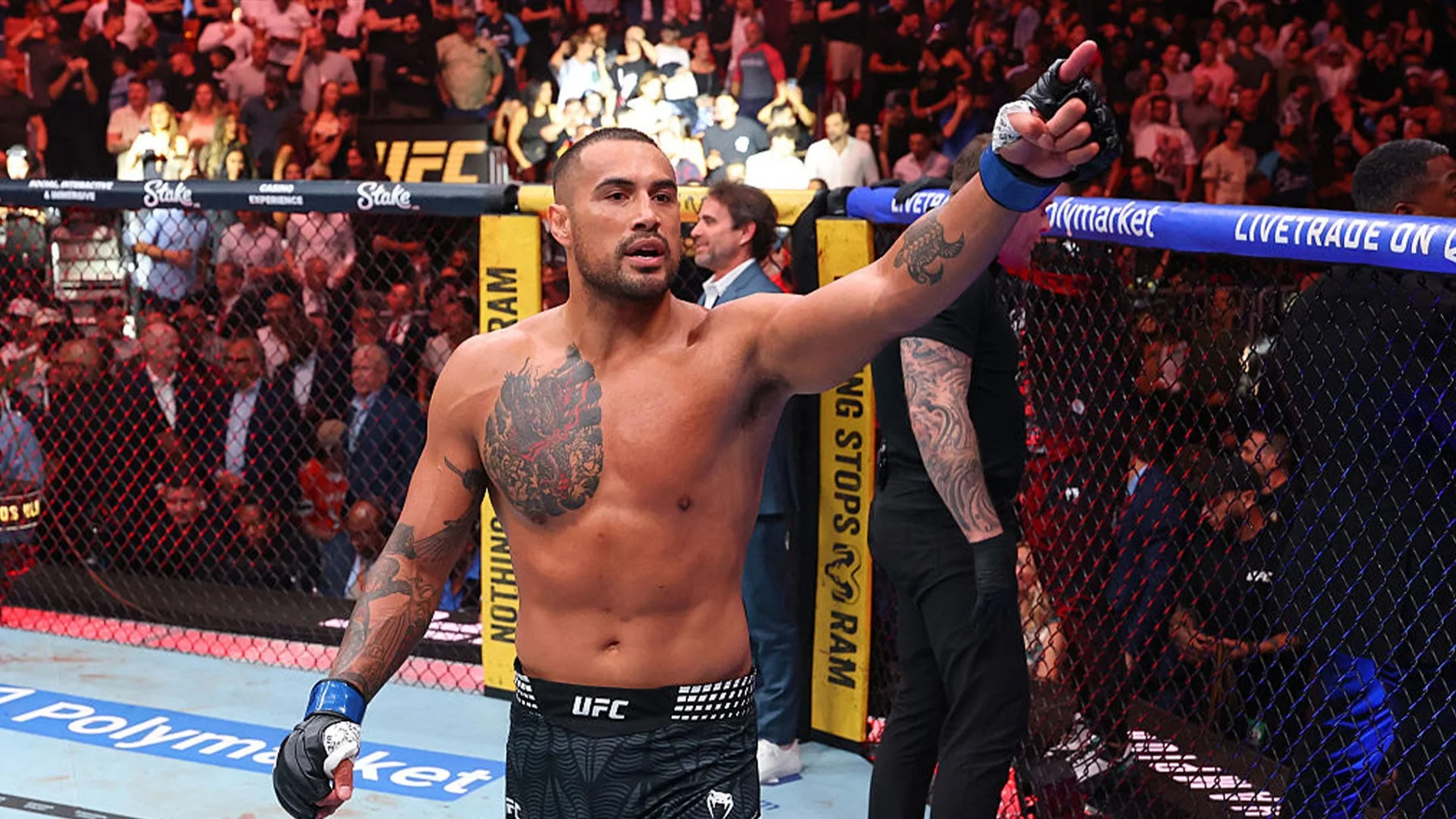
UFC Light Heavyweight Rankings 2026 Snapshot
Carlos Ulberg is the UFC light heavyweight champion as of August 29, 2026, while Magomed Ankalaev is the No. 1-ranked contender on the UFC media-panel list. Jiří Procházka occupies No. 2 and Alex Pereira No. 3. The champion appears outside the numbered Top 15, so Ankalaev leads the challengers but does not hold the belt.
This page names its system because UFC.com also shows Meta rankings after the June 2026 introduction of a data-driven model. The two official views may disagree. Our UFC rankings guide explains how to compare them; this article focuses on the current 205-pound competition.
Champion
Carlos Ulberg
No. 1
Magomed Ankalaev
No. 2
Jiří Procházka
Limit
205 pounds
Light heavyweight punishes straight-line assumptions. Ulberg’s controlled distance, Ankalaev’s southpaw striking and wrestling threat, Procházka’s irregular rhythm and Pereira’s kick game create different matchups. A higher rank reflects competitive position, not universal technical superiority over every name below.
The standard upper limit is 205 pounds, with championship and non-title weigh-in rules explained in our weight-class guide. A move from middleweight or to heavyweight may alter the list only after official status and results catch up; appearance or rumor is not a ranking fact.
Treat every number as a dated snapshot and every proposed matchup as analysis until it appears on an official event page. The sections below preserve that line while explaining what each contender has actually earned and what he would force an opponent to solve.
Complete Light Heavyweight Top 15
This table reproduces the UFC media-panel order captured August 29, 2026. Tactical notes are editorial shorthand, not extra official ranks.
| Rank | Fighter | Key read |
|---|---|---|
| Champion | Carlos Ulberg | Distance-control champion |
| 1 | Magomed Ankalaev | Southpaw and wrestling layers |
| 2 | Jiří Procházka | Unorthodox pressure |
| 3 | Alex Pereira | Kick and counter power |
| 4 | Khalil Rountree Jr. | Explosive striking test |
| 5 | Navajo Stirling | Rising top-five foothold |
| 6 | Paulo Costa | Physical pressure |
| 7 | Jamahal Hill | Veteran boxing range |
| 8 | Azamat Murzakanov | Compact power |
| 9 | Jan Błachowicz | All-phase veteran benchmark |
| 10 | Dominick Reyes | Long-range counter test |
| 11 | Bogdan Guskov | Ranking consolidation |
| 12 | Robert Whittaker | Division-transition craft |
| 13 | Johnny Walker | Dynamic volatility |
| 14 | Alonzo Menifield | Power and foothold defense |
| 15 | Nikita Krylov | Veteran grappling threat |
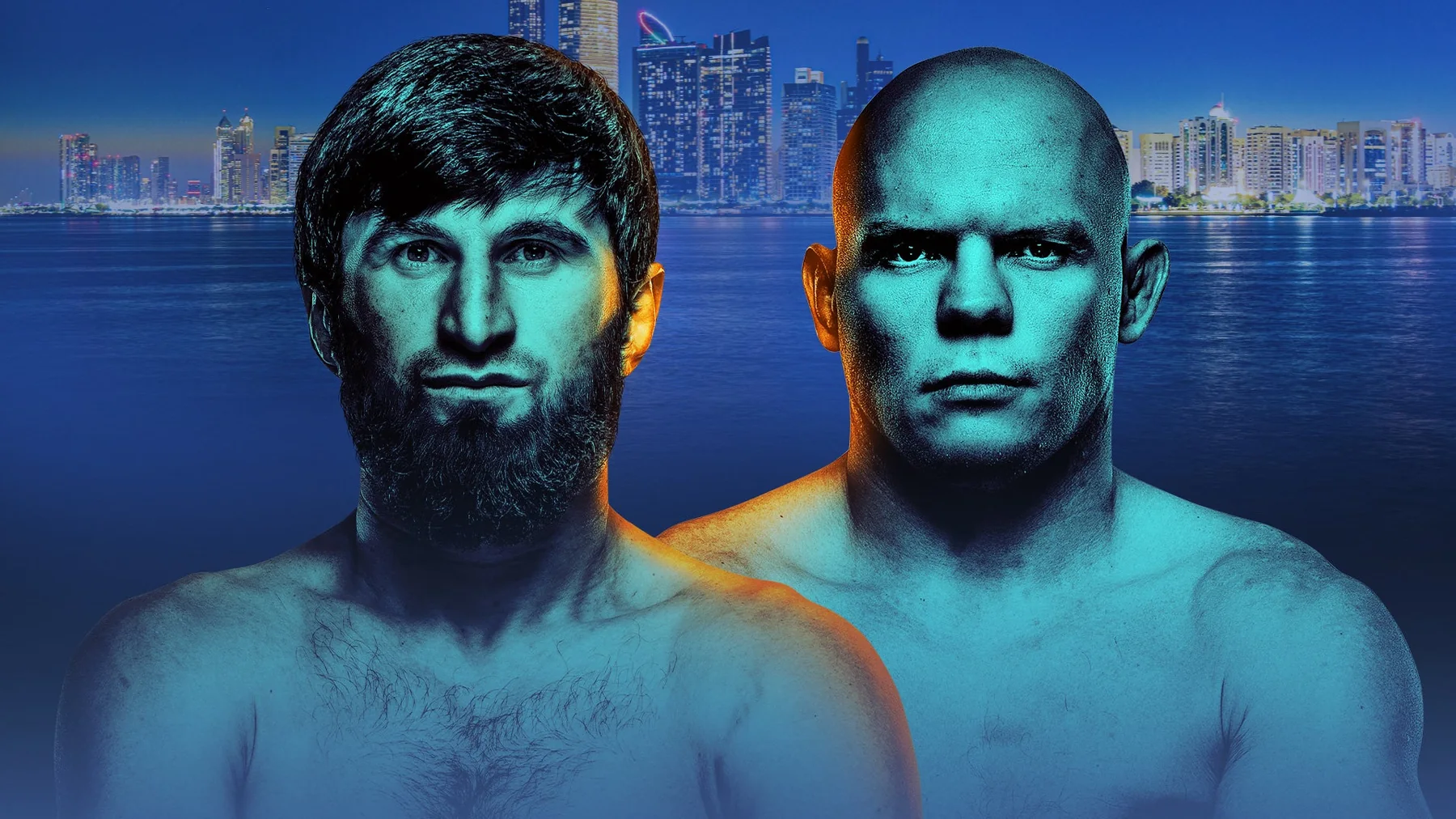
Think of Nos. 1–5 as championship leverage, Nos. 6–10 as the proving band and Nos. 11–15 as foothold defense. These are our labels. A win across a band may create more movement than defeating a neighbor, especially if opponent quality and performance answer a major tactical question.
Movement arrows still require context. A fighter can rise when someone else changes divisions or leaves the list. That movement does not describe a new performance. Conversely, a close loss against elite opposition can reveal more competitive value than a routine win against a favorable matchup.
Use the fighter directory to trace the records behind each position, and never use rank alone as a prediction.
Carlos Ulberg and the 205-Pound Title Picture
Carlos Ulberg won the vacant light heavyweight title by knocking out Jiří Procházka at 3:45 of Round 1 at UFC 327 on April 11, 2026. UFC had created the vacant-title matchup after Alex Pereira left the belt. That result establishes Ulberg as champion and makes the current contender question more specific: who offers the strongest next test after a decisive win over today’s No. 2?
Magomed Ankalaev holds the cleanest ranking case at No. 1. He also changes the style from Ulberg’s title-winning fight. Procházka’s unorthodox entries invited one type of timing battle; Ankalaev’s southpaw stance, measured striking and wrestling layer would require a different preparation. Rank plus a fresh technical question make his argument strong, though only an official event listing can confirm the defense.
The top-three cases
- No. 1 Magomed Ankalaev: leading rank and a different grappling/stance challenge.
- No. 2 Jiří Procházka: former champion and elite finisher, balanced against a direct first-round knockout loss to Ulberg.
- No. 3 Alex Pereira: established 205-pound championship history and dangerous kicking, balanced against his prior decision to vacate and any current divisional plans that must be confirmed.
An immediate Procházka rematch is harder to justify on result alone because the stoppage was early and decisive, not a disputed scorecard. That does not remove him from future contention. A strong win over elite opposition could reframe the case, especially because his style guarantees unusual exchanges. The important distinction is between long-term championship quality and immediate entitlement.
Pereira’s presence at No. 3 complicates fan discussion because his name carries title history and cross-division interest. Those qualities do not confirm where he intends to compete next. Any statement about a comeback to 205 pounds should rely on an official bout announcement, not inference from his rank remaining visible.
Our editorial read gives Ankalaev the strongest current case. He leads the contender list and supplies the clearest new tactical examination. This is not a claim that negotiations are complete or that other contenders are unavailable.
Review the UFC 327 result and check the schedule before treating any proposed defense as official.
Tactical Questions in the Top Five
At 205 pounds, the top five are separated less by raw power than by how they create a clean collision. Ankalaev builds with southpaw positioning and a wrestling threat; Procházka disrupts rhythm; Pereira punishes stance and weight transfer; Rountree compresses space; Stirling must prove his rise against increasingly prepared elite opposition.
No. 1 Magomed Ankalaev: win the stance battle
Ankalaev can make an orthodox opponent manage an open-stance lane while remembering the level change. Safe lead-foot position and disciplined exits matter. Overcommitting to stop the wrestling can expose straight left hands; waiting only for the strike can make the takedown entry easier.
No. 2 Jiří Procházka: do not follow the rhythm
Procházka attacks from unusual posture and timing, which can make an opponent chase visual openings that disappear. Ulberg’s UFC 327 knockout shows the cost of one decisive read, but it does not turn Procházka into a solved fighter. Every new opponent must still maintain distance discipline amid irregular movement.
No. 3 Alex Pereira: protect stance before the head
Pereira’s kicking can damage the base that makes boxing defense possible. An opponent focused only on the left hook may allow repeated lower-body attacks to slow exits. Wrestling threats can alter that exchange, but entries must be hidden well enough to avoid knees, counters and immediate separation.
No. 4 Khalil Rountree Jr.: survive compact violence
Rountree’s explosive combinations become most dangerous when an opponent retreats without an angle. The answer is not passive distance alone. A fighter needs responsible counters, clinch interruptions or level changes that prevent Rountree from setting uninterrupted pressure.
No. 5 Navajo Stirling: handle specific preparation
A rising fighter’s early opponents may react to general strengths. Top-five opponents arrive with detailed plans for favored entries, resets and defensive habits. Stirling’s next proof is adaptability: can he win after an opponent removes the first route?
Statistics cannot answer these questions alone. Significant strikes, total strikes, takedowns and control describe different events. Control does not automatically outweigh effective damage, and cumulative totals do not score a fight outside round context. Use data to locate a pattern, then watch how it was produced.
Our scouting view is that Ankalaev supplies the broadest style change for Ulberg, while Pereira carries the most obvious single-weapon danger. Procházka remains volatile, and Rountree can punish any overly patient plan. Stirling represents upside that still needs elite verification.
Follow histories in the fighter directory and confirm methods through UFC results.
Contenders Who Can Break the Order
The clearest path from the middle of the 205-pound table is a win that crosses the top-five boundary. Paulo Costa, Jamahal Hill, Azamat Murzakanov, Jan Błachowicz and Dominick Reyes occupy Nos. 6–10. Each has enough danger to change the title conversation, but each must connect a result to the current hierarchy rather than rely on reputation.
Costa owns a concrete recent result
Costa stopped Murzakanov at 1:23 of Round 3 at UFC 327. That finish matters because it occurred after extended work rather than in an opening collision. The next question is whether his pressure and physicality remain effective against a top-five opponent who can manage distance, threaten takedowns or punish entries.
Hill and Reyes are range benchmarks
Jamahal Hill at No. 7 and Dominick Reyes at No. 10 can test whether a rising light heavyweight enters responsibly against long punches. A prospect who dominates shorter exchanges may struggle when forced to cross open space repeatedly. Winning requires more than landing power; it requires creating safe opportunities without giving away counters.
Błachowicz tests all-phase patience
At No. 9, Jan Błachowicz represents veteran decision-making across striking, clinch and grappling phases. Defeating an experienced opponent means solving adjustments, not merely winning a first round. A contender who can preserve pace and positioning after Błachowicz changes the look has evidence that transfers upward.
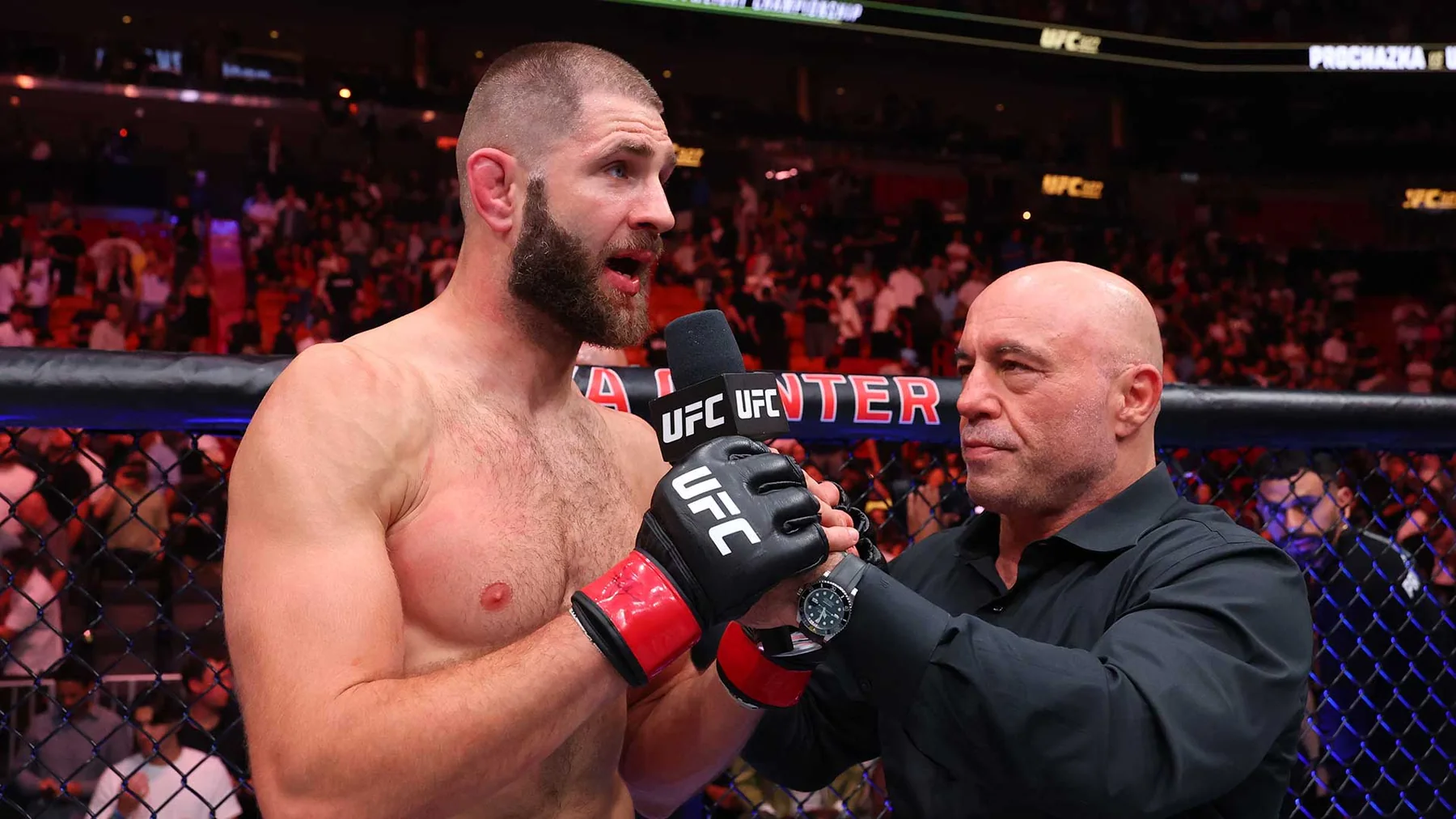
Robert Whittaker’s No. 12 position introduces a division-transition question. Technical craft can travel upward, but size, clinch burden and pacing may change. The correct assessment comes from actual 205-pound performances, not simply projecting a middleweight résumé onto larger opponents.
Our best dark-horse signal is not age or knockout count. Look for a fighter who defeats a ranked opponent in a phase the opponent was expected to control. That result shows adaptation and creates a stronger case than repeating a preferred matchup.
Confirm Costa’s win on the UFC 327 page and explore divisional records through the fighter directory.
What to Watch Before the Next Update
Before changing the 205-pound order, verify the card, weigh-in, result and published rankings separately. A callout can identify a desired opponent; it cannot create a booking. A booking creates stakes; it cannot produce a ranking result before the fight. A win supplies evidence; it still does not guarantee the exact place UFC will publish.
- Confirm both fighters and weight class. Cross-division discussion is common around Pereira, Costa and Whittaker. Use an official event page or the UFC schedule to establish where a bout is actually contracted.
- Check the official weigh-in. Championship eligibility, replacement opponents and a possible scale miss alter the stakes before competition begins.
- Record the result precisely. Winner, method, round and time provide the baseline. For decisions, inspect each round rather than substituting cumulative strike totals for judging.
- Compare like with like. Quote the media table as media and the Meta table as Meta. A disagreement is information, not permission to merge them.
- Reassess the tactical proof. Ask whether the winner succeeded in his favored phase or solved a phase expected to trouble him.
The highest-pressure watch point is Ulberg’s first defense. Ankalaev has the current No. 1 position and offers a fresh stance-and-wrestling problem. Procházka needs to rebuild after a direct knockout loss to the champion. Pereira’s placement remains important, but his next division should be established by official competition plans, not inferred from social attention.
A second pressure point is the top-five boundary. If Costa, Hill, Murzakanov, Błachowicz or Reyes beats a current top-five contender, the win may produce more meaningful leverage than a small adjacent-rank shuffle. If they only beat downward, the performance still matters, but the title argument requires closer scrutiny.
Inactivity and divisional movement require careful language. A fighter can rise because somebody else departs without demonstrating new ability. A fighter can remain ranked while his intended weight class is unclear. The published table is authoritative for position on its date, but it is not a medical report, contract registry or promise of future eligibility.
The Meta era also rewards precise sourcing. A data-led model can react differently to activity, opponent strength and dominance than a panel. Fans should investigate why the lists diverge, not call one “fake” or select whichever table makes a favored contender look better. Our ranking guide provides the comparison framework.
Evidence standard: ranks were captured August 29, 2026; Ulberg’s title win is taken from UFC 327’s official result. Style evaluations and “strongest case” language are editorial analysis.
After the next relevant bout, start with the verified UFC result. Then study what the performance proved and wait for the official table. Note whether the decisive moment came from a repeatable setup, a correct adjustment or a single opponent error. That distinction helps predict transfer without pretending any prediction is fact. This order keeps a volatile, power-heavy division readable without turning every rumor into a false update.
Fight talk
Comments