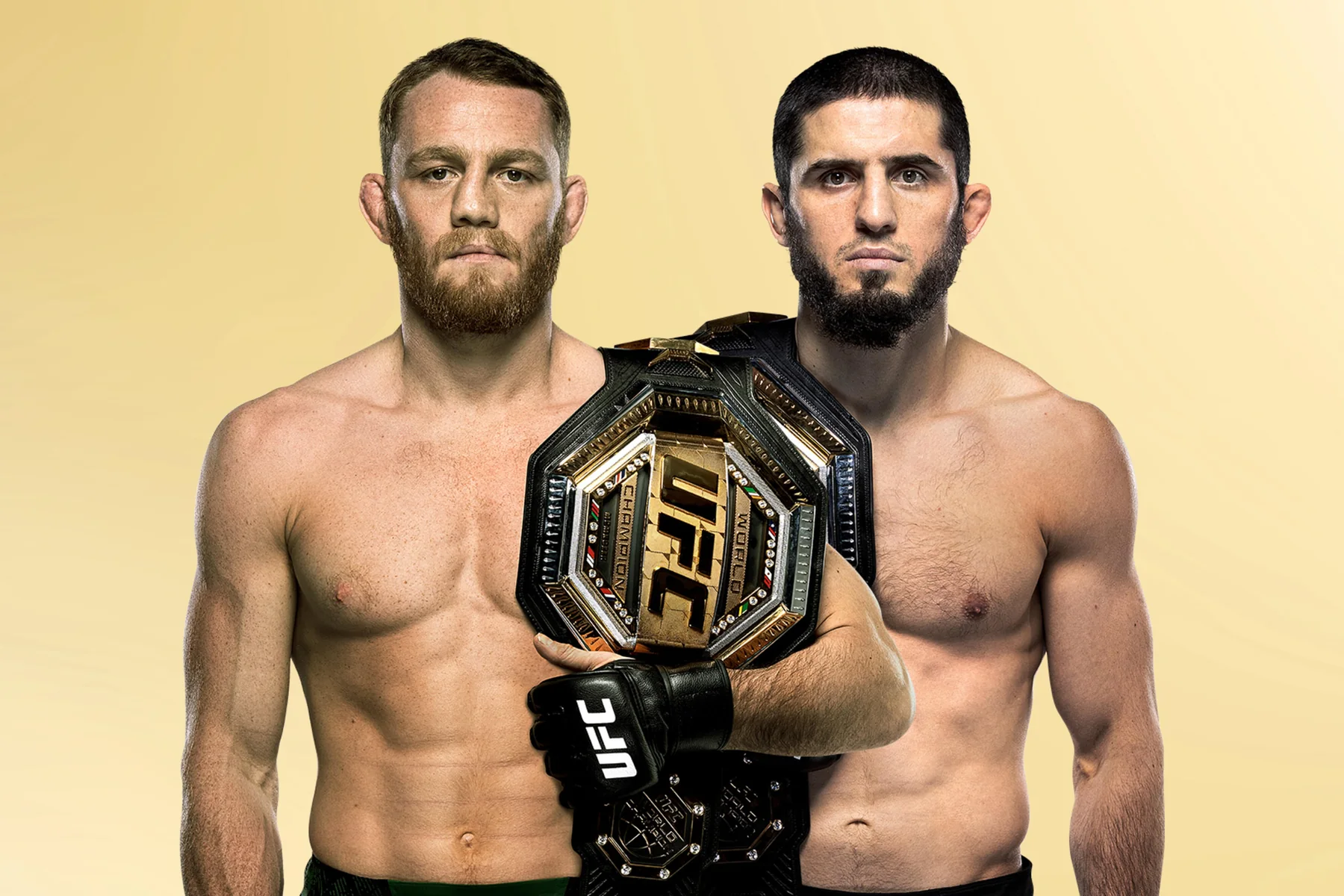
Islam Makhachev defeated Jack Della Maddalena by unanimous decision at UFC 322, winning 50-45 on all three scorecards to become UFC welterweight champion. Valentina Shevchenko retained the women's flyweight title over Zhang Weili by the same three 50-45 scores. The November 15, 2025 card at Madison Square Garden also produced breakout knockouts for Michael Morales and Carlos Prates.
This archive preserves the completed 14-fight card after late changes, then explains why a show advertised around two champion-versus-champion matchups became a night of positional dominance and welterweight turnover.
UFC 322 results at a glance
- Main event
- Makhachev def. Della Maddalena, UD
- Co-main
- Shevchenko def. Zhang, UD
- Venue
- Madison Square Garden
- Date
- November 15, 2025
Makhachev entered after leaving the lightweight belt and challenged Della Maddalena in his welterweight debut. Five rounds later, he had won every frame on every official card. The result made him a UFC champion in a second division and extended his winning streak to 16 at the time.
Zhang also moved up seeking a second divisional championship, but Shevchenko controlled the terms of their fight and swept the cards. The symmetry was striking: two elite champions attempted ambitious weight-class moves; one succeeded through wrestling and control, while the other met a champion whose game prevented her from establishing her best offense.
The UFC 322 event page carries the compact results. This article adds tactical and historical context, while the latest UFC results page is the better destination for current cards.
How Makhachev shut down Jack Della Maddalena
Della Maddalena's boxing depends on sustained access to the pocket. He attacks body and head in combination and becomes more dangerous when an opponent retreats along a predictable line. Makhachev prevented that rhythm by making every planted stance a possible takedown entry. The champion could not commit to long combinations without first solving hands at his hips or pressure toward the fence.
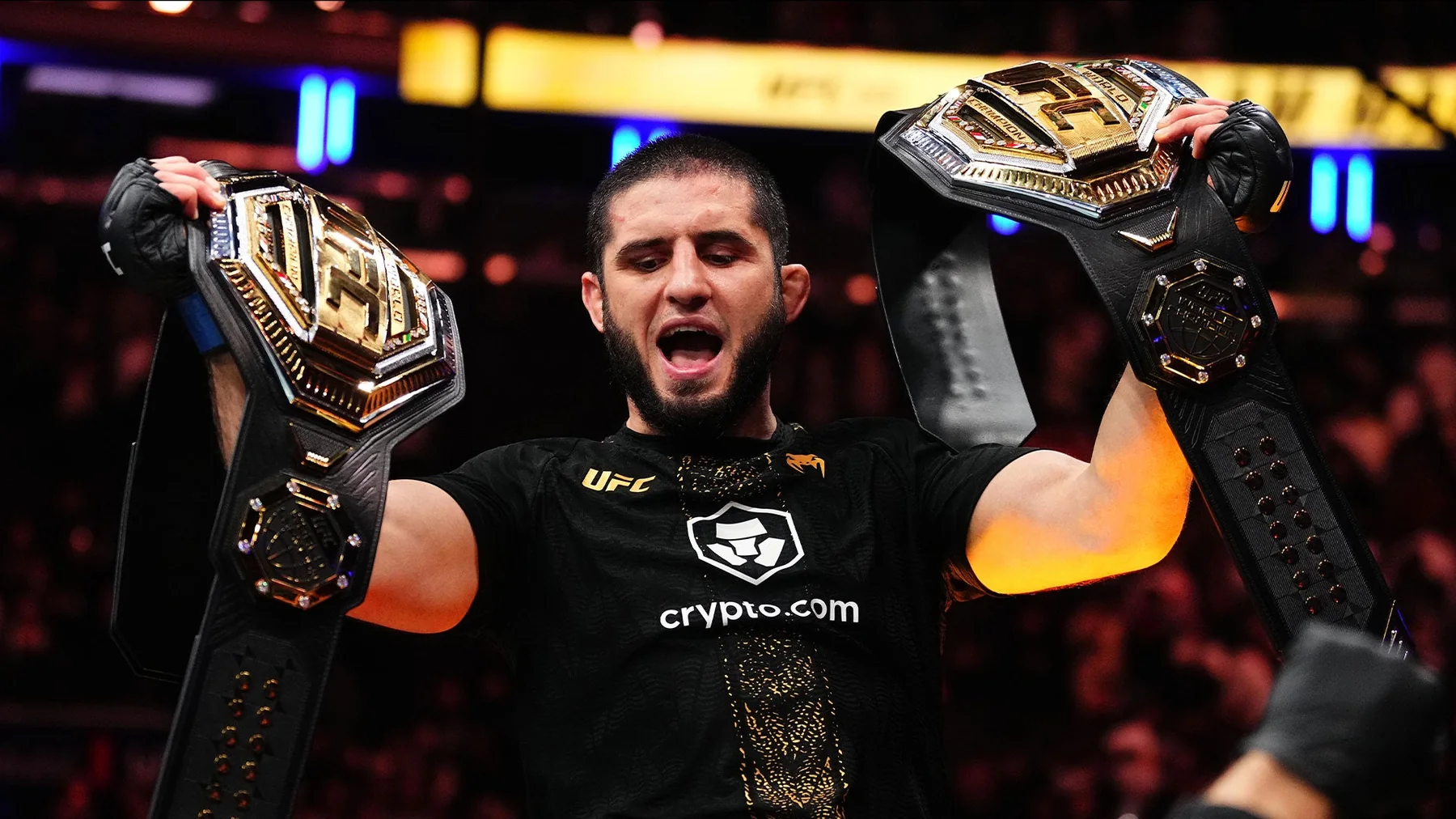
Makhachev's takedowns were part of longer chains. If the first shot stopped, he could connect to a body lock, turn the corner or drive Della Maddalena into the cage. If the Australian stood, Makhachev stayed attached and restarted the phase. That persistence removed the clean reset Della Maddalena needed.
Top position mattered because Makhachev kept it functional. He advanced, threatened offense and forced defensive hand-fighting. Control time by itself does not score automatically, but control that produces effective grappling and denies the opponent meaningful offense creates a clear round. The three identical cards show the officials found that advantage in every period.
The size question received a direct answer. Makhachev did not look dependent on being the stronger lightweight. His positioning, balance and transitions worked against the reigning welterweight champion across 25 minutes. Della Maddalena remained durable, yet durability could not substitute for a phase he won decisively.
Compare their later paths through the Makhachev profile and Della Maddalena profile.
What becoming a two-division champion meant
The lightweight title he left behind
Makhachev won the lightweight belt in 2022 and built a reign through defenses against elite opposition. He vacated it in May 2025 to pursue welterweight. That detail makes the wording important: UFC 322 made him a champion in a second weight class during his career, but he did not walk into Madison Square Garden holding the active lightweight and welterweight belts simultaneously.
The vacated belt also meant the move carried real cost. If Makhachev failed, he could not simply return to an uninterrupted lightweight reign. He exchanged established status for a chance to prove the game at 170 pounds.
The welterweight problem he solved
Della Maddalena represented more than size. He was the sitting champion, a composed boxer and a fighter able to punish predictable entries. Makhachev had to keep his wrestling efficient enough that carrying a larger opponent did not empty the gas tank. Winning all five rounds showed that his positioning and pace survived the move.
The UFC's official scorecard report described him as the 11th two-division champion in company history. Lists can count simultaneous and non-simultaneous reigns differently, so the concrete achievement is better than a loose label: Makhachev won UFC titles at lightweight and welterweight, taking the second from an active champion in a five-round decision.
That result tied his win streak at 16 at the time and gave the later UFC 330 defense meaning. The Garden was where an ambitious move became a reign, not just a super-fight experiment.
Shevchenko versus Zhang: why the second title fight was also one-sided
Valentina Shevchenko defeated Zhang Weili by unanimous decision, with all three judges scoring the women's flyweight title fight 50-45. Zhang's championship history at strawweight made the matchup prestigious, but it did not solve the tactical problem of entering a new division against a champion comfortable controlling distance and transitions.
Shevchenko's value has always come from completeness. She can counter at range, meet forward movement with clinch work and decide when a scramble becomes a stable grappling phase. Zhang is powerful, athletic and dangerous in transitions, yet those attributes needed access to exchanges she could clearly win. Shevchenko repeatedly denied that access and made the challenger reset.
As in the main event, a 50-45 sweep does not require five rounds of near-finishing damage. It requires one fighter to produce the better effective work in each scoring period. Zhang's moments of offense were not enough to build an entire round around, while Shevchenko controlled where and how the longer sequences occurred.
The result also warns against treating a move up as a simple reduction in weight-cut stress. The challenger meets opponents with different frames, clinch strength and timing. Shevchenko had spent years learning those dimensions at flyweight. Zhang brought elite skill, but she was solving them against the division's most experienced champion on the same night.
Use the Shevchenko profile and Zhang profile for their full fight histories. UFC 322's co-main result is simple: the established flyweight champion won every round and kept the belt.
Morales and Prates changed the welterweight conversation
Michael Morales stopped Sean Brady with strikes at 3:27 of Round 1. Brady entered as a highly ranked grappling threat, so the finish carried more divisional meaning than a routine knockout. Morales denied the chance for the fight to settle into Brady's strongest phase, made him pay during the transition and converted the opening before a long tactical contest could develop.
Carlos Prates then knocked out former champion Leon Edwards with a left hand at 1:28 of Round 2. Edwards' experience and counter striking made him a measuring stick for anyone claiming a place near the top. Prates' ability to create a clean finishing connection against that style changed him from an exciting puncher into a contender with elite evidence.
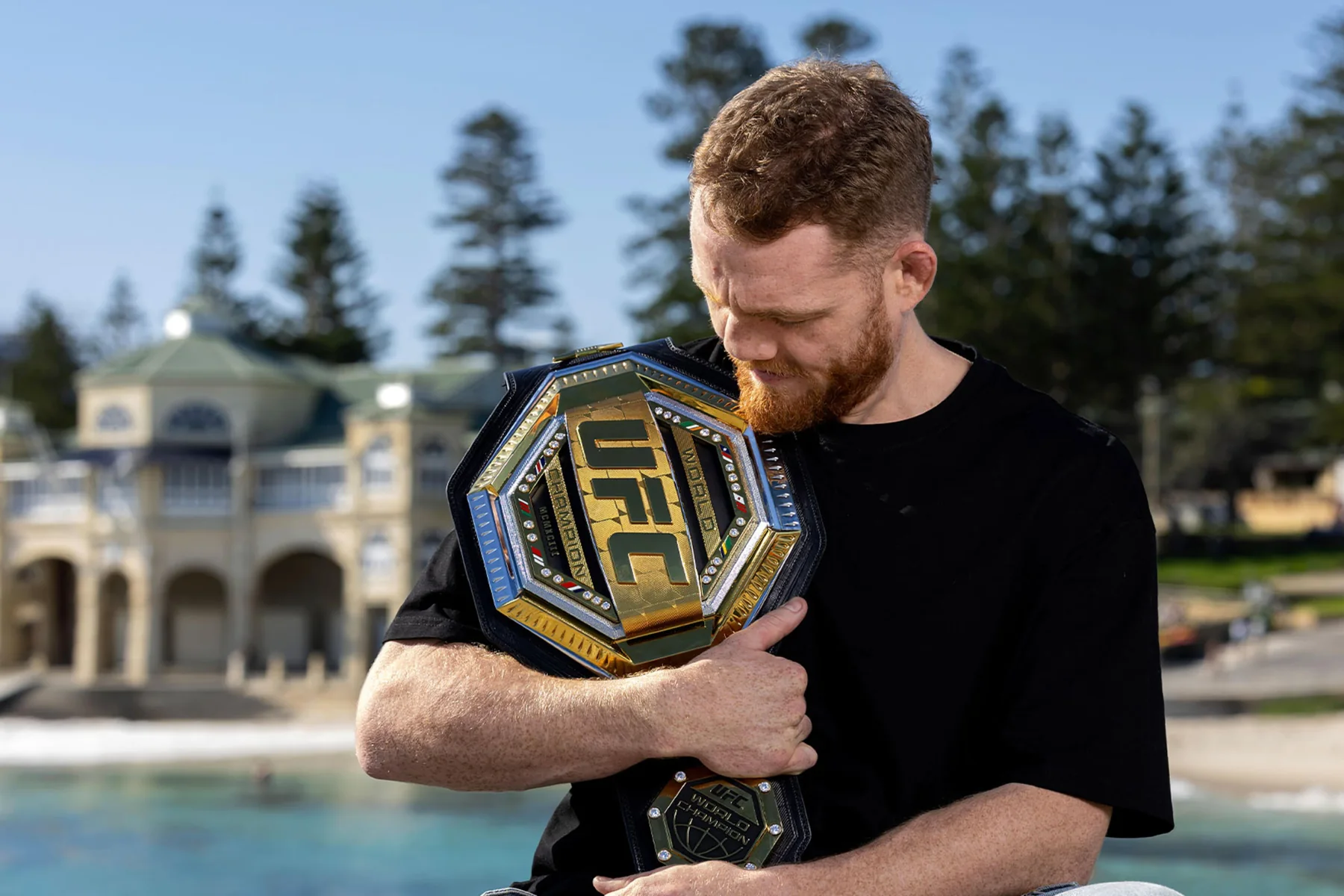
The order of the card amplified both results. Fans watched Morales remove Brady, Prates remove Edwards and Makhachev take the belt from Della Maddalena. In one night, the division received a new champion and two forceful claims from below. Matchmaking did not become automatic, because rankings, timing and subsequent fights still matter. The competitive map nevertheless shifted.
The finishes also contrasted with Makhachev's method. Morales and Prates won through sudden damage; the new champion won through repeatable positional control. A contender preparing for the title would need enough defense for the latter while surviving the dangerous peers beside him. That combination made post-UFC 322 welterweight deeper, not merely rearranged. See the welterweight rankings analysis for the later picture.
Complete UFC 322 final fight card and results
The list below follows the completed card. Ethyn Ewing replaced Cody Haddon on extremely short notice and defeated Malcolm Wellmaker, so an early advertised lineup that still names Haddon is not the final result archive.
Main card
- Makhachev def. Della Maddalena — unanimous decision, 50-45 x3.
- Shevchenko def. Zhang — unanimous decision, 50-45 x3.
- Morales def. Brady — TKO, Round 1, 3:27.
- Prates def. Edwards — KO/TKO, Round 2, 1:28.
- Benoît Saint Denis def. Beneil Dariush — KO/TKO, Round 1, 0:16.
Prelims
- Bo Nickal def. Rodolfo Vieira — TKO, Round 3, 2:24.
- Gregory Rodrigues def. Roman Kopylov — unanimous decision.
- Erin Blanchfield def. Tracy Cortez — submission, Round 2, 4:44.
- Ethyn Ewing def. Malcolm Wellmaker — unanimous decision.
Early Prelims
- Kyle Daukaus def. Gerald Meerschaert — submission, Round 1, 0:50.
- Pat Sabatini def. Chepe Mariscal — unanimous decision.
- Fatima Kline def. Angela Hill — unanimous decision.
- Baisangur Susurkaev def. Eric McConico — TKO, Round 3, 1:38.
- Matheus Camilo def. Viacheslav Borshchev — unanimous decision.
The distribution explains the pacing: both title fights consumed 50 minutes, while Saint Denis ended his main-card bout in 16 seconds and the two ranked welterweight showcases ended inside two rounds. Blanchfield and Daukaus supplied the submission finishes. For bout-level video and official card order, use the UFC 322 event archive.
UFC 322’s lasting impact
The clearest legacy is that Makhachev's welterweight move held. He did not collect the belt and disappear into a historical label; he later defended it against Ian Machado Garry at UFC 330. That decision extended his streak to 17 and made the Della Maddalena performance the foundation of an active second reign.
UFC 322 also marked the end of Della Maddalena's first title run and created a division in motion. Morales and Prates emerged with finishes over established top opponents on the same card. Their later rankings depend on subsequent activity, but the night remains the point when both claims became impossible to dismiss.
Shevchenko's victory aged as another example of championship durability. Zhang's attempt was historically ambitious, yet the result reinforced the difference between being elite in one division and solving a mature champion in another. The belt remained with the fighter who controlled the matchup, not the challenger with the more novel story.
The event is therefore worth revisiting for structure as much as spectacle. Its top two bouts were methodical scorecard sweeps; its middle delivered sudden finishes; its undercard contained a remarkable short-notice debut victory. Reducing the show to “Makhachev won” misses how many rankings and career paths moved underneath that result.
Ethyn Ewing's late arrival is a smaller but revealing part of that legacy. A preview card listed Cody Haddon against Malcolm Wellmaker; the completed record lists Ewing, who took the call after competing only days earlier and won a unanimous decision. Historical fight-card pages often fail here because they preserve the announced matchup instead of the athletes who actually entered the Octagon. UFC 322 is a strong reminder that an archive must be built from final results.
The scoring symmetry deserves attention too. Six separate official scorecards across two title fights all read 50-45. That did not mean Makhachev and Shevchenko used identical tactics. Makhachev made wrestling pressure the center of the main event; Shevchenko used her wider phase control to keep Zhang from establishing a reliable attack. The identical numbers describe round ownership, while the footage explains how each champion achieved it.
Finally, the card captured the difference between title history and contender momentum. A championship result changes possession immediately. A knockout over a ranked opponent creates an argument that matchmakers and future opponents still test. Morales and Prates left with persuasive arguments, while Makhachev left with the actual belt. Keeping those categories separate makes the event easier to understand than declaring every impressive winner “next.”
Madison Square Garden also gave the results an appropriate scale. UFC often uses its annual New York card for fights with historical stakes, and UFC 322 delivered a second-divisional champion plus a successful defense by one of the most accomplished women in the promotion's history. The venue did not change the scoring, but it increased the visibility of every contender result underneath.
For Makhachev's complete later timeline, read the Islam Makhachev record guide. For new bookings rather than historical reconstruction, use upcoming UFC events. UFC 322's facts are fixed: two 50-45 sweeps, a new welterweight champion and a card that redrew several contender conversations.
Fight talk
Comments