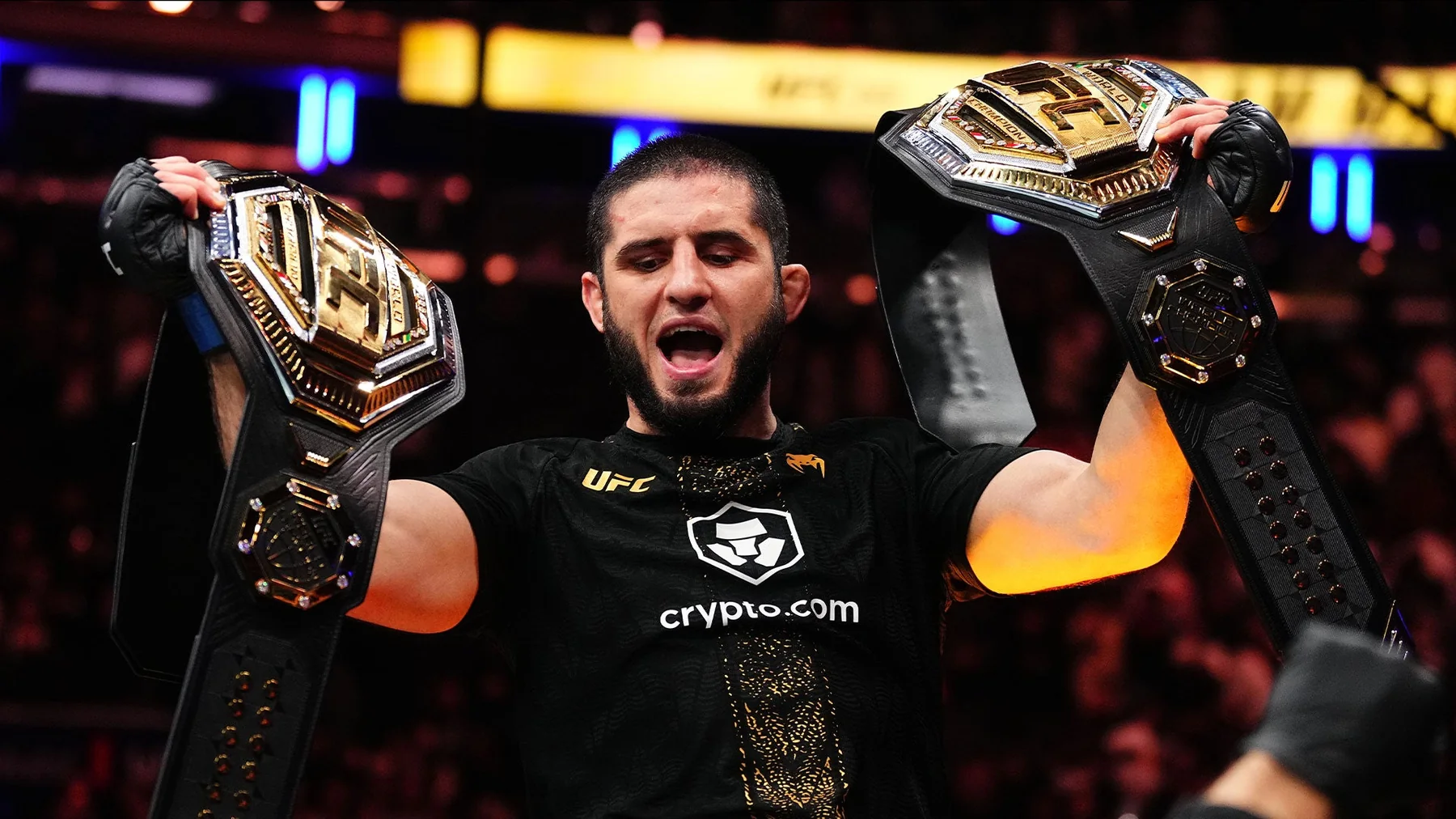
Islam Makhachev's professional MMA record is 29 wins and one loss as of September 9, 2026. He is the UFC welterweight champion, a former UFC lightweight champion and the owner of a 17-fight UFC winning streak. His most recent fight was a unanimous-decision title defense over Ian Machado Garry at UFC 330.
The one loss came against Adriano Martins in October 2015. Everything since has been a long technical response: safer entries, connected wrestling phases, elite top control, submissions and striking that now protects the grappling threat. This timeline explains the numbers without treating every win as equal.
Islam Makhachev’s record at a glance
Pro record
29-1-0
UFC streak
17 wins
Current title
Welterweight
Only loss
Adriano Martins
The official UFC athlete profile credits Makhachev with five knockout wins and 13 submissions across his professional career. Those finish totals matter, but they can hide how adaptable the wins have become. He has submitted elite lightweights, won tactical decisions, controlled championship rounds and scored the kind of knockdown that makes opponents hesitate before defending another takedown.
His title history contains two distinct reigns. Makhachev won the lightweight belt in October 2022, defended it four times according to the UFC's current biography, then vacated in May 2025 to move up. At UFC 322 he defeated Jack Della Maddalena for the 170-pound championship. At UFC 330 he defended that belt against Garry.
Record pages can lag, especially immediately after an event. This article uses the current Islam Makhachev fighter profile and dated official result pages. For divisional context, compare the 2026 welterweight rankings guide.
Makhachev’s last fight: the UFC 330 win over Ian Machado Garry
Makhachev last fought on August 15, 2026 in Philadelphia, defeating Ian Machado Garry by unanimous decision. Judges returned 49-46, 49-46 and 48-47 cards. The champion retained at welterweight and extended his UFC streak to 17, but Garry made the later rounds more competitive than the two widest totals suggest.

What the scorecards say
Every judge found at least three rounds for Makhachev, and two found four. The champion produced the fight's only knockdown, completed seven of 15 takedowns and accumulated 12:30 of control. Those achievements explain where his strongest phases came from. Early, the takedown threat limited Garry's output; later, repeated entries interrupted the challenger's improved striking.
What the totals do not say
Garry led significant strikes 29-22 and landed more in each of the last three rounds. Makhachev's control was not automatic scoring credit, and a final event total cannot decide a round. The judges had to compare effective striking and grappling within five separate periods. Makhachev's knockdown, positional work and ability to close Rounds 4 and 5 in strong grappling phases gave him the more consequential sequences.
The full tactical reading appears in the site's UFC 330 results analysis. For the record question, the important answer is stable: the Garry decision is win No. 29 and the newest entry in Makhachev's career.
Who is the only fighter to beat Islam Makhachev?
Adriano Martins is the only fighter to defeat Makhachev. Martins won by first-round knockout at UFC 192 on October 3, 2015. Makhachev was early in his UFC run, entered a punching exchange and was caught before he could establish the connected grappling game that later became his defining system.
The result should be described accurately. It was not a five-round exposure of Makhachev's wrestling and not proof that every powerful striker holds the same solution. A short knockout shows that an entry or exchange carried immediate risk on that night. It does not reveal how the next 20 minutes would have unfolded, because they never occurred.
What followed gives the loss its historical significance. Makhachev improved the safety between phases. His later takedowns often come after a kick, hand-fighting exchange, fence drive or opponent's defensive reaction. The shot is one piece of a chain rather than a naked commitment from too far away. His striking also became harder to ignore, creating knockdowns and counters that punish opponents who prepare only to sprawl.
Martins deserves full credit. “Fluke” removes the skill required to recognize and finish an opening. At the same time, repeating the clip without the 17 victories that followed removes the evidence of development. Good record analysis holds both facts together: Martins produced a legitimate knockout, and Makhachev built the longest winning response of his UFC career.
As of September 2026, there is no second loss to explain. Any page listing 29-1 should identify Martins, UFC 192 and the first round. That clarity prevents the frequent confusion between a lost round, a difficult fight and an official career defeat.
The 17-fight UFC winning streak, phase by phase
Building the contender case
Makhachev rebuilt after UFC 192 through increasingly difficult lightweight assignments. Wins over Chris Wade, Nik Lentz and Gleison Tibau restored consistency. Arman Tsarukyan forced demanding scrambles in 2019, showing that Makhachev could win when the opponent understood wrestling transitions. Later victories over Thiago Moises, Dan Hooker and Bobby Green demonstrated faster conversions from pressure to submission or stoppage.
Winning and defending the lightweight title
At UFC 280, Makhachev submitted Charles Oliveira to win the vacant lightweight championship. The opponent quality changed the meaning of the streak: Oliveira was a proven champion and elite finisher, yet Makhachev won both the positional battle and the decisive submission exchange. He then beat Alexander Volkanovski twice, first across five competitive rounds and later by first-round head-kick knockout. Wins over Dustin Poirier and Renato Moicano added a fifth-round submission and a short-notice first-round finish.
Those defenses displayed range. Makhachev could manage a close decision, create striking damage, fight late and finish elite opponents on the ground. The streak was no longer a repeated stylistic matchup against vulnerable grapplers.
Moving to welterweight
Makhachev vacated lightweight in May 2025 and challenged Jack Della Maddalena at UFC 322. He won all five rounds on every card, becoming welterweight champion and tying the then-recognized 16-fight UFC streak mark. The Garry defense at UFC 330 supplied No. 17 and showed a different test: Garry survived, improved late and made Makhachev keep finding wrestling solutions.
A streak is most valuable when it survives changes in opponent quality, fight length and weight class. Makhachev's did. Fans can use the UFC results archive to check the dated sequence rather than relying on an undated graphic.
How Makhachev wins fights
Makhachev's foundation is combat sambo, but the UFC version of his game is best understood as connected pressure. He rarely depends on one clean double-leg in open space. He guides an opponent toward the fence, attacks a leg or body lock, follows the first defensive turn and converts the next grip. If the opponent stands, the chain can restart before full striking distance returns.
On top, he prioritizes stable advancement. Wrist control, half-guard pressure and the threat of taking the back force predictable reactions. That creates submissions, but it also creates strikes and drains the time an opponent has to mount offense. The official profile's 13 submission wins show finishing skill; the decisions show he can preserve the system when an elite opponent refuses to tap.
The striking has become a partner to the wrestling. Southpaw kicks punish an opponent who stands too upright to defend entries, while straight counters meet a fighter who rushes to reclaim space. The Volkanovski rematch ended with a head kick. Garry suffered the only knockdown of UFC 330 after spending the opening minutes reading level changes and pressure. Neither moment makes Makhachev a pure kickboxer; both make his grappling harder to isolate.
Statistics need the same context. Takedown percentage measures completed attempts, not how many defensive reactions an entry created. Control time records position, not damage or submission danger. Significant strikes distinguish target and distance categories, not subjective impact. Judges score effective striking and grappling by round, so the analyst must watch how the numbers were produced.
The weight move tested whether the system relied on being larger than lightweight opponents. Wins over Della Maddalena and Garry showed it could operate against full welterweights, although Garry's late success also revealed the work required when a taller opponent repeatedly stands. For the structural difference between 155 and 170 pounds, see the UFC weight classes guide.
The opponents who define Makhachev’s résumé
Charles Oliveira is the foundational championship win. He entered UFC 280 as the division's most dangerous finisher, and Makhachev did not merely avoid the ground. He knocked Oliveira down, followed into the Brazilian's strongest phase and completed an arm-triangle choke. The performance converted a long contender run into undisputed evidence.
Alexander Volkanovski supplied the hardest stylistic contrast. In their first fight, the featherweight champion defended, scrambled and made the later rounds competitive across 25 minutes. The rematch ended through Makhachev's head kick. Together, the bouts show adjustment: he could win a difficult decision and capitalize immediately when the striking opening appeared again.
Dustin Poirier added championship-round depth. Poirier defended numerous positions and forced Makhachev to work into Round 5, where a D'Arce choke ended the challenge. Renato Moicano then represented short-notice uncertainty at UFC 311; Makhachev finished him in the opening round rather than allowing a disrupted matchup to disrupt the reign.
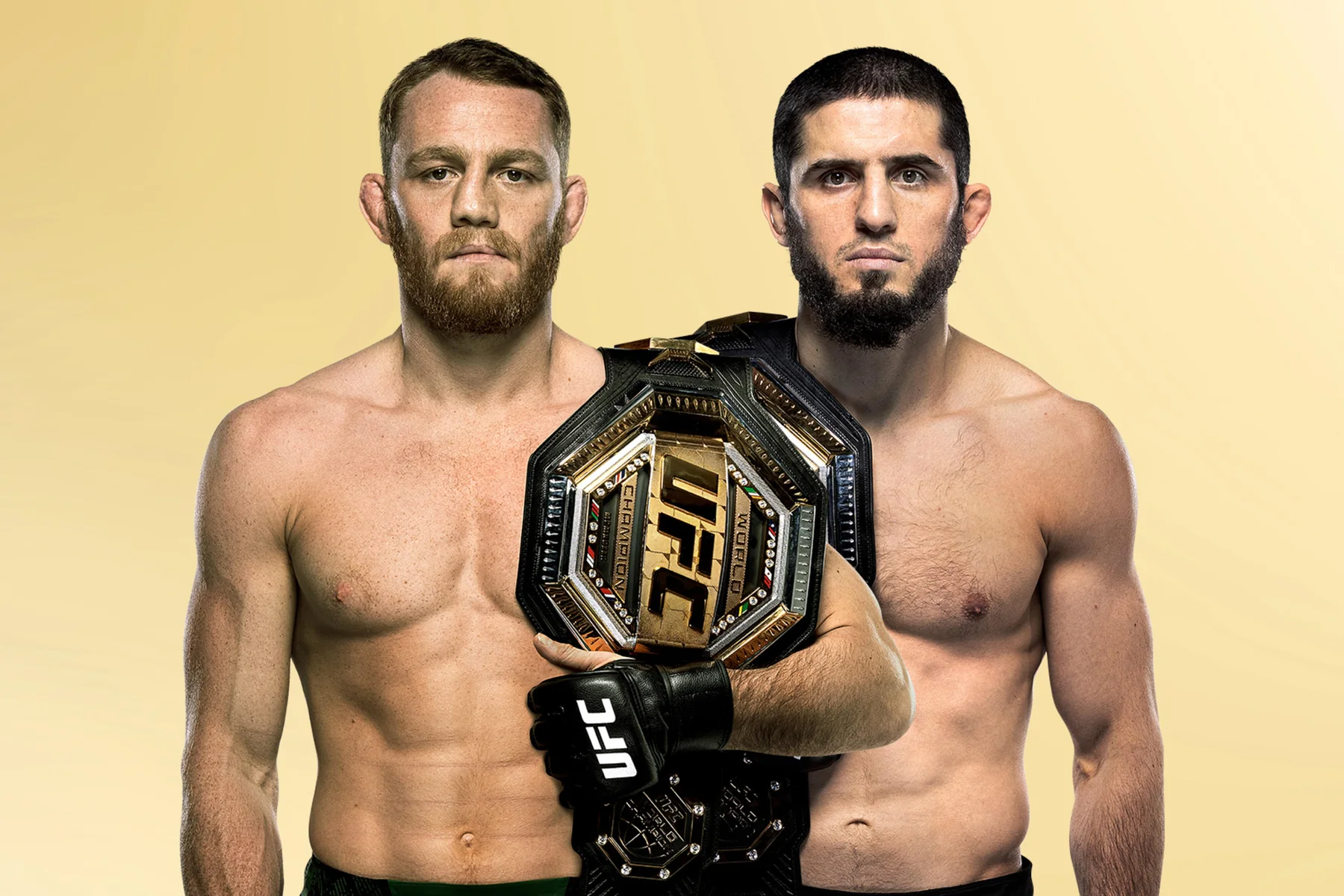
Della Maddalena and Garry define the second-divisional chapter. The former entered as welterweight champion and lost every round on all three scorecards. The latter arrived as a mobile, tall challenger, lost clearly but found late striking success that demanded more adjustments. Those wins matter because they prevent the résumé from ending at the moment Makhachev left lightweight.
A great résumé is not just famous surnames. It is a range of problems solved: Oliveira's submissions, Volkanovski's scrambling, Poirier's durability, Della Maddalena's size and Garry's distance. Makhachev's 29-1 record carries weight because the later wins became harder and more varied.
What comes next for Makhachev’s record
What is confirmed
As of September 9, Makhachev is the UFC welterweight champion with a 29-1 professional record and one successful defense at 170 pounds. The Garry result is official; a second defense is not added to the record until a fight occurs. A callout, interview preference or social-media exchange is not a booking.
Fans should require an official event page that names both fighters, date and venue before treating the next opponent as confirmed. The Makhachev next-fight tracker is the appropriate live destination because a career article will age between announcements.
What would strengthen the résumé
More welterweight defenses would answer the remaining historical question. Makhachev's lightweight reign already includes varied elite opposition. At 170, he has beaten the champion he challenged and defended against a leading contender. Repeating that across another style—heavy counter wrestling, dangerous pressure striking or a physically strong grappler—would prove the system remains dominant after opponents study the first two welterweight performances.
Activity also shapes how a streak is remembered. Seventeen consecutive UFC wins is already an extraordinary result, but title history measures who was faced, under what conditions and how often a champion defended. A longer number against weak context would add less than a difficult defense against the division's clearest contender.
There is also a technical standard for the next chapter. Garry showed that a challenger can stand repeatedly, win later striking exchanges and make Makhachev work through more than one entry. The champion still found the decisive positions, including two fifth-round takedowns, but future opponents now have a recent map of where resistance is possible. A defense that answers those adjustments would say more than simply preserving an unbeaten run at welterweight.
Historical labels should wait. “Greatest” arguments involve title defenses, opponent quality, longevity and performance across eras; a win-streak number cannot settle them by itself. Makhachev's record already supports inclusion in the discussion, while additional defenses would supply evidence rather than slogans. That is the fairest way to value 29-1: recognize what has been achieved and leave space for the reign that is still active.
For now, the record answers the most searched questions cleanly: Garry was the last opponent; Martins delivered the only loss; the streak stands at 17; and Makhachev has held UFC championships in two divisions. Everything after that belongs on the officially announced upcoming-event schedule when the promotion makes it real.
Fight talk
Comments