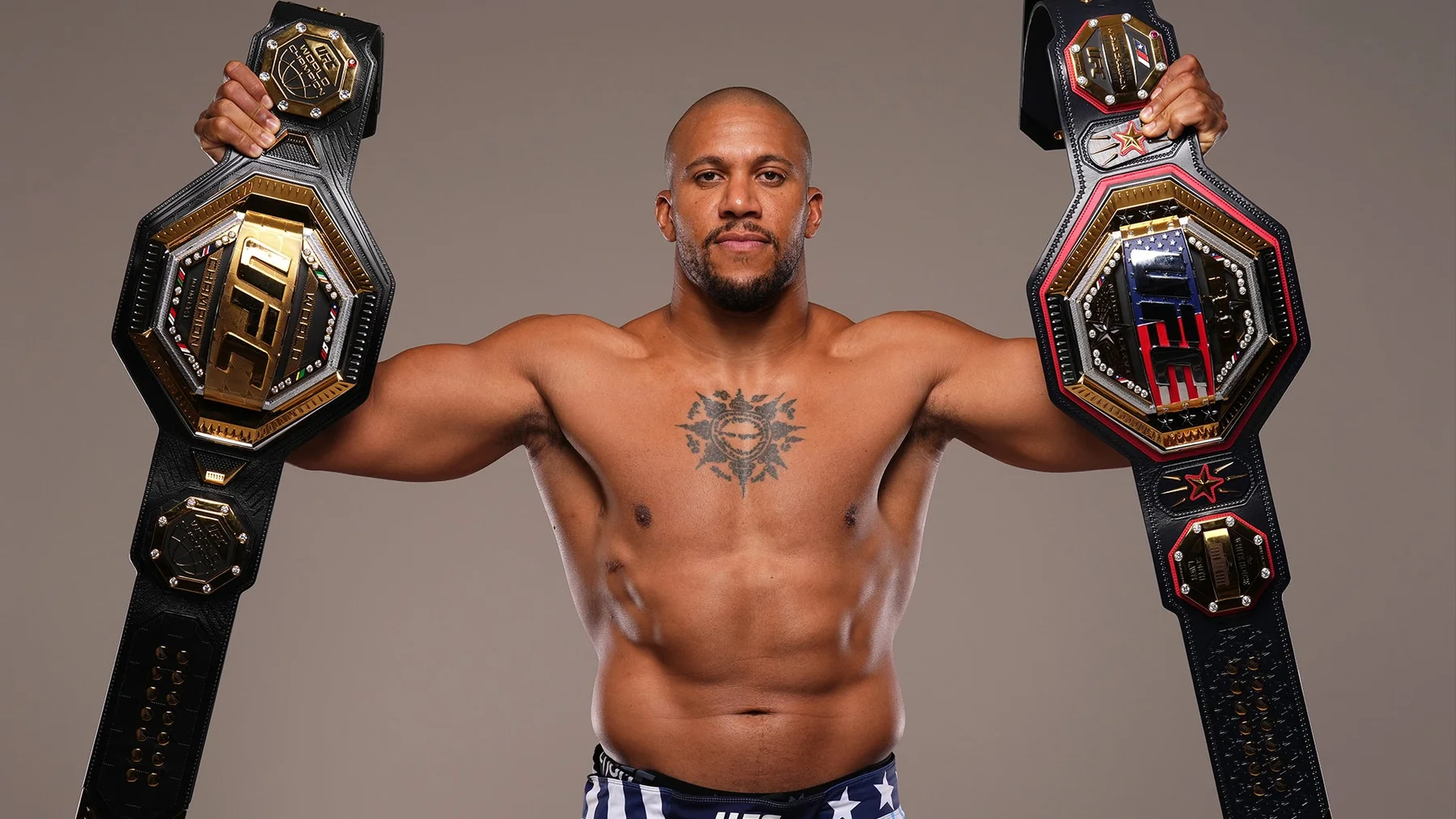
Ciryl Gane is set to defend the undisputed UFC heavyweight title against Josh Hokit at UFC 334 on November 14, 2026. The booking has prompted a fair question: how did a fast-rising contender reach a title fight while veteran Alexander Volkov remained outside it? The confirmed sequence starts with Tom Aspinall's decision to vacate during his eye-injury recovery. What follows is a sporting argument about Hokit and Volkov, rather than a publicly disclosed UFC ranking formula. Here is what the promotion has announced, what each fighter has earned in the Octagon, and what remains opinion as of September 28.
How did Gane become the undisputed heavyweight champion?
Gane became undisputed champion after Aspinall vacated the title; Gane did not beat Aspinall for that belt. The UFC's September 20 UFC 334 announcement calls Gane the undisputed champion who will defend against Hokit. That wording matters because earlier heavyweight coverage correctly described Gane as an interim champion. Those descriptions refer to different points in the same title timeline.
Aspinall's title decision followed the unresolved UFC 321 fight
The first Aspinall–Gane title bout at UFC 321 in Abu Dhabi on October 25, 2025, ended without a winner. The official UFC scorecard record lists a no contest due to an accidental eye poke at 4:35 of Round 1. Gane was neither awarded a victory nor crowned undisputed that night. The unresolved ending created a natural case for a rematch, but it did not give fans a completed five-round comparison of the two heavyweights.
The rematch did not happen before the belt changed hands administratively. In its September announcement, the UFC said Aspinall chose to vacate as he continued recovering from the effects of the eye poke. The same announcement relayed Aspinall's statement that he had reinjured his right eye in training for an expected rematch and did not want to hold up the division. Those are his stated reasons, not a medical forecast. There is no sound basis here to assign him a return date, declare the injury permanent, or claim the UFC forced him out.
Gane's interim belt became an undisputed title
While Aspinall was out, Gane fought Alex Pereira at UFC Freedom 250 on June 14, 2026. The official result records Gane winning the interim heavyweight title by TKO from strikes at 1:27 of Round 2. Our Freedom 250 results guide covers the rest of that card. The interim win was a real cage result, but the qualifier still mattered until the UFC changed his status.
When Aspinall vacated, the UFC promoted Gane into the undisputed position and announced Hokit as his first defense. This is a different route from a unification fight: there was no second Aspinall–Gane result to settle their direct matchup. Fans can reasonably wish the rematch had happened, yet the official November booking now runs through Gane and Hokit. Getting that distinction right also prevents a misleading shorthand: Hokit is challenging an undisputed champion, and Aspinall is a former champion whose return remains contingent on clearance.
Why did Josh Hokit get the UFC 334 title fight?
Hokit has a genuine results-based case: four UFC wins in roughly seven months, with his last two against Curtis Blaydes and Derrick Lewis. The UFC booked him against Gane, but its announcement did not publish a formal rule saying those wins outrank every other contender's claim. A fair explanation therefore starts with what Hokit actually did and stops short of pretending to know a private matchmaking vote.
Hokit moved quickly from Contender Series to veteran heavyweight wins
The UFC fighter profile lists Hokit winning on Dana White's Contender Series in August 2025 before making his UFC debut that November. He stopped Max Gimenis at 56 seconds of Round 1, then stopped Denzel Freeman at 4:59 of Round 1 in January 2026. Those fast wins established his finishing ability and put him on a short turnaround, but they alone would have been a thin basis for a championship opportunity. A prospect can look spectacular against developing opposition without yet showing how he handles a seasoned heavyweight who survives the first exchange.
The April and June bookings changed the quality of the evidence. Blaydes was an experienced top-tier opponent at UFC 327; Lewis brought a long record of heavyweight finishing threat to Freedom 250. Hokit did not merely remain unbeaten on paper. He went the distance with one veteran and stopped another, giving the promotion two more useful tests than his debut knockouts supplied. That is why the title shot is defensible as a fast merit-based promotion even if it is debatable against a longer veteran résumé.
Lewis and Blaydes tested different parts of his game
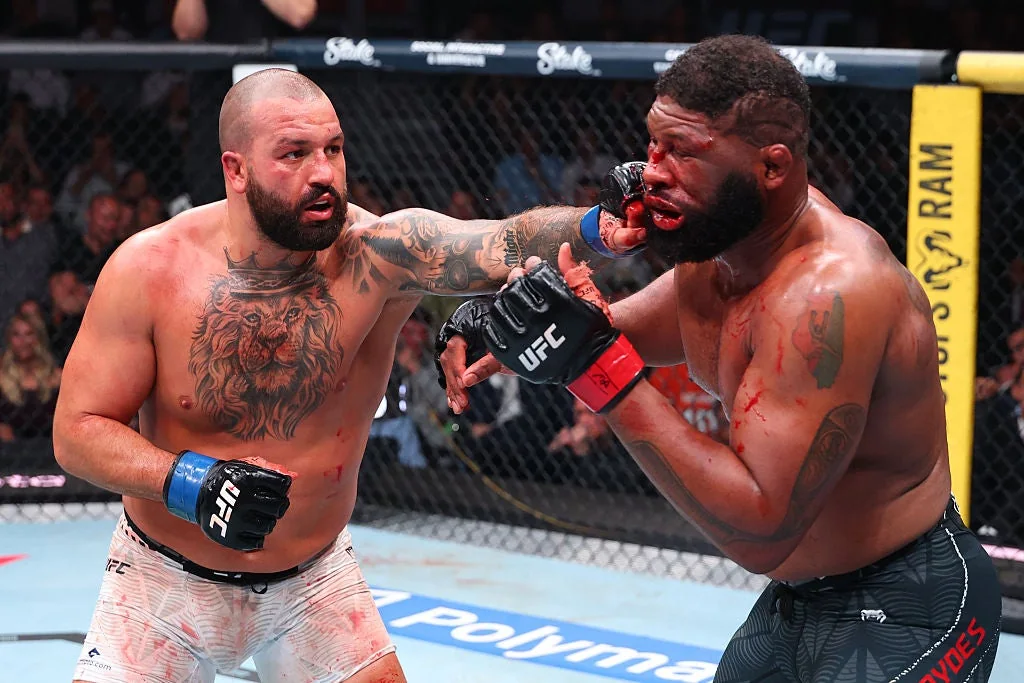
Against Blaydes, Hokit won a three-round unanimous decision with three 29–28 scorecards. The UFC also named their contest Fight of the Night. The decision matters because a young heavyweight had to work through changing positions and repeated exchanges rather than land once and leave. The bonus describes an entertaining fight; it is not a substitute for the judges' verdict, and it does not confer priority in the championship queue. Our UFC 327 results place that performance in the rest of the card.
At Freedom 250, Hokit stopped Lewis with strikes at 4:09 of Round 2. That finish showed he could turn pressure into a stoppage against a veteran dangerous enough to change a fight with one counter. It should be called a TKO, as the official result does, rather than invented as a single-shot knockout. The two fights together show both persistence and finishing capacity. They do not yet answer how Hokit manages a scheduled five-round title fight against Gane's movement, nor do they erase the case for a contender with more long-form heavyweight experience.
What is Alexander Volkov's argument for the shot?
Volkov's claim is built on sustained heavyweight results, high placement on the UFC's displayed rankings, and a competitive recent fight with Gane. As viewed on September 28, the UFC athlete profile placed Volkov at No. 2 in the heavyweight division; Hokit's profile showed No. 4. Those are dated page snapshots, not a published regulation that No. 2 must receive the next defense. Still, a fan looking at the division has a sound reason to ask why a veteran above the challenger was passed over.
Volkov's recent results and Gane history make the question reasonable
Volkov's current argument is more than career longevity. At UFC 321 in October 2025, he beat Jailton Almeida by split decision, with two 29–28 cards for Volkov and one 29–28 card for Almeida. At UFC 328 in May 2026, he beat Waldo Cortes Acosta by unanimous decision, 30–27, 29–28 and 29–28, according to the UFC scorecards. Those bouts represent repeated success against relevant heavyweight opposition. Neither was a finish, but a decision over a capable opponent still tests a fighter's ability to maintain effective work across multiple rounds.
There is also a direct Gane link. The men met again at UFC 310 on December 7, 2024. The official result gives Gane a split-decision win, 29–28, 28–29 and 29–28. The closeness made a third meeting understandable to many viewers, especially once Gane became champion. The UFC's own post-event analysis described Volkov's frustration with that verdict and Gane's disappointment with his performance. Those reactions explain why the rematch remains emotionally live, but they do not reverse the judges' decision.
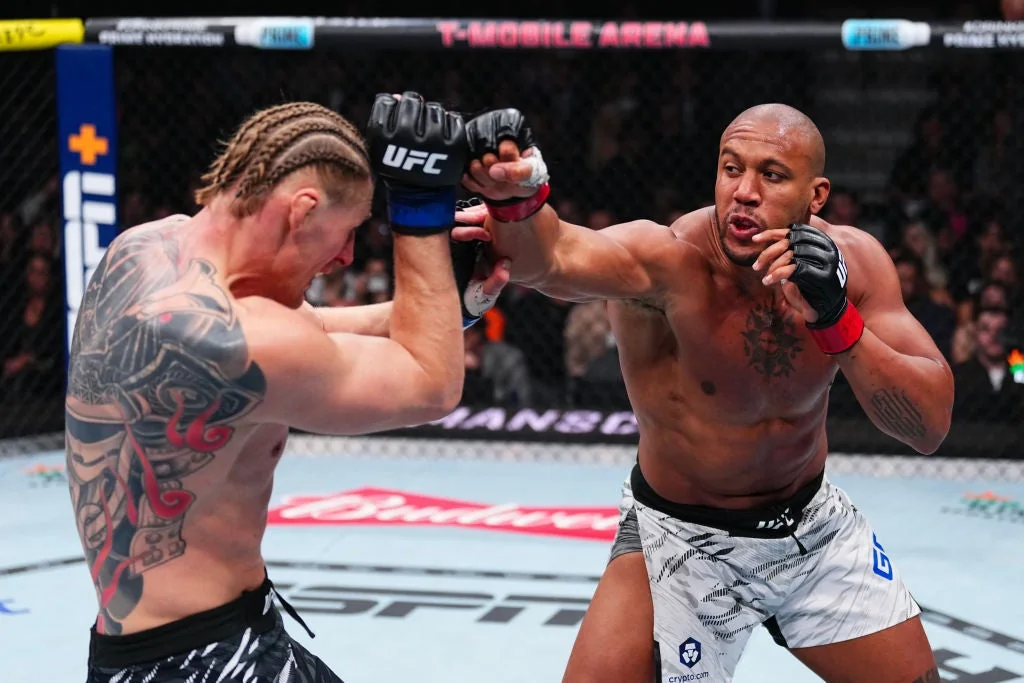
A balanced comparison also notes the limitation of Volkov's claim. Gane has two official wins over him: a clear unanimous decision in their 2021 meeting and the narrow 2024 split verdict. Hokit, by contrast, has never faced Gane and arrives with recent finishing momentum. It is reasonable to prefer Volkov's longer résumé and No. 2 position; it is also reasonable to value a new opponent who has just beaten Blaydes and Lewis. Neither preference is the same as proof that the UFC violated a required challenger order. Our UFC 328 results give more context for Volkov's latest completed fight.
Did the UFC explain why Hokit was picked over Volkov?
The UFC confirmed the matchup and praised Hokit's rise, but its September 20 announcement did not publish a head-to-head selection reason for choosing him over Volkov. The article points to Hokit winning four times since November 2025 and collecting bonuses. Those are relevant merits. It does not say that Volkov failed a required condition, that Hokit won a formal eliminator, or that a numbered ranking mechanically determined the challenge. The public evidence supports a narrower conclusion: the promotion made the booking, while the comparative rationale remains undisclosed in that announcement.
Volkov made the disagreement personal in a September 23 interview shared by Ariel Helwani. He used sarcasm to object to Hokit receiving the opportunity first. MMA Junkie reported the remarks and Hokit's subsequent reply. Hokit answered the next day by mocking Volkov's fighting style and pointing to opponents both men had faced. These comments are evidence that the fighters disagree; they are not a medical claim about Hokit or proof of what UFC officials considered in their decision.
This distinction matters when fans say Volkov was “skipped.” As a description of the announced matchup, he was passed over this time while the lower-ranked Hokit was selected. As a claim that the UFC broke a published mandatory sequence, the evidence is not there. UFC rankings help describe the competitive field, but a No. 2 label alone does not tell us whether a champion's next bout must be with that person. Availability, contractual terms, a promotion's plans and other factors can affect matchmaking in general; none should be presented as the verified reason here without a direct statement.
Fans can evaluate the sporting choice without treating an accusation as fact. One argument favors Volkov's veteran résumé, recent wins and close 2024 fight with Gane. Another favors Hokit's fast run, younger matchup and successful tests against Blaydes and Lewis. The official Gane–Hokit fight will answer which of those two men wins on November 14 if it takes place as scheduled. It will not by itself reveal the private reasoning that produced the booking.
What will Gane vs Hokit actually test in the Octagon?
The contest asks a more useful question than whether a polished striker can beat “a wrestler.” Both heavyweights can end exchanges on the feet. Gane's advantage is the ability to shape distance with kicks, stance changes and movement; Hokit's opportunity is to turn the moving target into repeated close-range decisions. The analysis below describes possible routes, not an announced game plan or a forecast of the winner.
Gane needs distance and clean exits
In a UFC coach discussion before Freedom 250, Gane's lead-leg attacks, stance choices and ability to dictate range were central themes. Those tools can make a challenger cross a long stretch to get close enough to punch or clinch. If Gane touches the lead leg or body and then exits at an angle, Hokit must reset his feet before pressing again. Repeated resets can slow a forward-moving fighter without requiring Gane to win every exchange with a dramatic shot.
The danger for Gane would be losing that exit space. A kick thrown without enough room to recover, a straight retreat toward the fence, or a missed counter that leaves his hips accessible could let Hokit attach to him. The UFC 285 record shows Jon Jones submitted Gane in Round 1 in 2023, so fans are right to ask about grappling defense. It does not establish that a different opponent in 2026 can reproduce Jones's sequence. Gane's task is to defend each entry on its own merits while keeping enough space to make his striking work.
Hokit needs layered entries and five-round answers
Hokit's UFC profile describes a serious wrestling background, but credentials outside the Octagon do not automatically become takedowns against Gane. At UFC 327, the official main-card recap describes Hokit and Blaydes trading hard strikes through 15 minutes, with Hokit surviving the veteran's answers. That win proved resilience and attack under fire; it was not a demonstration of 15 minutes of uninterrupted ground control.
A plausible Hokit route would combine punching threats with changes of level, then use the fence to keep contact if the first shot fails. A single open-space takedown attempt can be easier for a mobile opponent to read than a sequence that makes him defend hands, hips and cage position. Conversely, chasing a moving kicker while absorbing clean counters is costly at heavyweight. Those are tactical possibilities inferred from the fighters' profiles, not a claim about what either camp has promised.
The scheduled championship distance creates another open question. Hokit has a three-round UFC decision over Blaydes, but his listed UFC history does not include a prior five-round title bout. That does not mean he lacks stamina. It means a late fourth or fifth round against Gane would provide evidence fans do not yet have. Watch whether Hokit can still cut off exits and defend counters after early surges, and whether Gane can keep moving without conceding the fence as the fight lengthens.
What should UFC fans watch before November 14?
As of September 28, UFC 334 is scheduled for Saturday, November 14 at Madison Square Garden in New York, with Gane–Hokit as the heavyweight title main event. The official event page also lists Kayla Harrison's women's bantamweight title defense against Amanda Nunes as the second championship fight. It currently shows a 9 p.m. Eastern main-card start and Paramount+ viewing in the United States. Those are useful planning facts, but fight cards and times can change between announcement and event week.
A title defense, a second championship fight and a changing division
The next meaningful heavyweight result may arrive before Gane and Hokit walk out. The UFC 333 event page currently lists Volkov against Rizvan Kuniev on October 24 in Abu Dhabi. A Volkov win could strengthen his sporting case; a loss would change it. Neither result would automatically create a promised UFC 334 winner-versus-Volkov fight. Calling the October bout a mandatory eliminator would add a condition the UFC has not announced.
Aspinall's situation is also independent of the November result. He has vacated, and the UFC's announcement says he awaits clearance after his right-eye reinjury. Until he returns and a bout is officially booked, there is no basis to assign him the winner, a rematch date or a ranking position in this new title sequence. Gane's first undisputed defense, Hokit's first championship-distance test and Volkov's next fight are the three concrete checkpoints fans can follow.
Use the site's upcoming UFC events and UFC TV schedule for current viewing details as November approaches. The sporting debate is worth having now: Volkov offers a tested résumé and a close Gane rematch, while Hokit brings a rapid four-win UFC run and a new style test. The scheduled fights, not an invented motive for their booking, will supply the next evidence.
Fight talk
Comments