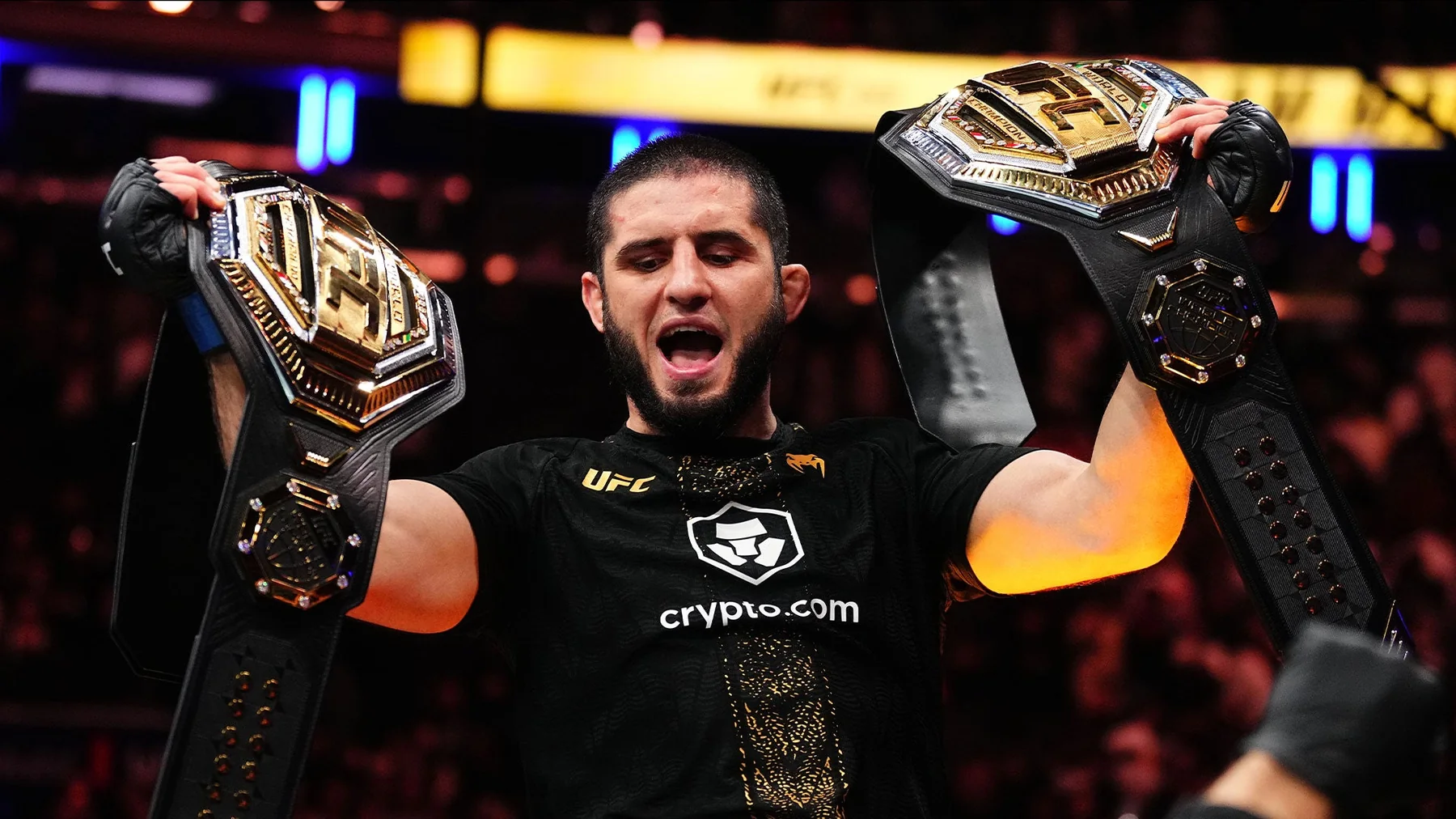
The UFC has 11 undisputed divisional champions as of September 9, 2026, plus Ciryl Gane as interim heavyweight champion. Islam Makhachev holds welterweight gold, Justin Gaethje is lightweight champion, and Sean Strickland regained the middleweight belt at UFC 328. The list below is a dated snapshot because one title fight can change it overnight.
This guide distinguishes undisputed, interim and promotional belts, then explains each champion's recent title result and which next defenses are officially scheduled. Rumored opponents are excluded.
Current UFC champions at a glance
| Division | Champion | Status |
|---|---|---|
| Heavyweight | Tom Aspinall | Undisputed |
| Heavyweight | Ciryl Gane | Interim |
| Light heavyweight | Carlos Ulberg | Undisputed |
| Middleweight | Sean Strickland | Undisputed |
| Welterweight | Islam Makhachev | Undisputed |
| Lightweight | Justin Gaethje | Undisputed |
| Featherweight | Alexander Volkanovski | Undisputed |
| Bantamweight | Petr Yan | Undisputed |
| Flyweight | Joshua Van | Undisputed |
| Women's bantamweight | Kayla Harrison | Undisputed |
| Women's flyweight | Valentina Shevchenko | Undisputed |
| Women's strawweight | Mackenzie Dern | Undisputed |
The UFC does not currently maintain an active women's featherweight champion, so adding an empty name to make the table symmetrical would be misleading. BMF is also excluded because it is a promotional belt rather than a weight-class championship. The interim heavyweight title appears because it belongs to the same divisional championship track and can lead to unification.
Check the live UFC rankings after every title event and use upcoming UFC events for confirmed defenses.
Heavyweight through middleweight champions
Heavyweight: Tom Aspinall and interim champion Ciryl Gane
Aspinall is the undisputed heavyweight champion. Gane occupies the interim track after stopping Alex Pereira in Round 2 at UFC Freedom 250. “Interim” is essential: Gane's belt does not replace Aspinall's undisputed title. It identifies a temporary champion whose logical championship purpose is unification, although no date should be assumed until UFC books it.
Light heavyweight: Carlos Ulberg
Ulberg holds the 205-pound title after UFC 327. His rise changed a division that had recently moved through Alex Pereira and Magomed Ankalaev. The useful current question is how he handles a defense once challengers prepare for the champion rather than the contender. No opponent belongs in this guide as official without an event listing.
Middleweight: Sean Strickland
Strickland regained the middleweight championship at UFC 328, defeating Khamzat Chimaev by split decision. The result restored his pressure-jab style to the top and showed how difficult it is to maintain early grappling dominance across five rounds when Strickland keeps making an opponent work.
For division-specific contender context, use the heavyweight rankings and middleweight rankings. A champion name answers possession; the rankings explain the pressure building below.
Welterweight and lightweight champions
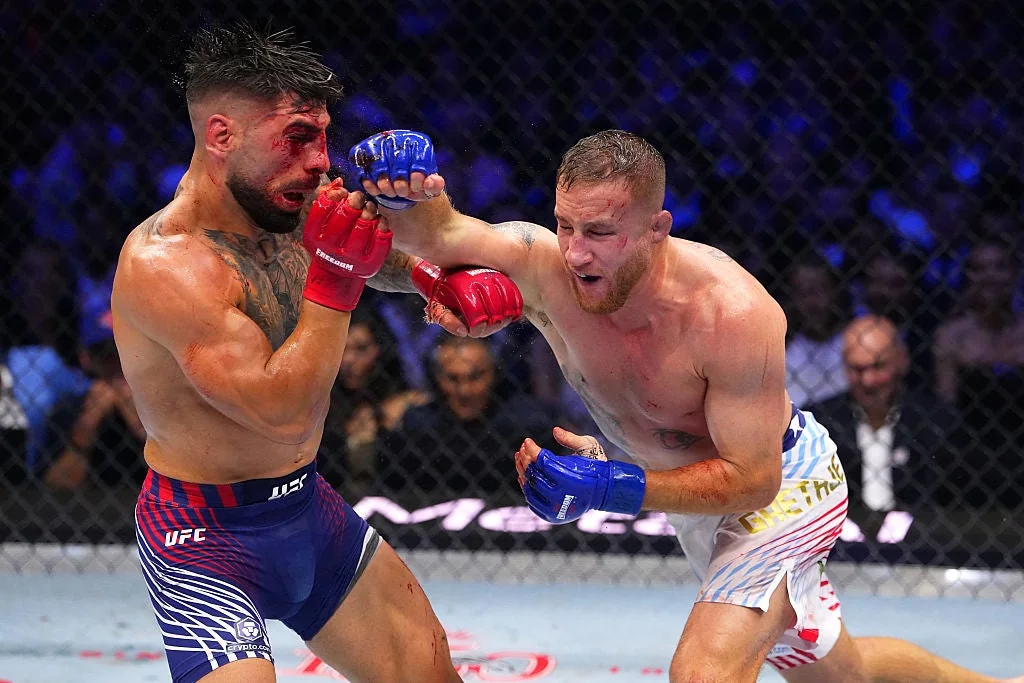
Islam Makhachev is the UFC welterweight champion. He won the belt from Jack Della Maddalena at UFC 322 after vacating lightweight, then defended against Ian Machado Garry at UFC 330. The Garry decision was competitive in later striking exchanges, but Makhachev scored the only knockdown, completed seven takedowns and won unanimously.
That history matters because “two-division champion” can be misunderstood. Makhachev held UFC titles at lightweight and welterweight during his career, but he vacated the first before winning the second. His current championship is the 170-pound belt, and the Garry result is his first defense in that division.
Justin Gaethje is the UFC lightweight champion. He defeated Ilia Topuria at UFC Freedom 250 when Topuria's corner stopped the bout after Round 4. The official 5:00 round time means the fourth round ended before the corner declined to send Topuria out for the fifth. Gaethje therefore won by TKO through corner stoppage, not by judges' decision.
Gaethje's title status is distinct from Charles Oliveira's BMF belt. The lightweight championship governs the division; BMF is a separate promotional title. Oliveira can be a prominent contender and BMF holder without displacing Gaethje as the 155-pound champion.
These are two volatile divisions, so track exact context through the Makhachev record guide and lightweight rankings.
Featherweight through men’s flyweight champions
Featherweight: Alexander Volkanovski
Volkanovski holds the featherweight title and has an official defense ahead. UFC 333 lists him against undefeated contender Movsar Evloev on October 24 at Etihad Arena in Abu Dhabi. That booking is more reliable than a callout because the event page supplies opponent, date and venue.
Bantamweight: Petr Yan
Yan is the current bantamweight champion. His return to the top places one of the division's most technically layered boxers back in the role every contender studies. As of the snapshot, this guide does not attach a next opponent without a corresponding UFC event listing. Ranking proximity alone does not create a defense.
Flyweight: Joshua Van
Van holds the flyweight title and is booked for a rematch with former champion Alexandre Pantoja at UFC 331 on September 19. Their first meeting lasted only 26 seconds before Pantoja suffered an arm injury, so the rematch is closer to the first full test of the matchup than a conventional tactical sequel.
Van's later defense against Tatsuro Taira showed the reign could extend beyond that injury result. Pantoja still brings championship experience and a connected grappling game, making UFC 331 one of the clearest near-term opportunities for this table to change.
Fans can verify the bookings on the UFC 331 event page and UFC 333 event page. Event cards remain subject to change until the fighters compete.
Women’s UFC champions
Kayla Harrison holds the women's bantamweight title. Her elite grappling and physical control reshaped the 135-pound division, but the champion label alone should not be used to invent a next opponent. A defense becomes official when the UFC attaches it to an event.
Valentina Shevchenko is women's flyweight champion. At UFC 322 she stopped Zhang Weili's attempt to win a second divisional belt, sweeping all five rounds on every scorecard. That defense reinforced the value of experience at a specific weight: Zhang's strawweight greatness did not automatically solve Shevchenko's distance and transitional control at 125 pounds.
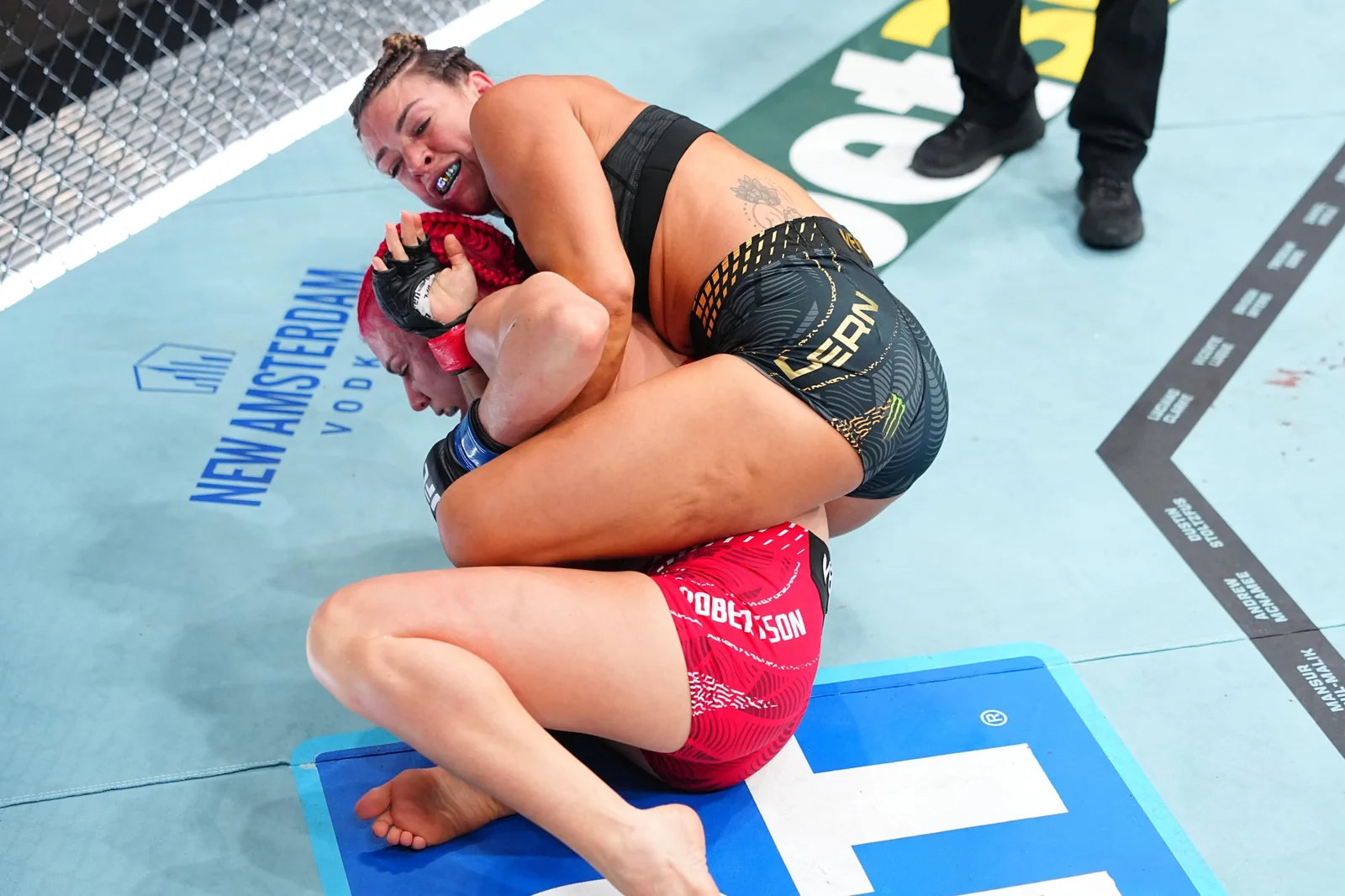
Mackenzie Dern holds the women's strawweight belt. She defended it against Gillian Robertson at UFC 330 by unanimous decision, 49-46, 49-46 and 48-47. Dern led the early grappling exchanges and built enough offense and control that Robertson's strongest late round could not erase the deficit.
There is no active UFC women's featherweight champion to add. The promotion has not maintained that division as a current title track, so describing the belt as merely “temporarily vacant” would imply an announced succession process that does not exist. The current women's championship structure contains bantamweight, flyweight and strawweight.
See the Shevchenko profile and Dern profile for complete histories.
Which UFC title fights are officially scheduled next?
Joshua Van's flyweight defense is first on the current calendar. UFC 331 lists Van versus Alexandre Pantoja 2 for September 19 at Crypto.com Arena in Los Angeles. Because the first bout ended through Pantoja's early arm injury, the rematch should reveal far more about their complete striking and grappling matchup.
UFC 332 follows on October 3 at Delta Center in Salt Lake City. Its women's flyweight title context must be checked against the official event page immediately before publication because championship labels and card order can change. A scheduled title fight does not alter the current champion table until the bout occurs and an official result is recorded.
Alexander Volkanovski is then scheduled to defend the featherweight championship against Movsar Evloev at UFC 333 on October 24 in Abu Dhabi. Evloev's unbeaten, control-oriented approach gives Volkanovski a different problem from the striking-heavy challenges that shaped much of his reign.
Those are schedule facts, not guarantees that every bout reaches fight night unchanged. Injuries, medical issues and card adjustments can move a title fight. The upcoming UFC events page and UFC schedule should be the live source after this dated snapshot.
How to read UFC champion and interim champion labels
Undisputed champion identifies the primary holder of a UFC division's title. It does not mean the fighter has literally defeated every possible challenger. It means the promotion recognizes that fighter as champion of the active weight class.
Interim champion identifies a temporary championship track created while the undisputed title cannot proceed on the intended schedule. The interim holder is a champion, but the qualifier must remain attached. In the current heavyweight case, Aspinall remains undisputed and Gane remains interim until a unification result or another official title decision changes the structure.
Vacant means no fighter currently holds that belt. A vacancy can follow retirement, departure, a move between divisions or a promotional decision. It should not be confused with an inactive division. Women's featherweight currently has no active UFC championship track, which is why this list does not present a named champion or pretend a title fight is pending.
BMF champion is a promotional distinction contested in selected bouts. It can add major event value and belongs in a fighter's achievements, but it does not replace the lightweight, welterweight or another divisional champion. Charles Oliveira holding BMF and Justin Gaethje holding lightweight gold is therefore not a contradiction.
A useful champions page always supplies a snapshot date, checks official UFC titleholders, verifies the last completed result and labels interim status. It should update after the result, not after a prediction. For the limits behind each division, see the UFC weight classes guide, then use the live UFC rankings for later changes.
The champion row and the No. 1 contender row also answer different questions. A champion normally sits outside the numbered 1–15 list because the belt is a separate position. The first-ranked contender is not a second champion and does not have an automatic title date. UFC matchmaking considers results, timing, injuries and event needs, so the table should never convert a ranking into a promised defense.
Weight misses add another layer. A challenger who misses the championship limit can become ineligible to win the belt even if the bout proceeds, while a champion who misses may face different official consequences. Those terms are announced for the specific bout. Readers should therefore check official weigh-in results before assuming the championship conditions survived fight week unchanged.
A no contest or draw can also leave possession unchanged. The bout result, commission ruling and UFC title announcement must be read together rather than guessed from who appeared stronger. The same evidence rule applies when a result is later overturned: the current official record controls, even if highlight clips and older articles continue circulating with the original outcome.
Finally, “recent defense” is not a synonym for “recent fight.” A champion may compete in a non-title bout, move divisions or appear in a promotional contest. The belt's history changes only when the relevant divisional championship is at stake. This is why Oliveira's UFC 326 BMF win and Gaethje's Freedom 250 lightweight-title win belong in different rows of championship history.
Use the table as a timestamped answer, then use each event page to understand the transition. Makhachev's 29-1 record explains welterweight stability; Strickland's split decision explains middleweight turnover; Van and Volkanovski have defenses with published dates. Those layers keep a list of names connected to the fights that made the names accurate.
Readers should also separate pound-for-pound ranking from championship status. A fighter can rank first pound for pound while holding one divisional belt, and a champion can sit lower because voters assess opponent quality, recent form and performance across divisions differently. Pound-for-pound is a comparative editorial ranking. A UFC championship is decided through the promotion's title structure and completed bouts.
That distinction explains why this list does not reorder champions by fame. Heavyweight through strawweight each has its own competitive track. Makhachev's résumé does not make him lightweight champion after vacating, and Volkanovski's accomplishments do not give him authority over bantamweight. The belt follows the division and official result.
When checking a future version of this guide, start with the newest completed title fight, then verify the UFC titleholder display and athlete record. If they conflict immediately after an event, the dated official result and scorecards provide the strongest account of what happened, while the roster display catches up. That method keeps fast-moving championship information useful without guessing.
Fight talk
Comments